The IDF and Defense Ministry are preparing to procure 12,000 Israeli-made FPV assault drones in a new tender aimed at adapting to the rapid expansion of drone warfare against Hamas and Hezbollah. The move reflects growing concern over the battlefield impact of low-cost attack drones and the need for a more secure domestic supply chain.
The IDF Ground Forces and the Defense Ministry’s Procurement Directorate are moving to acquire 12,000 Israeli-made first-person-view assault drones, as Israel adapts to a battlefield increasingly shaped by the widespread use of attack drones by Hamas and Hezbollah.
The new tender marks a significant expansion in the army’s effort to field domestically sourced drone capabilities, while reducing dependence on Chinese-made components and responding to the growing operational threat posed by cheap, highly maneuverable explosive drones.
New tender reflects changing battlefield reality
The planned procurement comes as Hezbollah has stepped up its drone warfare in recent weeks, including the use of assault drones against IDF forces in southern Lebanon. According to the report, Israeli forces recently used an assault drone to eliminate a Hezbollah terrorist, underscoring how central such systems are becoming on both sides of the battlefield.
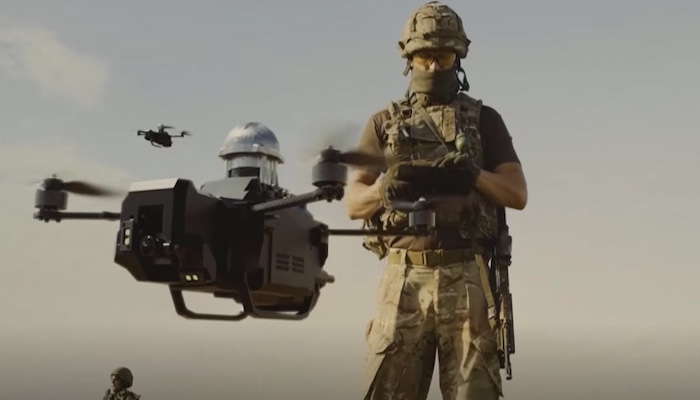
The new tender calls for 12,000 FPV drones operated manually through virtual reality goggles and joysticks, with advanced features including night-vision capability. These systems are expected to cost far more than those acquired under an earlier tender, reflecting higher specifications and a broader effort to build a more secure and capable platform.
Higher costs, tighter supply chain requirements
Each drone in the new tender is expected to cost about NIS 20,000 to NIS 25,000. That represents a sharp increase from the previous procurement round, in which units were estimated at about NIS 3,500 each.
The latest requirements also move away from reliance on Chinese electronics, after criticism that the use of foreign-made components from China created potential data-security risks. The change is intended to support a more Western-aligned supply chain and reduce vulnerabilities linked to imported systems.
Among the companies bidding are Ondas Holdings, Xtend, and Robotican. Several other firms that had previously shown interest are not participating this time, citing business strategy, tender conditions, or failure to meet required classifications.
Cheap drones are rewriting combat doctrine
Defense experts increasingly see FPV drones as a defining weapon of modern ground warfare. Small, relatively inexpensive, and highly accurate, these systems can carry explosive payloads directly to troops, vehicles, and fixed positions, often at far lower cost than traditional weapons.
The experience of the war in Ukraine has accelerated that understanding. There, mass-produced FPV drones have become one of the most important battlefield tools, with experts saying they are responsible for a large share of injuries and fatalities. The report notes that Ukraine produces drones at a pace far beyond Israel’s current procurement scale, highlighting how early the IDF still is in adapting to the new reality.
Senior defense figures believe assault drones may eventually become as common to frontline forces as grenades or rocket launchers, giving individual soldiers a cheap precision strike option even without direct line of sight.
Hezbollah expands its own drone tactics
The urgency of the new tender is also tied to Hezbollah’s evolving capabilities. The group has released numerous videos showing FPV drones targeting Israeli military positions and armored vehicles, part of a broader effort to normalize drone attacks as a regular tool of combat.
Of growing concern are fiber-optic FPV drones, which are harder to jam electronically because they do not rely on conventional wireless links. While such systems have limits in maneuverability, they reduce the effectiveness of standard electronic warfare defenses and have already become a major feature of the war in Ukraine.
That trend has raised concern that Hezbollah could continue importing or developing more advanced drone tactics, potentially including attacks on helicopters and other higher-value military targets.
Israel moves to build local capacity
The new tender reflects a broader Israeli recognition that drone warfare is no longer a niche capability but a core component of future combat. Even so, industry experts quoted in the report cautioned that the scale of the procurement is still modest compared with the mass production models emerging elsewhere.
Still, the shift toward Israeli-made assault drones signals a strategic adjustment by the IDF: building local production capacity, strengthening supply-chain security, and preparing for a battlefield where cheap, explosive drones are likely to remain a central threat.

Loading comments...