Netanyahu says Israel has opened direct peace contacts with Lebanon | Achla News
israel
Netanyahu says Israel has opened direct peace contacts with Lebanon
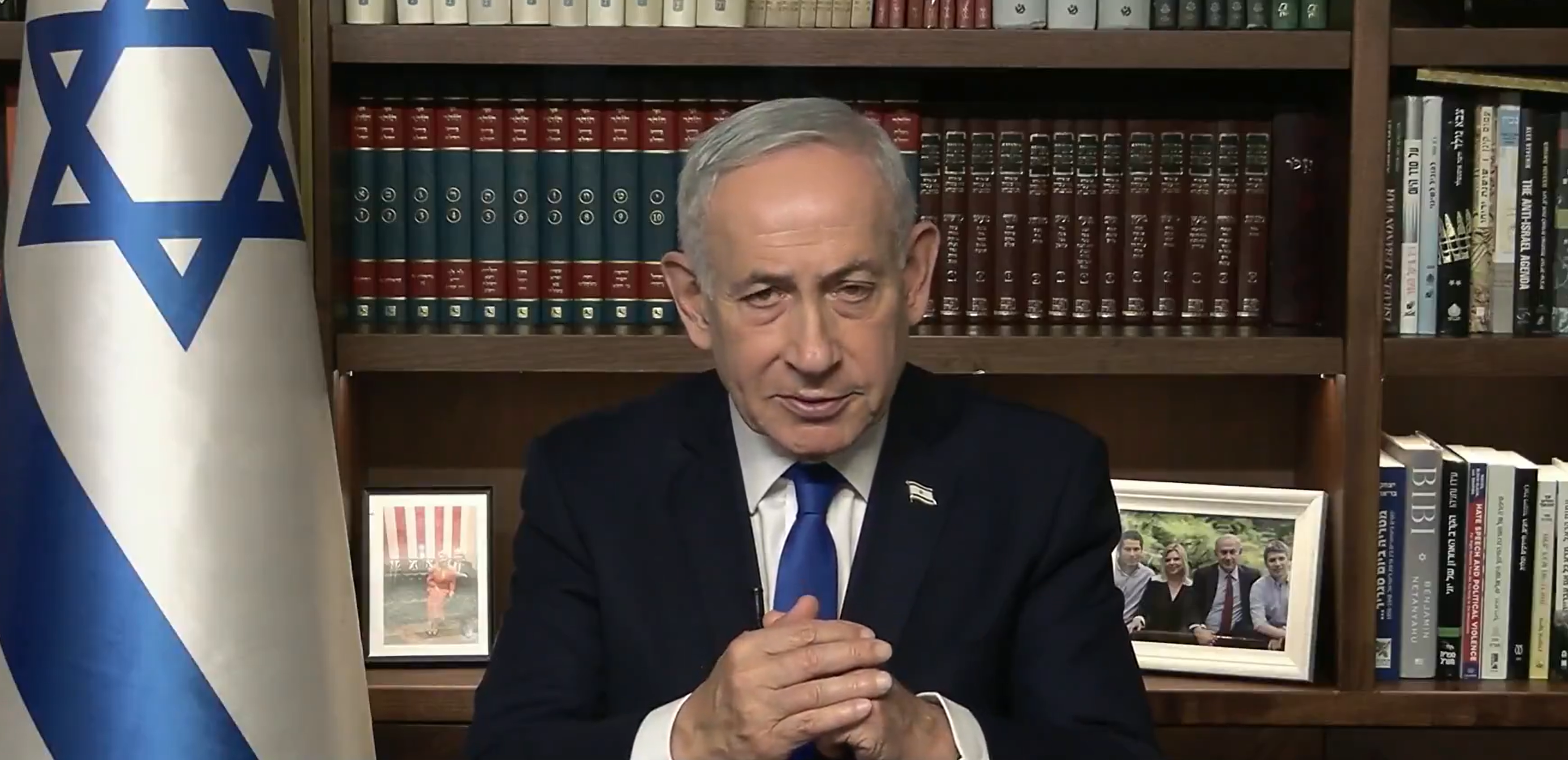
Prime Minister Benjamin Netanyahu said Israel has begun receiving approaches from Lebanon for direct peace talks for the first time in more than 40 years. He said Israel agreed only to a temporary 10-day ceasefire while maintaining a widened security buffer inside Lebanon and insisting on Hezbollah’s disarmament.
Prime Minister Benjamin Netanyahu said Israel has entered a new phase in its confrontation with Lebanon and Hezbollah, declaring that the killing of Hezbollah leader Hassan Nasrallah shifted the regional balance and led to direct outreach from Lebanon for peace talks.
In a series of public remarks, Netanyahu said the contacts marked the first such move in more than four decades. He said Israel responded by agreeing to what he described as a temporary 10-day ceasefire aimed at advancing discussions that had begun earlier in Washington.
Israel sets terms for talks
According to Netanyahu, Israel is entering any diplomatic process with two core demands:
The disarmament of Hezbollah
A durable peace arrangement based on Israeli security strength
He said Hezbollah, for its part, demanded two conditions for a ceasefire:
That Israel withdraw to the international border from all Lebanese territory
That the ceasefire operate under a “quiet for quiet” formula
Netanyahu said Israel rejected both demands.
“I agreed to neither of these, and indeed, those two conditions are not being met,” Netanyahu said.
Security buffer to remain in place
Netanyahu said Israeli forces are remaining inside Lebanon in what he described as a reinforced security buffer zone, and made clear that Israel does not intend to pull back under the terms outlined by Hezbollah.
He said the current deployment is broader and more entrenched than previous limited positions, stretching from the Mediterranean coast through Mount Dov and the slopes of Mount Hermon to the Syrian border.
“This is a security strip ten kilometers deep, which is much stronger, more intense, more continuous, and more solid than what we had previously. That is where we are and we are not leaving,” he said.
Netanyahu said the expanded zone is intended to prevent cross-border infiltration into Israeli communities and stop direct anti-tank fire at towns near the northern frontier.
Rocket threat remains
Despite his description of a major shift in the security picture, Netanyahu acknowledged that Hezbollah still retains rocket capabilities.
He said those remaining threats would have to be addressed as part of any broader security arrangement and future peace framework.
“Of course, there are still problems; they still have rockets left. We will have to deal with that as well,” he said.
Netanyahu cites talks with Trump
Netanyahu also said he had spoken over the past two days with US President Donald Trump, claiming Trump remains committed to maintaining a naval blockade and to dismantling what remains of Iran’s nuclear program.
He further suggested that additional action could be taken against Iran’s missile threat and uranium enrichment capability, but declined to elaborate.
“He is tremendously determined to continue the naval blockade and to bring about the dismantling of Iran's nuclear capability, what remains of it,” Netanyahu said.
Broader strategic message
Netanyahu framed the developments in Lebanon and the pressure on Iran as part of a wider transformation in Israel’s strategic and diplomatic position.
His remarks presented the current moment as one of both military leverage and diplomatic opening, with Israel seeking to translate battlefield gains into a longer-term regional security arrangement.
No independent confirmation was provided in the remarks regarding the identity of the Lebanese interlocutors, the status of the reported direct contacts, or the framework under which any future agreement might be negotiated.

Loading comments...