The United States is moving to extend the combat range of its F-35A, with growing attention on the Israeli Air Force’s use of external and conformal fuel tanks on the F-35I Adir. The issue is becoming increasingly urgent as Washington prepares for the long distances and operational risks in the Indo-Pacific
The United States is stepping up efforts to extend the combat range of its F-35A fighter, as planners confront one of the aircraft’s biggest operational limitations: distance.
That challenge is especially acute in the Indo-Pacific, where vast geography, limited basing options and the threat posed by China’s anti-ship and long-range missile arsenal have intensified the need for stealth aircraft that can strike farther without depending heavily on vulnerable tanker support.
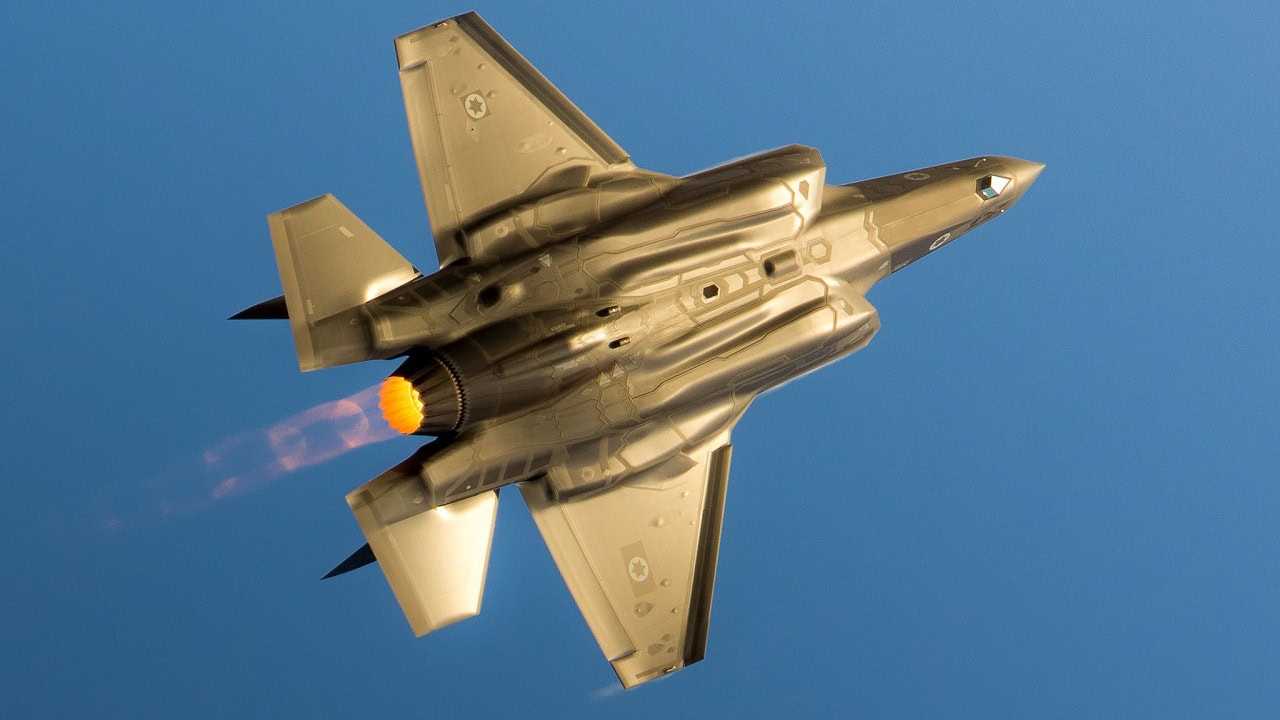
In that discussion, the Israeli Air Force’s F-35I Adir has emerged as a closely watched example of how the platform’s range can be expanded in practice.
The core problem: the F-35 does not naturally have long legs
The F-35 is widely regarded as one of the most advanced fighter aircraft in the world, but its combat radius on internal fuel remains a major constraint for long-range warfare. That limitation is less severe in theaters such as Europe or the Middle East, where missions are generally shorter and more nearby operating bases are available.
In the Indo-Pacific, however, the distances are far greater. That means stealth fighters may need to travel much farther to reach targets, remain on station, and return safely, all while avoiding reliance on aerial refueling tankers that could themselves become prime targets in a high-end war.
For the US Navy and Air Force, this is not just a technical issue. It is a strategic one. If fighters cannot reach the battlespace without tankers, then carriers, forward bases and support aircraft all become more exposed.
Why the Indo-Pacific changes everything
The geography of a potential conflict with China makes the F-35’s range issue much more serious than in other regions. The Pacific theater offers fewer safe landing and refueling options, while China’s missile forces can threaten US assets at long range.
That creates a difficult equation: carriers may have to operate closer to danger in order to launch shorter-range fighters, while tanker aircraft orbiting behind the fight could become attractive targets for Chinese interceptors and long-range missiles.
The result is that range is no longer just a performance metric. It is directly tied to survivability, flexibility and America’s ability to project power without overexposing critical support assets.
Israeli experience has become a key reference point
As the US looks for ways to solve that problem, attention has increasingly turned to Israel’s F-35I Adir variant.
According to the report, Israel’s air operations over Iran demonstrated the practical value of expanding the F-35’s range through fuel tank modifications. Some of those missions reportedly reached Iranian targets and returned without requiring aerial refueling, a notable achievement for a stealth fighter operating at significant distance.
The report says Israeli F-35Is used two types of fuel tanks: a 425-gallon external tank produced by Elbit Systems and an 800-gallon conformal tank developed in by Israel Aerospace Industries.
The external tanks could be dropped before entering hostile airspace, while conformal tanks are designed to hug the aircraft’s fuselage more closely, reducing drag and helping preserve more of the jet’s stealth profile compared with standard drop tanks.
External fuel tanks can dramatically increase range, but they also come with tradeoffs. Traditional external tanks add drag and can degrade the aircraft’s radar signature. Even after being jettisoned, the remaining hardware can still affect stealth.
That is why conformal fuel tanks are drawing so much interest. Because they are shaped to fit closely along the aircraft’s body, they are intended to offer extra fuel with less aerodynamic penalty and less damage to stealth performance.
For a platform like the F-35, that matters enormously. The aircraft’s value lies not only in its sensors and weapons but in its ability to survive inside defended airspace. Any range solution that undermines that advantage too severely creates a new problem while solving the old one.
US modernization effort now tied to range expansion
The push to improve range is now tied into the broader Block 4 modernization effort for the F-35 program.
Block 4 is intended to upgrade the aircraft’s radar, sensors, weapons integration and electronic warfare capabilities, while also improving the computing backbone needed to support future systems. Within that larger effort, extending range has become increasingly important.
The report says the US Air Force is actively exploring the integration of external fuel tanks on the F-35A as part of this modernization path. The goal is to give the jet greater operational flexibility and reduce dependence on tanker aircraft in contested environments.
Alongside that effort, the Pentagon is also working on improvements to the Pratt & Whitney F135 engine through the Engine Core Upgrade program, which is expected to improve thermal management and fuel efficiency, though those gains are not expected to arrive until later in the decade or beyond.
MQ-25 and other fixes are only part of the answer
Another piece of the solution is the MQ-25 Stingray, the Navy’s carrier-based refueling drone, which is designed to extend the range of carrier air wings. That could help reduce some of the burden on manned tankers and improve the operational reach of carrier-based aircraft.
But tanker support, whether manned or unmanned, does not fully solve the underlying issue. In a high-threat environment, the ability of the fighter itself to travel farther without outside help remains a major advantage.
That is one reason Israeli experience has attracted so much attention: it suggests that practical range extensions may already be achievable without waiting for an entirely new aircraft generation.
Cost pressures and strategic urgency
The range push comes as the F-35 program continues to face cost pressure. The fiscal 2026 US defense budget proposes cutting new F-35 purchases in part to free up money for Block 4 modernization and sustainment of the existing fleet.
That means the Pentagon is increasingly prioritizing capability improvements over simply buying more jets. In other words, the question is no longer just how many F-35s the United States should field, but whether those aircraft can perform effectively in the wars US planners believe are most likely or most dangerous.
From that perspective, expanding range is not a secondary improvement. It is central to making the aircraft viable in the operational environment it may soon face.
Israeli precedent may shape the future fleet
The broader significance of the Israeli example is that it offers a real-world model rather than a theoretical fix. Israel’s F-35I operations have helped demonstrate that modifications aimed at extending range can be integrated into actual combat use.
That does not mean the US can simply copy and paste the Israeli approach. American requirements are broader, its fleet is larger, and the Pacific theater presents its own distinct challenges. Still, the Israeli experience appears to have strengthened the case for giving the F-35A more reach through fuel tank integration and related upgrades.
As the Pentagon prepares for future competition with China, the lesson is becoming clearer: stealth alone is not enough if the aircraft cannot get to the fight and back on acceptable terms. The F-35’s next leap may depend not on making it more lethal, but on making it able to go much farther without losing what makes it valuable in the first place.

Loading comments...