Lebanon’s president defends talks with Israel after ceasefire, says country is ‘no longer a pawn’ | Achla News
middle east
Lebanon’s president defends talks with Israel after ceasefire, says country is ‘no longer a pawn’
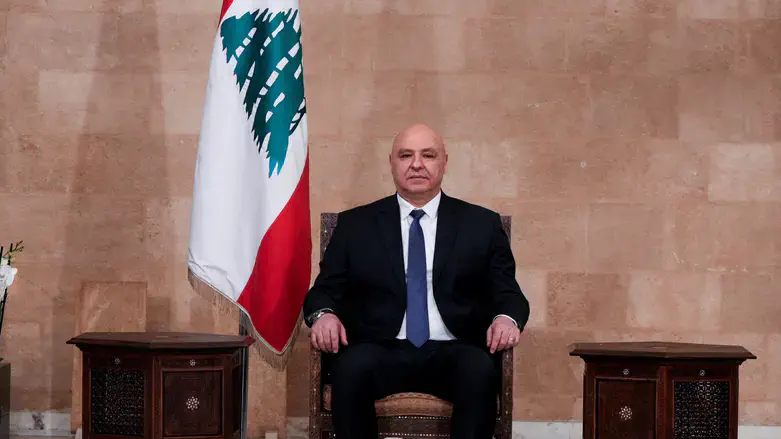
Lebanese President Joseph Aoun defended direct talks with Israel in a national address delivered a day after the ceasefire took effect, saying Lebanon had regained independent decision-making. He said negotiations were aimed at securing permanent arrangements without compromising sovereignty or territorial unity.
Lebanese President Joseph Aoun on Friday publicly defended direct talks with Israel, framing the move as part of a broader effort to reassert Lebanese sovereignty after a ceasefire between the two countries took effect a day earlier.
In a speech to the nation, Aoun said Lebanon was entering a new phase in which it would negotiate on its own behalf rather than serve as a battleground for outside powers.
“We are confident that we will save Lebanon… we have reclaimed Lebanon and Lebanon’s decision-making power for the first time in nearly half a century,” Aoun said.
“Today, we negotiate for ourselves… we are no longer a pawn in anyone’s game, nor an arena for anyone’s wars, and we never will be again.”
A shift from ceasefire to longer-term arrangements
Aoun said the immediate challenge was to move beyond the ceasefire itself and begin work on more durable agreements.
“Now, we all stand before a new phase,” he said. “It is the phase of transition from working on a ceasefire to working on permanent agreements that preserve the rights of our people, the unity of our land, and the sovereignty of our nation.”
His remarks suggest Beirut is seeking to present the talks not as a temporary tactical step, but as part of an effort to stabilize the border and define a longer-term framework with Israel.
‘Not a sign of weakness’
Aoun directly addressed criticism of the talks, insisting that negotiating with Israel should not be interpreted as retreat or surrender.
“Direct talks are not a sign of weakness nor a concession,” he said.
“Negotiations do not mean, and will never mean, giving up any right, conceding any principle, or compromising the sovereignty of this nation.”
By emphasizing sovereignty and national decision-making, Aoun appeared to be signaling both to domestic audiences and regional actors that Lebanon intends to pursue its own interests in the aftermath of the latest confrontation.
US role in the ceasefire
The ceasefire was brokered by US President Donald Trump’s administration.
Trump said on Wednesday that Aoun and Israeli Prime Minister Benjamin Netanyahu would speak on Thursday. That conversation did not ultimately take place, according to the source report. Trump instead held separate phone calls with both leaders before later announcing that the ceasefire had been secured.
Key takeaways
Aoun defended direct talks with Israel one day after the ceasefire took effect.
He said Lebanon was no longer an “arena” for outside wars or a “pawn” in the hands of others.
He presented negotiations as a path toward permanent agreements, not as a concession.
The ceasefire was brokered by the Trump administration after separate calls with Aoun and Netanyahu.
Friday’s address marked one of Aoun’s clearest public efforts to justify engagement with Israel while portraying the process as an assertion of Lebanese independence rather than a diplomatic retreat.

Loading comments...