Why This Changed the Global Economy
The petrodollar system fundamentally transformed international finance.
Countries importing oil now had to accumulate large reserves of U.S. dollars in order to secure stable energy supplies. Central banks across Asia, Europe, the Middle East, and Latin America steadily increased their dollar holdings as part of their foreign exchange reserves.
Oil-exporting nations, meanwhile, accumulated enormous quantities of dollars from energy sales. Rather than allowing those dollars to sit idle, many reinvested them into U.S. Treasury bonds and other American financial assets.
This process became known as petrodollar recycling.
The result was a self-reinforcing cycle.
Global demand for oil created global demand for dollars.
Global demand for dollars increased purchases of U.S. government debt.
Those purchases helped finance American deficits while reinforcing confidence in the dollar itself.
Over time, this financial architecture became one of the most important pillars of American economic power and global influence.
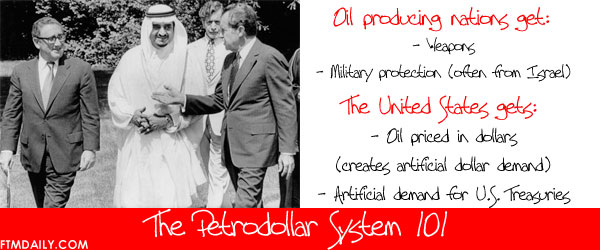
The petrodollar system did far more than increase global demand for U.S. dollars. It created an economic structure that has given the United States a series of advantages no other country has enjoyed on the same scale.
From government finance to consumer purchasing power and financial sanctions, reserve currency status has become one of the greatest sources of American national strength.
Constant Global Demand for the U.S. Dollar
Because oil has long been traded primarily in U.S. dollars, governments, central banks, multinational corporations, and financial institutions around the world must continually hold large amounts of dollars.
Countries need dollars to purchase energy, settle international trade, service dollar-denominated debt, and stabilize their own financial systems during periods of market stress.
This creates a permanent global demand for the U.S. currency that exists regardless of America's own trade balance.
Unlike most countries, the United States does not need to convince foreign investors to use its currency. The international financial system itself generates that demand.
Global Demand for U.S. Treasury Bonds
Dollar demand naturally creates demand for dollar-denominated assets.
The safest and most liquid dollar asset in the world is the U.S. Treasury bond.
As oil-exporting nations accumulated hundreds of billions of petrodollars, many recycled those revenues into U.S. government debt. Central banks across the world also increased Treasury holdings as part of their foreign exchange reserves.
This steady international demand has enabled Washington to finance budget deficits at borrowing costs that would be difficult for most other countries to sustain.
In effect, global demand for dollars also helps finance the U.S. government.
Seigniorage: The Unique Privilege of Issuing the World's Reserve Currency
Reserve currency status gives the United States another extraordinary advantage: seigniorage.
Every country earns some revenue by issuing its own currency, but no country benefits from this privilege on the same scale as the United States.
Because dollars circulate throughout the global economy, Washington can issue currency that is accepted far beyond its own borders.
When foreign governments, banks, businesses, and investors willingly hold U.S. dollars as reserves or transaction balances, they are effectively providing the United States with extremely low-cost financing.
This advantage has no true equivalent in international finance.
Stronger Purchasing Power for American Consumers
Persistent global demand for dollars generally supports a stronger U.S. currency than would otherwise exist.
A stronger dollar allows Americans to import foreign goods, raw materials, energy, electronics, machinery, and consumer products at relatively lower prices.
This increases the purchasing power of American households while helping keep inflation under control.
Since consumer spending accounts for roughly seventy percent of U.S. GDP, stronger purchasing power also supports domestic economic growth.
For American consumers, a strong dollar effectively increases the value of their income in international markets.
A Financial System Built Around the Dollar
The dollar is not simply a reserve currency.
It also serves as the primary currency for international banking, trade finance, commodity markets, shipping insurance, sovereign borrowing, and cross-border investment.
Much of the world's financial infrastructure—including correspondent banking networks, international payment systems, and global capital markets—operates primarily in dollars.
This network effect reinforces the dollar's dominance.
The more people use dollars, the more valuable it becomes for others to use dollars as well.
Replacing such a deeply established system would require not only another major economy, but also an entirely new global financial infrastructure capable of matching the scale, liquidity, legal certainty, and trust currently provided by U.S. markets.
America's Most Powerful Non-Military Weapon
Dollar dominance also provides Washington with enormous geopolitical leverage.
Because so much of international finance passes through the U.S. financial system, Washington can impose sanctions that restrict access to dollar clearing, American banks, and international payment networks.
Countries, companies, and financial institutions that depend on dollar transactions often have little choice but to comply with U.S. sanctions or risk losing access to the world's largest financial system.
This financial influence has become one of America's most effective foreign policy tools.
Military power remains important, but the ability to control access to the world's dominant currency gives Washington leverage that extends far beyond traditional diplomacy.
The Foundation of American Power
Taken together, these advantages form a self-reinforcing system.
Global demand for oil increases demand for dollars.
Demand for dollars increases investment in U.S. financial assets.
That investment lowers borrowing costs for the United States, strengthens the dollar, supports American purchasing power, and expands Washington's financial influence abroad.
This is why policymakers in Washington closely monitor efforts to reduce reliance on the U.S. dollar.
The issue extends far beyond currency markets.
It concerns one of the central pillars of American global leadership itself.
Why Iran's Yuan Oil Trade Matters to Washington
If the petrodollar system has been one of the foundations of American global power for the past five decades, it becomes easier to understand why Washington closely watches any effort to move global energy trade away from the U.S. dollar.
This is one of the reasons American concerns about Iran extend beyond the regime's sponsorship of terrorism throughout the Middle East.
Equally important is Tehran's growing effort to conduct oil trade with China in Chinese yuan rather than U.S. dollars.
Iran and China Build an Alternative Payment System
Following the reimposition of U.S. sanctions in 2018, China emerged as Iran's largest oil customer.
Rather than relying exclusively on the traditional dollar-based financial system, the two countries gradually expanded the use of yuan-denominated settlements, Chinese financial institutions, and alternative payment channels for energy transactions.
The objective was straightforward.
Reduce dependence on the U.S. dollar.
Reduce exposure to American financial sanctions.
Continue exporting Iranian oil despite restrictions imposed by Washington.
In 2021, China and Iran further deepened their economic relationship through a 25-year strategic cooperation agreement covering energy, infrastructure, transportation, banking, and investment.
Although the dollar remains overwhelmingly dominant in global finance, these developments demonstrated that major energy transactions could increasingly take place outside the traditional dollar system.
Why This Concerns Washington
From Washington's perspective, the issue extends beyond Iran itself.
If one sanctioned oil producer can successfully sell energy without relying on dollars, other countries facing U.S. sanctions may attempt to follow the same model.
Should more oil exporters begin accepting alternative currencies, global demand for dollars could gradually weaken over time.
That would not immediately end the dollar's reserve currency status.
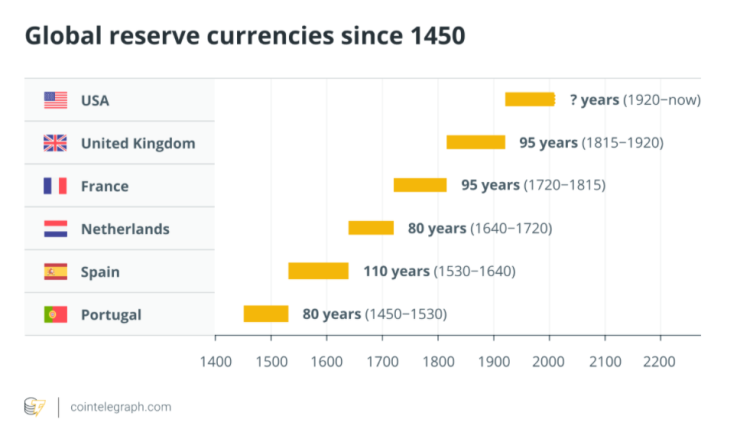
However, it could slowly reduce one of the key structural advantages that has supported American financial leadership for decades.
For American policymakers, the concern is cumulative rather than immediate.
The dollar does not lose its dominance overnight.
It loses it if enough countries gradually conclude they no longer need it.
Why China Matters More Than Iran
Iran alone cannot replace the dollar.
China is the critical variable.
China possesses the world's second-largest economy, the largest manufacturing base, and one of the world's largest energy markets.
If Beijing succeeds in expanding yuan-denominated trade across multiple sectors—not only oil but also commodities, manufacturing, infrastructure, and international lending—the role of the yuan in global commerce would steadily increase.
For now, however, significant obstacles remain.
The Chinese yuan accounts for only a small percentage of global foreign exchange reserves and international payment flows.
China also maintains capital controls that limit the yuan's attractiveness as a true reserve currency.
International investors generally continue to prefer the liquidity, transparency, and legal protections available in American financial markets.
As a result, most economists view China's strategy not as an immediate replacement for the dollar, but as a long-term process of gradual diversification.
De-Dollarization Is a Long-Term Strategy
Much has been written about "de-dollarization."
In reality, it is better understood as reducing dependence on the dollar rather than replacing it entirely.
Countries participating in this trend are seeking greater flexibility.
They want the ability to conduct trade, settle payments, and finance projects without relying exclusively on American financial infrastructure.
Iran has become one of the clearest examples of this approach because years of sanctions have forced Tehran to develop alternative financial channels with China.
Although these systems remain relatively small compared with the global dollar economy, they demonstrate that parallel financial networks can exist alongside the traditional system.
Why the United States Continues to Defend Dollar Dominance
For Washington, preserving the dollar's international role is about far more than national prestige.
Dollar dominance strengthens America's economy, lowers government borrowing costs, supports domestic purchasing power, reinforces global demand for U.S. financial assets, and gives policymakers extraordinary leverage through the international financial system.
Any significant reduction in the dollar's role would gradually weaken these advantages.
This helps explain why successive American administrations—Republican and Democratic alike—have consistently defended the dollar's position at the center of the global economy.
Conclusion
The Iranian regime remains a major security challenge because of its support for terrorist organizations and its destabilizing activities across the Middle East.
At the same time, its growing economic partnership with China represents another strategic concern.
By expanding yuan-based oil settlements and reducing reliance on the U.S. dollar, Tehran and Beijing are testing an alternative financial architecture that, if adopted more broadly over time, could gradually erode one of the most important pillars of American global power.
Whether that effort ultimately succeeds will depend less on Iran than on China's willingness to continue expanding the international role of the yuan and whether other major economies choose to follow.

Loading comments...