The IDF carried out strikes near Tebnine in southern Lebanon after accusing Hezbollah of a serious ceasefire violation. Lebanese authorities reported one person killed and 12 wounded.
The IDF carried out strikes near Tebnine in southern Lebanon after accusing Hezbollah of a serious ceasefire violation. Lebanese authorities reported one person killed and 12 wounded, while US-backed talks between Israel and Lebanon ended earlier than scheduled in Rome.
The Israel Defense Forces carried out strikes in southern Lebanon on Wednesday, saying Hezbollah had committed a “blatant violation” of the ceasefire agreement.
The IDF described the operation as a series of precise strikes but did not immediately disclose the nature of Hezbollah’s alleged violation.
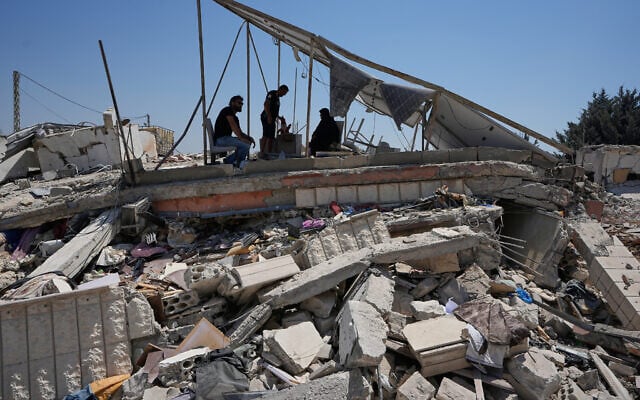
Lebanon’s Health Ministry reported that one person was killed and 12 others were wounded in a strike in Tebnine. Lebanon’s state-run National News Agency said the attack hit a prayer room inside the town’s cemetery. The IDF did not confirm that account or identify the specific site targeted.
IDF Issues Evacuation Warning
Shortly before the strikes, the IDF issued an evacuation warning for residents of Mansouri, ordering people to move at least one kilometer north of the village. It was the first such warning in southern Lebanon in several weeks and preceded the first reported Israeli strikes in the area since August 1.
“In light of the Hezbollah terror organization’s violation of the ceasefire agreement, the IDF is compelled to operate against it with force,” IDF Arabic-language spokeswoman Lt. Col. Ella Waweya said.
Waweya warned that anyone remaining near Hezbollah terrorists, weapons, or military infrastructure was placing their life at risk.
Tebnine is located approximately 25 kilometers from Mansouri, while Mansouri lies about 10 kilometers north of Israel’s border.
Interceptor Fired at Israeli Forces
Later Wednesday, the IDF said an interceptor missile had been launched at a target that was subsequently identified as having been fired by Israeli forces operating in southern Lebanon.
No injuries were reported, and the military said the incident remained under investigation.
Dispute Over Activity Near Mansouri
Lebanese civilians returned to Mansouri during the ceasefire under the protection of the Lebanese army. According to the IDF, Lebanese forces also established a roadblock in the area in violation of the agreement.
The municipality announced on June 22 that residents could return but instructed them to avoid sections of the village located within Israel’s security zone in southern Lebanon.
The area has faced repeated Israeli strikes and artillery fire since the June 26 ceasefire. Israel says military activity remains necessary where Hezbollah continues to operate or maintain terror infrastructure near the border.
The United Nations humanitarian agency reported that more than 800,000 people displaced by the fighting had begun returning home, while more than 360,000 remained displaced.
Rome Talks End Early but Are Expected to Resume
US-backed negotiations between Israel and Lebanon in Rome ended several hours earlier than scheduled on Wednesday, although officials gave differing explanations.
An Israeli source said Israeli Ambassador to the United States Yechiel Leiter accused the Lebanese delegation of repeatedly leaking false information to Lebanese media and asked American mediators to suspend the session.
A US State Department official confirmed that the talks ended early but attributed the decision to “events on the ground,” apparently referring to the Israeli strikes. The official said discussions remained productive and were expected to resume Thursday.
The negotiations are focused on six major issues:
Maritime border arrangements
Land border disputes
Lebanese army control in pilot areas previously held by the IDF
The disarmament of Hezbollah
Stopping Iranian funding to Lebanon
Reconstruction efforts in southern Lebanon
Hezbollah’s Role in the Wider War
The negotiations mark the seventh round of direct, Washington-backed talks since Hezbollah expanded the regional conflict by firing rockets at Israel in March following the killing of Iranian Supreme Leader Ali Khamenei.
Israel responded with major airstrikes and a ground operation against Hezbollah’s forces and infrastructure. Lebanon says more than 4,300 people were killed during the fighting, though its figure does not distinguish between terrorists and civilians.
Israel said in late July that at least 2,500 Hezbollah terrorists had been eliminated, including hundreds from the group’s elite Radwan Force.
Israel has made clear that it will not allow Hezbollah or Iran’s terror network to rebuild military positions along its northern border under the cover of a ceasefire.

Loading comments...