Iran Elevates IRGC Hardliner Who Says Strait of Hormuz Is “More Important Than Dozens of Nuclear Bombs” | Achla News
world
Iran Elevates IRGC Hardliner Who Says Strait of Hormuz Is “More Important Than Dozens of Nuclear Bombs”
Iran just put an IRGC legend in charge of national security.
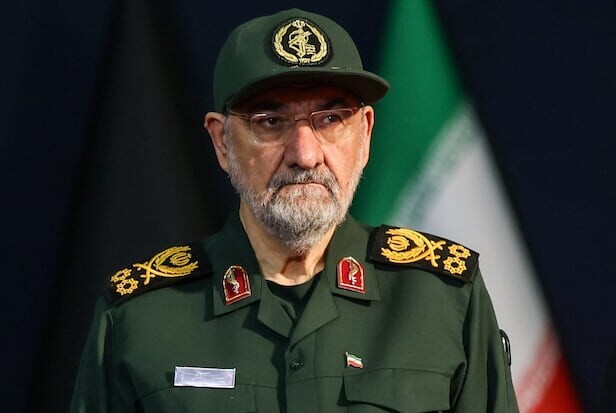
Mohsen Rezaei says the Strait of Hormuz is “more important than dozens of nuclear bombs.”
As Tehran demands U.S. concessions, the regime’s hardliners are tightening their grip.
Iran has appointed veteran Islamic Revolutionary Guard Corps commander Mohsen Rezaei to lead the Supreme National Security Council, strengthening the regime’s hardline camp as negotiations with the United States over reopening the Strait of Hormuz remain stalled.
Iran has placed one of the Islamic Revolutionary Guard Corps’ most prominent hardliners at the center of its national security establishment as tensions continue over the Strait of Hormuz.
Mohsen Rezaei, 72, was appointed secretary of Iran’s Supreme National Security Council on August 9. The powerful council brings together senior political and military officials and plays a central role in decisions involving war, diplomacy and national security.
Rezaei has made clear how strategically important Tehran considers the Strait of Hormuz. Speaking last month at a memorial ceremony for former Supreme Leader Ali Khamenei, he declared:
“This strategic strait is more important than dozens of nuclear bombs, and the Islamic Republic of Iran will protect it.”
His appointment comes as negotiations between Washington and Tehran over reopening the vital waterway remain deadlocked, raising signs that Iran’s hardline security establishment is gaining influence over officials who have favored negotiations with the United States.
A Veteran of the Revolutionary Guard
Rezaei is one of the most influential figures in the history of the IRGC. He served as commander-in-chief of the Revolutionary Guard from 1981 until 1997, a 16-year tenure that remains the longest in the organization’s history.
He played a major role in transforming the IRGC, created after Iran’s 1979 Islamic Revolution, into the powerful military and security organization it is today.
Rezaei has also faced international scrutiny over terrorism allegations. He has been wanted by Interpol in connection with the 1994 bombing of the AMIA Jewish community center in Buenos Aires, Argentina, and was placed under U.S. Treasury sanctions in 2020.
Hardliners Gain Ground in Tehran
Rezaei replaces Mohammad Bagher Zolghadr, who had been viewed as close to parliament speaker Mohammad Bagher Ghalibaf, a figure involved in negotiations with Washington.
Hamidreza Azizi of the German Institute for International and Security Affairs told The New York Times that the personnel change could be intended to limit Ghalibaf’s influence and indicated that hardliners were strengthening their position inside the Iranian system.
The change could also reduce the room for maneuver available to President Masoud Pezeshkian, who has supported negotiations with the United States.
Iran Sets Sweeping Demands
Tehran has reportedly presented Washington with six conditions for reopening the Strait of Hormuz, including the withdrawal of U.S. forces, compensation for wartime damage and the lifting of sanctions against Iran.
The demands would be extremely difficult for the Trump administration to accept and underline the deep divide between the two sides.
As diplomatic efforts struggle to produce a breakthrough, the rise of a longtime IRGC commander to one of Iran’s most important security positions signals that the regime’s hardline faction intends to maintain pressure over the strategic waterway.
Washington Applies Economic Pressure
President Donald Trump, meanwhile, indicated on August 9 that Washington was keeping its military response restrained. In a conversation with Axios, Trump said the United States was handling Iran in a “low-key” manner and was only partially engaged in negotiations.
The United States has continued increasing economic pressure instead, including additional sanctions targeting cryptocurrency platforms accused of helping Iran move or launder funds.
With the IRGC-linked security establishment gaining influence in Tehran, the confrontation over Hormuz is increasingly becoming a test of whether economic pressure and negotiations can force Iran to retreat from demands Washington considers unacceptable.

Loading comments...