Iran has reportedly instructed Hezbollah and other members of its terror network to prepare for a broader regional conflict as fighting with the United States intensifies. The escalation has included American strikes on Iranian infrastructure and Iranian attacks targeting U.S.-allied countries across the Middle East.
Iran has reportedly warned Hezbollah and its other regional allies to prepare for a wider military conflict, raising the possibility that Israel could be drawn directly into the renewed fighting.
Lebanon’s Nidaa Al Watan newspaper reported that leaders of Iran’s so-called “Axis of Resistance” were told that the period of waiting is nearing an end and that military preparations must now take priority.
The report cited information from meetings held in Tehran during the funeral of former Iranian supreme leader Ali Khamenei. According to the report, Iranian officials warned their proxies that any future conflict could be broader and more severe than previous rounds of fighting.
Hezbollah Told to Prepare for Escalation
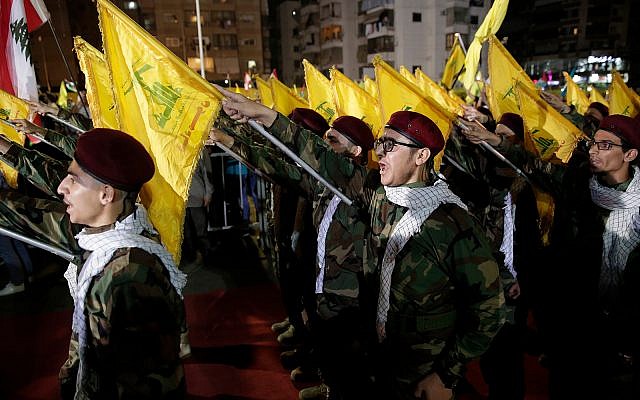
Hezbollah, Iran’s most powerful terror proxy in Lebanon, was reportedly ordered to maintain full readiness for a possible escalation.
Israel has not yet entered the latest round of fighting between Washington and Tehran. However, that could change if Hezbollah resumes attacks against Israeli territory.
Tehran reportedly continues to view Hezbollah as its most important regional asset despite major setbacks suffered by Iran-backed terror groups. Israel severely damaged Hezbollah’s leadership and military infrastructure during previous fighting and established a buffer zone in southern Lebanon to push the terror organization away from the border.
Iran has also used the Houthis in Yemen and other armed proxies across the region to threaten Israel, American forces, international shipping and U.S.-allied Arab states.
U.S. Expands Strikes on Iranian Infrastructure
American forces have carried out strikes against Iran for six consecutive nights, expanding the campaign to include bridges, energy facilities and military infrastructure.
U.S. Central Command confirmed that American forces destroyed a surveillance tower at Iran’s Chabahar port on the Gulf of Oman.
The facility had been used by the Islamic Revolutionary Guard Corps to monitor and target commercial vessels traveling near the Strait of Hormuz, according to CENTCOM.
CENTCOM said destroying the tower weakened the IRGC’s ability to coordinate attacks against civilian ships and helped protect freedom of navigation in regional waters.
Iranian state media reported that eight people were killed and 20 others wounded in overnight American strikes. The reports said infrastructure in southern and western Iran was hit, including six bridges in Hormozgan province.
Iran’s energy ministry also urged citizens to reduce electricity consumption after strikes placed additional pressure on the country’s power grid.
Iran Targets U.S. Allies Across the Region
The IRGC claimed that it attacked American military aircraft in Jordan using ballistic missiles and drones. It also claimed to have damaged U.S. radar systems and aircraft in Qatar.
Those claims were not immediately confirmed by the United States or Jordan. Jordanian authorities said they intercepted three Iranian missiles targeting the kingdom, with no reported injuries or damage.
Kuwait said an Iranian attack damaged a power and water desalination facility, causing a fire and disrupting several production units. Kuwaiti officials urged residents to conserve electricity during the emergency.
The Kuwaiti military also said several service members were wounded after Iranian drones targeted army facilities and camps.
In Iraq’s Kurdistan region, eight members of an Iranian Kurdish opposition group were reportedly killed in drone and rocket strikes blamed on Tehran. Kurdish forces separately said they intercepted eight drones over Erbil.
Strait of Hormuz Remains at Center of Crisis
The confrontation is increasingly focused on the Strait of Hormuz, a critical shipping route for global oil and natural gas supplies.
The United States has increased pressure on Tehran over its threats to international shipping and its attempts to control passage through the waterway. Washington has also reimposed a naval blockade on Iranian ports to restrict Iranian crude-oil exports.
Iranian media reported that a Thai-flagged vessel was targeted after allegedly ignoring IRGC warnings in the strait. The claim has not been independently confirmed.
Shipping traffic through the area has fallen sharply as companies respond to the growing danger. Some vessels are reportedly switching off their tracking systems, while others are avoiding the route entirely.
Israel Faces Growing Threat from Iran’s Terror Network
Iran’s reported instructions to Hezbollah show that Tehran may be preparing to expand the conflict through its regional proxies rather than limiting the fighting to direct exchanges with the United States.
Israel cannot allow Hezbollah or any other Iran-backed terror organization to rebuild its attack capabilities along its borders. Any renewed assault from Lebanon would risk opening another front and triggering a much larger regional war.
The latest escalation once again exposes Iran’s strategy: threaten international shipping, attack American allies and use terrorist proxies to spread conflict across the Middle East.

Loading comments...