Iran Threatens U.S. and Israel Ahead of Khamenei State Funeral | Achla News
world
Iran Threatens U.S. and Israel Ahead of Khamenei State Funeral
Iran issued new threats against the United States and Israel as Tehran prepares for the state funeral of Ayatollah Ali Khamenei, who was killed in Israeli airstrikes at the start of the war. Iranian commanders also warned oil tankers in the Strait of Hormuz to follow Tehran-approved routes or face a forceful response.
Iran warned the United States and Israel on Thursday against any new attack as the regime prepares for the state funeral of Ayatollah Ali Khamenei, who was killed in Israeli airstrikes on February 28 during the opening strike of the war.
Ali Abdollahi, commander of Iran’s Khatam al-Anbiya Central Headquarters, said Iran’s enemies should avoid what he called a miscalculation, warning of harsh retaliation against any threat or aggression.
Khamenei Funeral Expected to Draw Massive Crowds
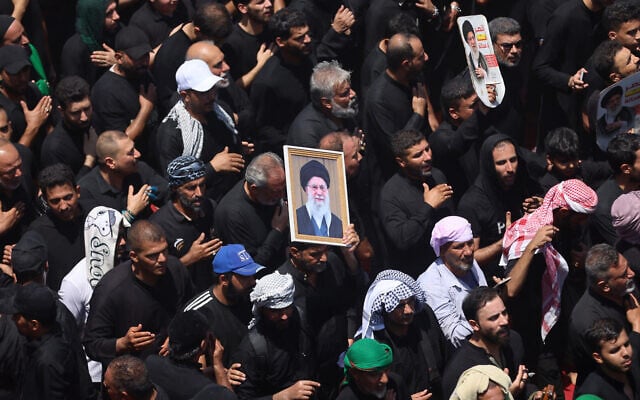
Funeral processions for Khamenei are set to begin Saturday in Tehran and conclude on July 9 with burial in Mashhad, his hometown. Ceremonies are also planned in Qom and Iraq.
Iranian officials claim the funeral could draw 15 to 20 million mourners, making it the largest state funeral in the regime’s history.
Mohammad Bagher Ghalibaf, Iran’s parliament speaker and chief negotiator, called on Iranians to attend in large numbers and said the nation’s call for vengeance must be heard around the world.
Security Tightened Across Iran
Authorities have ordered closures in Tehran and imposed traffic restrictions across parts of the capital. Temporary airspace restrictions are also expected over several cities, including Tehran and Mashhad.
It remains unclear whether Mojtaba Khamenei, Ali Khamenei’s son and successor, will attend. He was reportedly injured in the strike that killed his father and has not been publicly seen since taking office.
Iran Escalates Threats Over Strait of Hormuz
Iran also warned that oil tankers moving through the Strait of Hormuz must use Tehran-approved routes or face an immediate and forceful response.
The Strait of Hormuz remains a critical route for global energy supplies and has become a major point of tension in talks over ending the war.
Iran accused the United States of creating insecurity in the waterway and warned that any American interference would be treated as a threat to Iranian sovereignty.
The United States and Gulf allies have rejected Iran’s efforts to impose new controls and possible fees on passage through the strait.

Loading comments...