Israel’s Channel 12 reports that President Donald Trump canceled a planned strike on Iran after Tehran accepted a compromise to reopen the Strait of Hormuz. Iranian officials and the Mehr News Agency reject that account, instead portraying the decision as the result of American military pressure and missile shortages—claims that remain unverified.
Conflicting Reports Over the Canceled Strike
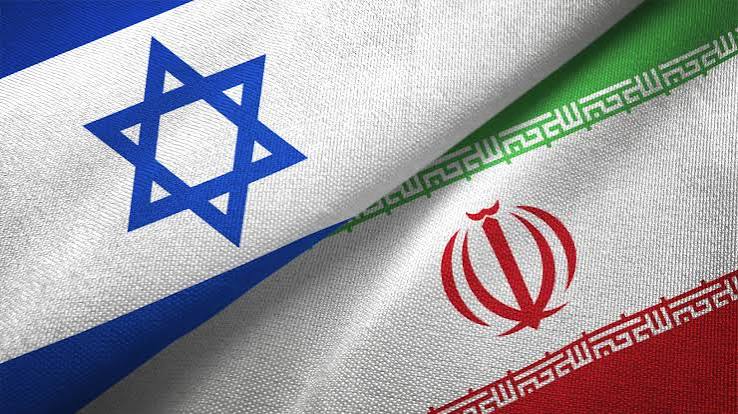
Israeli and Iranian media are presenting sharply different explanations for President Donald Trump’s decision to cancel a planned military operation against Iran.
Israel’s Channel 12 reported that Iranian Foreign Minister Abbas Araghchi accepted a U.S.- and Qatar-mediated compromise for reopening the Strait of Hormuz. Trump reportedly canceled the strike after being informed that Tehran had agreed to the proposal.
Under the reported arrangement, ships entering the Persian Gulf would travel through waters controlled by Iran, while outbound vessels would use the Omani side of the strait. A related proposal would keep Hormuz open for 60 days without transit fees and revive a ceasefire framework between Washington and Tehran.
Channel 12 Says Iran Accepted a Hormuz Compromise
Channel 12 cited diplomats familiar with the negotiations and reported that Qatar held intensive discussions with Iran, the United States, and Oman before informing Trump that Tehran had accepted the compromise.
The report said Oman supported the plan, while questions remained over whether Iran’s Islamic Revolutionary Guard Corps would comply. Qatar was reportedly working to secure additional guarantees.
Trump wrote on Truth Social that Iran and other Middle Eastern countries had accepted the framework and asked him to delay military action. He said the arrangement included the immediate and complete reopening of the Strait of Hormuz and an end to Iran’s nuclear threat.
Iranian officials denied that Tehran had asked Washington to cancel the attack.
Iran’s semi-official Mehr News Agency quoted an unnamed military source accusing Trump of lying and claiming that the United States abandoned the operation because of shortages in air-defense missiles. Mehr also alleged that Vice President J.D. Vance and the chairman of the Joint Chiefs of Staff urged Trump not to proceed.
No independent evidence was presented to support those claims. The Iranian account appears designed to portray Tehran as militarily dominant while avoiding any acknowledgment that pressure on the regime may have forced concessions over Hormuz.
Ebn al-Reza, Iran’s acting defense minister, described Trump’s announcement as “psychological warfare” and “calculated escalation.” He warned that Iran would not be caught off guard or respond passively.
Iranian military sources also issued threats that any future confrontation would reveal which side holds the advantage. Such statements fit Tehran’s longstanding pattern of using aggressive rhetoric to project strength while its leadership faces military, economic, and diplomatic pressure.
Israel Reportedly Left Without Advance Notice
Channel 12 also reported that Israel was expected to participate in the planned operation against Iranian energy and regime targets.
According to the report, U.S. Central Command prepared the attack plan after Prime Minister Benjamin Netanyahu met Trump at the White House. Israel reportedly told Washington that any operation would need to cause serious damage to Iranian economic and regime infrastructure to be worthwhile.
Israeli officials were reportedly not informed in advance that Trump had canceled the strike. Channel 12 said senior Israeli defense and diplomatic officials learned of the decision through the president’s Truth Social post.
“President Trump left us in the fog,” a senior Israeli official told Channel 12.
Israel initially considered whether Trump’s announcement might be intended to mislead Iran ahead of an attack. Israeli officials later contacted their American counterparts and confirmed that the operation had been canceled.
Despite the cancellation, Israeli forces reportedly remain on high alert because Trump could reverse course if Iran violates the emerging arrangement.
Gulf States Pressed Washington in Different Directions
Saudi Crown Prince Mohammed bin Salman reportedly urged Trump to avoid a major attack, amid concerns that Iran could retaliate against Gulf energy infrastructure.
The United Arab Emirates took the opposite position, according to The Wall Street Journal. Emirati officials reportedly argued that stronger U.S. action was necessary because the IRGC would not make meaningful concessions without additional military pressure.
Tehran’s Claims Remain Unproven
The central dispute is clear: Channel 12 reports that Iran accepted a compromise over Hormuz and that Trump canceled the strike after diplomatic progress. Iranian officials and Mehr News Agency insist that Washington backed down because of military weakness.
The Iranian explanation remains unsupported by publicly verified evidence. Tehran has every reason to deny making concessions, particularly when acknowledging them could damage the regime’s image at home and weaken the IRGC’s claim that it controls events in the Gulf.
For Israel and the United States, the test will be whether Iran actually keeps the Strait of Hormuz open, restrains the IRGC, and ends its nuclear and regional threats. Until then, Tehran’s statements should be treated as propaganda—not proof.

Loading comments...