Israel is moving toward a major expansion of the Israeli Air Force after a ministerial committee approved a plan to purchase two additional fighter squadrons: one F-35 squadron and one F-15 squadron. The move could bring four new fighter squadrons into the IAF within less than a decade. The buildup is meant to strengthen Israel’s long-range strike power, air superiority, and ability to confront threats from Iran, Hezbollah, the Houthis, and other regional enemies.
Israel is moving toward one of the largest expansions in the history of the Israeli Air Force.
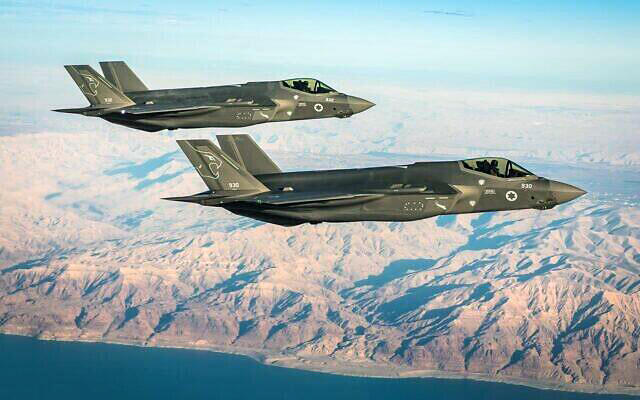
In recent days, the Ministerial Committee for Acquisitions approved a Defense Ministry and IDF plan to purchase two additional fighter squadrons: one squadron of F-35 aircraft and one squadron of F-15s.
The decision could place the IAF on an unprecedented expansion track, with dozens of new fighter jets expected to be absorbed in the coming years, along with major investments in supporting infrastructure.
Four New Squadrons Expected Within a Decade
Within less than a decade, the Air Force is expected to integrate four new fighter squadrons.
This includes earlier procurement decisions made in July 2023, when Israel approved the purchase of a third F-35 squadron, and in November 2024, when Israel approved the acquisition of the first squadron of the advanced F-15IA model.
Those earlier purchases will move forward regardless of the latest committee approval.
F-35 Fleet to Reach Around 100 Aircraft
Lockheed Martin has already supplied the Israeli Air Force with 48 F-35 aircraft under previous orders.
Two more jets are expected to arrive this summer, completing two full squadrons of 25 aircraft each. Both squadrons are stationed at Nevatim Air Base.
Deliveries for Israel’s third F-35 squadron, ordered in 2023 at a cost of about $3 billion using U.S. security assistance, are expected to begin in late 2027.
The aircraft are expected to arrive at a pace of five to six jets per year.
With the latest approval, Israel is now positioned to order a fourth F-35 squadron at similar pricing. Once deliveries are complete, the IAF’s F-35 fleet could reach roughly 100 aircraft.
Israel Seeks More Advanced F-15IA Jets
At the same time, the Defense Ministry is seeking to speed up the purchase of the next-generation F-15IA, manufactured by Boeing.
The first F-15IA squadron was approved in 2024, with deliveries expected to begin toward the end of the decade.
The Defense Ministry wants the second squadron’s production schedule to line up with the first. Each F-15 squadron is estimated to cost around $5 billion.
Deadline Helped Push the Decision
The latest decision came shortly before an important deadline.
Under agreements with Boeing and Lockheed Martin, Israel had options to expand previous orders at fixed prices until early June.
Using those options helps Israel preserve favorable pricing and secure production slots on busy assembly lines, as many countries are increasing arms purchases.
Missing the deadline could have delayed deliveries by years.
F-15IA Brings Heavy Firepower
The Israeli Air Force has operated the F-15 “Baz” since the 1970s.
The new F-15IA is expected to bring a major technological upgrade, including advanced radar systems and the ability to carry up to 17 tons of long-range munitions.
While the F-15IA does not have stealth capabilities like the F-35, its twin-engine design allows it to carry a much heavier payload.
Older Aircraft to Be Retired
As the new aircraft enter service, the IAF is expected to gradually retire older F-15 and F-16 “Barak” models.
Future F-35 squadrons are expected to operate from Tel Nof Air Base. At least one of the new F-15 squadrons may also be stationed there.
The procurement packages also include major infrastructure upgrades to support the new fleets.
Part of a Wider Defense Buildup
The purchases are part of a broader military buildup plan announced by Prime Minister Benjamin Netanyahu.
The plan calls for an additional $110 billion in defense spending over the next decade, equal to about $11 billion more per year.
The goal is to strengthen the IDF against growing and changing regional threats.
Israel Prepares for Long-Range Threats
Defense officials see the new squadrons as a response to Israel’s ongoing strategic challenges.
Iran’s regime remains in power, its nuclear and missile programs continue, and its support for terror proxies such as Hezbollah, the Houthis, and other militias has not stopped.
At the same time, threats from Gaza and Lebanon have not been fully removed.
New Refueling Aircraft Will Boost Strike Range
Israel is also preparing to strengthen its long-range operational reach with new KC-46 aerial refueling aircraft from Boeing.
The first of six refueling aircraft is expected to arrive next month. A second is expected by the end of the year, with the rest to follow in the coming years.
Each aircraft costs about $250 million and will replace Israel’s aging refueling fleet, which has been in service for more than five decades.
Aerial refueling is critical for long-range strike missions, including operations against distant targets such as Iran and Yemen.
During the recent conflict with Iran, the IAF benefited from access to U.S. refueling aircraft. In a future conflict without direct U.S. involvement, Israel’s own refueling fleet could be a decisive factor in sustaining long-range operations.

Loading comments...