
Vice President JD Vance said in an NBC interview that major wars throughout history, including World War I and World War II, ended with “some kind of negotiation.”
The claim is not accurate.
world
Vice President JD Vance claimed that every major conflict in history, including World War I and World War II, ended through negotiation. Historical records show that is false. Germany and Japan surrendered unconditionally in World War II, and many other wars ended through surrender or military defeat, not negotiated compromise.
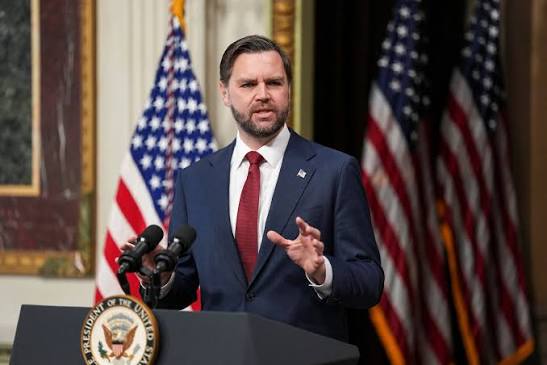
Vice President JD Vance said in an NBC interview that major wars throughout history, including World War I and World War II, ended with “some kind of negotiation.”
The claim is not accurate.
World War II ended with unconditional surrender by both Nazi Germany and Imperial Japan. Germany surrendered in May 1945, and Japan formally surrendered aboard the USS Missouri on September 2, 1945.
Historians note that the Allies dictated the terms. This was not a balanced negotiation or a give-and-take process. It was surrender after military defeat.
World War I also does not fit Vance’s claim cleanly. Germany received a few minor concessions during the armistice process, but the Allies largely imposed their will. The later Treaty of Versailles placed harsh terms on Germany, including territorial losses, disarmament, reparations, and a war guilt clause.
History includes many other examples of wars ending without negotiated compromise. The Third Punic War ended with Rome destroying Carthage. Other conflicts have ended through unconditional surrender or decisive military defeat.
The historical record is clear: many wars do end through negotiations, but not all major conflicts do. Some end when one side is crushed and forced to surrender.
Bottom line: Vance’s statement that “every major conflict in human history” ended with negotiation is false.
Loading comments...