The USD/JPY exchange rate, which had surged as high as 163.86, fell to around 157 yen per dollar following intervention by the U.S. government and the Bank of Japan.
With the yen at its weakest level in roughly 40 years, Japan appeared to conclude that it could no longer stand by without taking action. The United States also seems to have cooperated with the intervention.
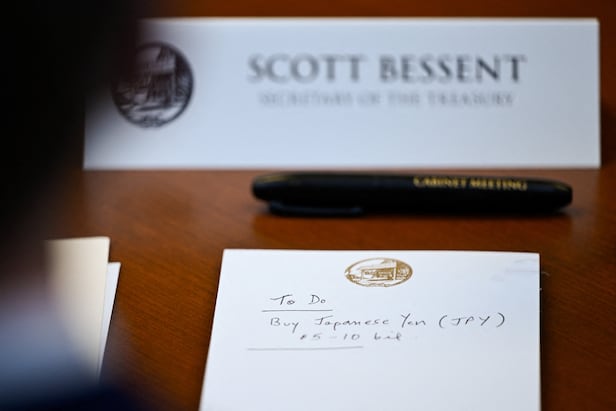
President Trump said the U.S. intervened in support of the yen because of America's strong relationship with Japan. On July 31, U.S. Treasury Secretary Scott Bessent also appeared to signal planned purchases of the Japanese yen when a memo suggesting yen-buying was briefly visible in public during a Cabinet meeting chaired by President Trump. The disclosure was widely viewed as deliberate. Following Bessent's memo, the United States appears to have supported the yen by purchasing it in the foreign exchange market.
If the United States directly intervened in Japan's foreign exchange market to support the yen, it would mark the first such intervention in about 15 years, since the coordinated G7 intervention following the 2011 Great East Japan Earthquake, according to reports.
One important point about Secretary Bessent is that he previously worked at a George Soros-managed hedge fund, where he reportedly earned substantial profits by shorting the Japanese yen. In other words, he once took the exact opposite position from the one he appears to be supporting today by encouraging a stronger yen.
That background suggests he has extensive knowledge of Japan's foreign exchange market. Born in 1962, Bessent graduated from Yale University with a degree in political science and has reportedly studied Japanese.

Loading comments...