Spain Faces Diplomatic and Political Fallout After Massive Migrant Surge Into Ceuta | Achla News
world
Spain Faces Diplomatic and Political Fallout After Massive Migrant Surge Into Ceuta
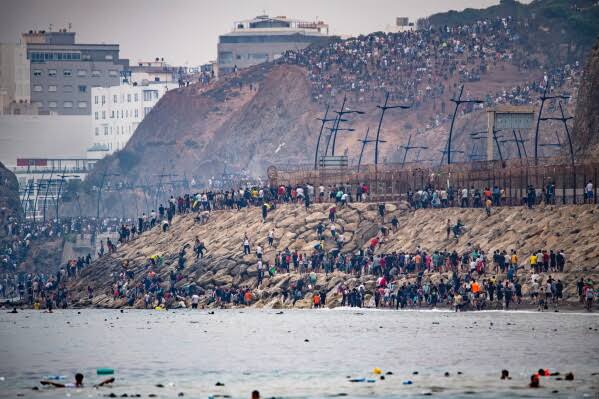
Tens of thousands of migrants crossed from Morocco into the Spanish enclave of Ceuta before most returned, while the incident triggered political disputes inside Spain and renewed tensions across the European Union over border security and the Schengen Agreement.
Spain Faces Diplomatic and Political Fallout After Massive Migrant Surge Into Ceuta
Tens of thousands of migrants crossed from Morocco into the Spanish enclave of Ceuta before most returned, while the incident triggered political disputes inside Spain and renewed tensions across the European Union over border security and the Schengen Agreement.
<p>Spain continues to face diplomatic and political pressure following the large-scale migrant influx into Ceuta, the Spanish enclave on Morocco's northern coast. Although most of the migrants have now returned to Morocco, the political consequences are expected to continue.</p>
<p>According to <em>Le Monde</em>, approximately 60,000 migrants entered Ceuta during the crisis. By Friday evening, roughly 48,000 had already returned to Morocco. The unusual decision by Moroccan authorities to allow such a large number of people to cross the border has fueled widespread speculation about Rabat's motives.</p>
<h2>Trump Criticizes Spain's Border Policies</h2>
<p>President Donald Trump criticized Spain's handling of the crisis, describing the country's immigration policies as the result of "weak laws and poor management." He called the situation a "disaster," arguing that stronger border enforcement is essential to prevent similar incidents.</p>
<h2>Migration Crisis Sparks EU Dispute</h2>
<p>The Ceuta crisis also exposed divisions within the European Union. Italy announced that it would suspend the application of the Schengen free-movement rules with Spain and temporarily close its border to arrivals from the country. Finland and Denmark voiced support for the move.</p>
<p>The European Commission responded by emphasizing that the Schengen Agreement may only be suspended when a member state's internal security faces a serious threat. Spanish Prime Minister Pedro Sánchez rejected calls for division, saying the current situation requires European cooperation rather than political fragmentation.</p>
<h2>Border Security Remains a Growing European Concern</h2>
<p>The events in Ceuta have renewed debate across Europe over border control, migration policy, and the future of the Schengen system. European governments continue to weigh security concerns against their commitments to freedom of movement within the EU.</p>

Loading comments...