The First Opium War and the Sassoons' Expansion into China
The First Opium War erupted in 1839 after tensions between Qing China and British merchants reached a breaking point. Imperial Commissioner Lin Zexu ordered the confiscation and destruction of large quantities of opium held by foreign merchants in Canton, including shipments belonging to Dent & Co., Jardine Matheson, and David Sassoon & Co. Several British merchants subsequently urged the British government to intervene militarily.
Britain's victory led to the Treaty of Nanking in 1842, which fundamentally transformed China's relationship with Western powers. Five treaty ports were opened to foreign trade, Hong Kong Island was ceded to Britain, the Cohong monopoly was abolished, substantial indemnities were imposed on Qing China, and foreign merchants received greatly expanded commercial privileges.
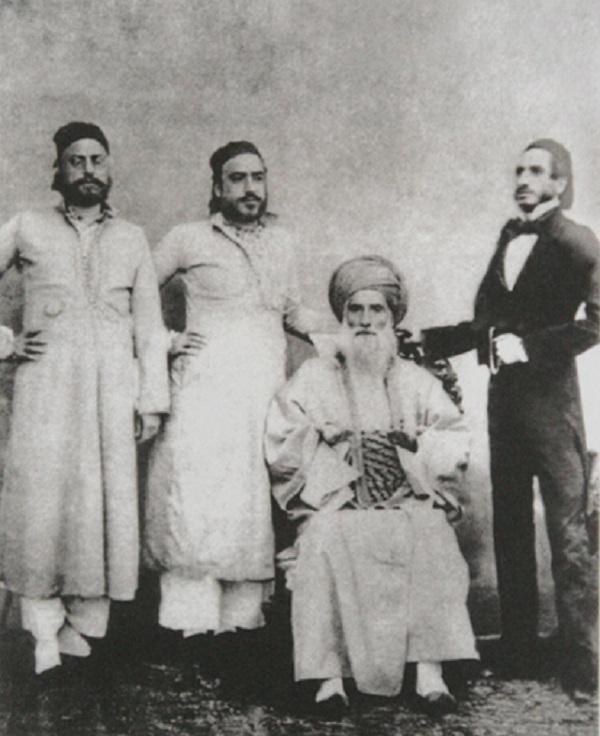
David Sassoon moved quickly to capitalize on these new opportunities. In 1845, he sent his son Elias David Sassoon to Canton, making him one of the first members of the family to establish permanent commercial operations in China. Five years later, David Sassoon personally established the company's Shanghai branch along the Bund, then rapidly developing into one of Asia's most important international commercial districts.
As the Sassoon business expanded throughout China, increasing numbers of Baghdadi Jewish merchants relocated from India to Shanghai. David Sassoon recruited many Jewish employees into his company while actively supporting the establishment of a growing Sephardic Jewish community in the city, creating a commercial and communal network that linked Baghdad, Bombay, Hong Kong, and Shanghai.
The Second Opium War and the Sassoon Empire
The Second Opium War, fought between 1856 and 1860, further expanded foreign commercial access to China.
David Sassoon advocated broader commercial access throughout China, while Britain sought additional trading privileges beyond the treaty ports.
Following the Treaties of Tianjin and the Convention of Beijing, foreign merchants received expanded commercial rights, additional ports were opened, diplomatic missions were permitted in Beijing, and international trade across China increased significantly.
During the 1860s and 1870s, David Sassoon & Co. emerged as one of the dominant firms in the India-China opium trade. The company's direct access to Indian production allowed it to outperform many competitors who relied on intermediaries.
By the late nineteenth century, the Sassoons had diversified beyond opium into textiles, shipping, banking, insurance, and real estate, laying the foundation for one of the largest commercial empires in Asia.
The Founding of HSBC
The establishment of The Hongkong and Shanghai Banking Corporation (HSBC) in 1865 reflected the rapid expansion of British commercial interests throughout Asia following the Opium Wars.
HSBC was created to finance trade between China, India, and Europe at a time when Hong Kong was emerging as Britain's principal commercial gateway to East Asia. The bank's founding brought together leading British merchants operating throughout the region, including representatives associated with Dent & Co., P&O Steam Navigation Company, Jardine Matheson, and other major trading houses.
Both the Baring commercial network and members of the Sassoon family maintained important financial relationships with HSBC during its formative years. Albert Sassoon invested capital through the Chartered Mercantile Bank of India, London and China, while Arthur Sassoon participated in the bank's provisional committee during its early organization.
Wardley House, one of HSBC's earliest headquarters in Hong Kong, was leased from interests connected to the Sassoon family before portions of the property were later purchased by the bank.
Albert Sassoon Expands the Family Empire
Following David Sassoon's death in 1864, leadership of the family's expanding commercial empire passed to his sons, particularly Sir Albert Sassoon.
Albert continued diversifying the family's business interests well beyond the opium trade. Under his leadership, the company expanded into cotton, silk, shipping, insurance, banking, and large-scale real estate investment.
He completed the Sassoon Docks in Bombay, enlarged the family's textile operations, invested in steamship routes linking Calcutta, Hong Kong, Shanghai, and Japan, and later helped establish the Imperial Bank of Persia alongside prominent European financial interests.
At the same time, another branch of the family was created when Elias David Sassoon established E.D. Sassoon & Co. in 1867. That company would become one of India's largest textile manufacturers while maintaining significant commercial operations throughout East Asia.
From Opium to Industry
By the beginning of the twentieth century, changing political conditions and increasing competition encouraged the Sassoons to transform their business model.
David Sassoon & Co. was reorganized as a limited company in 1901, reflecting the growing complexity of its international operations. Family members remained influential, but professional managers gradually assumed greater responsibility.
Meanwhile, international pressure to restrict the opium trade increased. Following agreements reached between Britain and China in 1907, the Sassoon companies gradually withdrew from the China opium business and accelerated their investments in manufacturing, finance, shipping, insurance, hotels, and commercial real estate.
The family's diversification proved successful. By the early twentieth century, its textile mills ranked among India's largest industrial enterprises, while its real estate portfolio in Shanghai continued to grow rapidly.
Victor Sassoon and the Golden Age of Shanghai
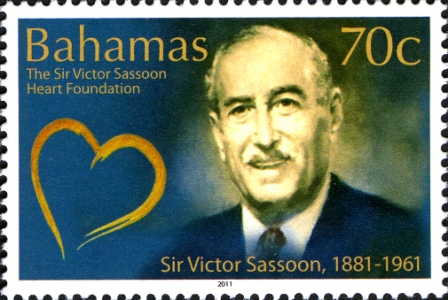
No member of the family became more closely associated with Shanghai than Sir Victor Sassoon.
Recognizing Shanghai's rapid commercial expansion during the interwar years, Victor shifted much of the family's attention from India to China, where he assembled one of the city's largest real estate portfolios.
His developments transformed the Bund into one of Asia's most recognizable skylines. Among the best-known projects were the Cathay Hotel—today's Fairmont Peace Hotel North Building—along with Hamilton House, the Metropole Hotel, and numerous commercial office buildings.
While the Sassoons became one of Shanghai's largest private property owners, they were not solely responsible for developing either the Bund or Nanjing Road. Those districts evolved through investments by numerous British, American, French, and international firms, including Jardine Matheson, Butterfield & Swire, HSBC, Standard Chartered, and the Shanghai International Settlement authorities.
The Sassoons nevertheless emerged as one of the most influential investors in shaping Shanghai's modern commercial district during the first half of the twentieth century.
Philip Sassoon and His Influence in British Politics and High Society
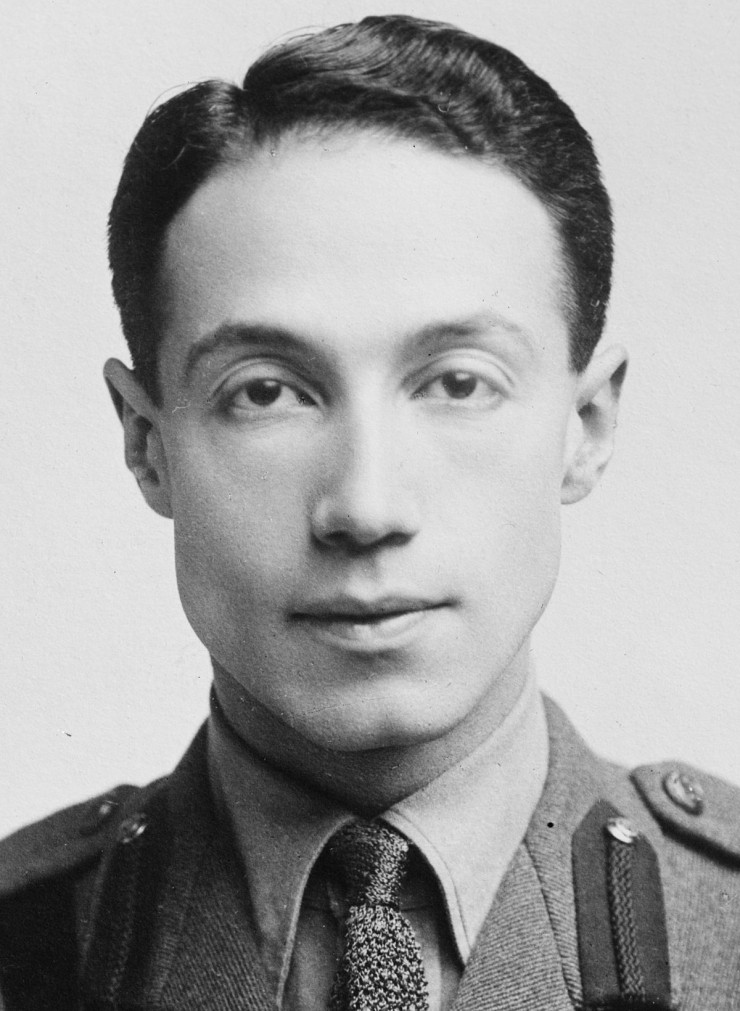
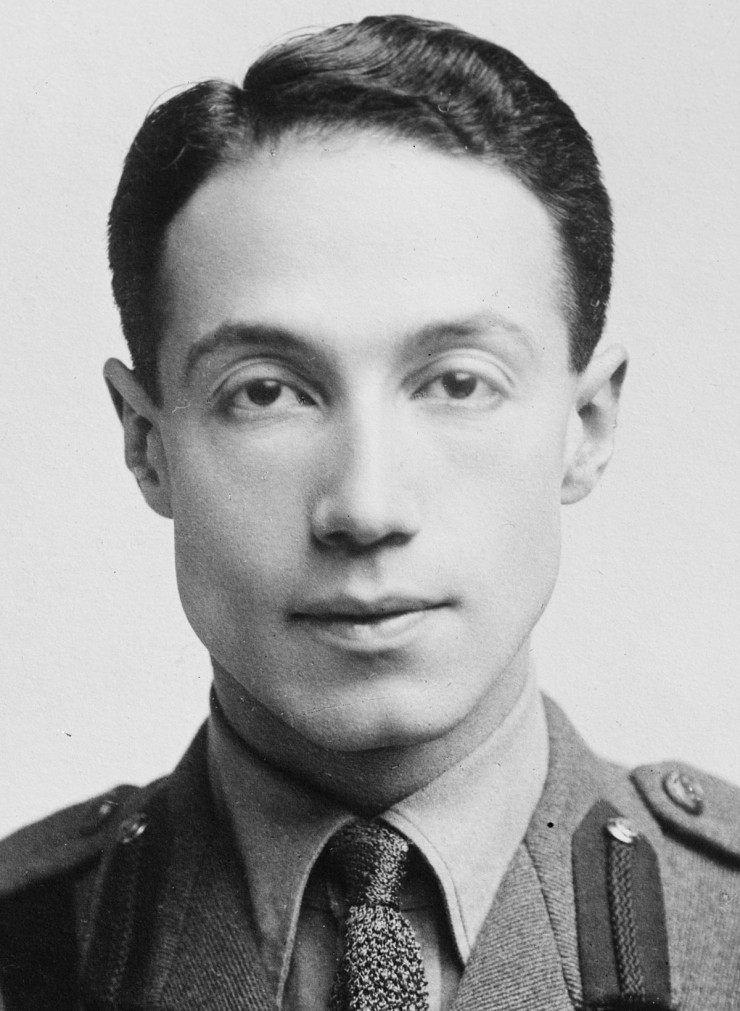
By the early twentieth century, the Sassoon family had moved far beyond trade and finance. Several members had become deeply integrated into Britain's political establishment, royal circles, and aristocratic society. No one represented that transformation more clearly than Sir Philip Sassoon.
Philip was the son of Edward Albert Sassoon and Aline Caroline de Rothschild. Through his mother, he was the great-grandson of James de Rothschild, giving him direct blood ties to the French branch of the Rothschild family. His background therefore united two of the wealthiest and most influential Jewish dynasties of the nineteenth century.
The Sassoons had already built close personal relationships with the British royal family. David Sassoon's sons, David and Albert, were friends of the Prince of Wales, while Arthur Sassoon was especially close to King Edward VII. The king visited Arthur's home repeatedly, with recorded visits in 1898, 1907, 1908, and 1910.
Philip continued that tradition. He developed a close friendship with Edward, Prince of Wales, who later became King Edward VIII. Philip admired him throughout his life and remained supportive during the abdication crisis of 1936, when Edward gave up the throne to marry Wallis Simpson.
Philip's country estate at Trent Park in Cockfosters became one of the most important social gathering places in Britain. Leading politicians, aristocrats, writers, and public figures regularly visited the estate. His guests included Winston Churchill, George Bernard Shaw, and former Prime Minister Arthur Balfour.
His political connections began early. After attending Eton College, Philip studied at Oxford, where Arthur Balfour helped secure his entry into the Oxford Union. He soon moved into national politics and became one of the best-connected members of Parliament of his generation.
Philip served as Parliamentary Private Secretary to Prime Minister David Lloyd George and later held senior aviation posts under several governments. He served as Under-Secretary of State for Air under Stanley Baldwin and Ramsay MacDonald and later became First Commissioner of Works. His political career placed him at the center of Britain's aviation policy, public building programs, and royal affairs during the interwar period.
He also played a significant role in the development of British military aviation. Philip promoted the Royal Air Force, supported the expansion of airfields, and maintained close relationships with senior military and political leaders as Britain prepared for the growing threat from Nazi Germany.
Philip was known for his wealth, polished appearance, lavish entertaining, and extraordinary access to power. His homes were filled with valuable art, and his social circle included royalty, cabinet ministers, military leaders, writers, and artists. He became one of the most visible representatives of the Sassoon family's entry into the British establishment.
He never married and had no children. Philip was widely understood to have been homosexual, although he kept his private life discreet and did not publicly discuss his sexuality.
Philip Sassoon died from influenza on June 3, 1939, at the age of fifty, only three months before Britain entered the Second World War. With no direct heir, much of his estate passed to Hannah Gubbay, the wife of David Gubbay and a member of the extended Sassoon family network.
His death marked the end of one of the family's most politically influential careers. While earlier generations had built the Sassoon fortune through trade in India and China, Philip represented the dynasty's final transformation into a family embedded at the highest levels of British political and royal society.
War, Revolution, and Decline
The Second World War dramatically altered the commercial landscape across Asia.
Although the Sassoon companies initially benefited from wartime manufacturing contracts supporting Allied forces, the political transformation that followed proved far more challenging.
India achieved independence in 1947, and the Chinese Communist Party established the People's Republic of China in 1949. Foreign-owned businesses operating in mainland China increasingly lost their assets through nationalization or were forced to withdraw.
Much of the family's once-vast Shanghai property empire disappeared during this period. Some business operations were sold to international financial institutions, while others relocated to new jurisdictions, including the Bahamas and Switzerland.
By the second half of the twentieth century, the Sassoon family's direct influence had declined considerably, although several businesses founded by family members continued operating under new ownership.
The Kadoorie Family: From Employees to Business Rivals
The Kadoorie family, another Baghdadi Jewish business dynasty, was closely intertwined with that of the Sassoons.
Originally associated with Sassoon enterprises, the Kadoories eventually established independent businesses in finance, utilities, hotels, and real estate. Their investments later included Hong Kong's Peninsula Hotel, China Light & Power (CLP), and numerous commercial properties.
Unlike the Sassoons, who concentrated much of their wealth in Shanghai during the 1930s, the Kadoories gradually shifted substantial assets to Hong Kong before the Chinese Communist victory in 1949. This strategic relocation enabled them to preserve much of their wealth while many foreign-owned assets in mainland China were nationalized.
Conclusion
The history of the Sassoon family extends far beyond the story of a single business dynasty. From their origins in ancient Mesopotamia to their rise in Bombay, Shanghai, Hong Kong, and London, the family helped shape some of the most important commercial developments of the nineteenth and early twentieth centuries.
Their story intersects with the history of the British Empire, the East India Company, the Opium Wars, HSBC, the growth of modern Shanghai, the emergence of Hong Kong as an international financial center, and the global trading networks that connected Europe and Asia.
Whether viewed through the lens of commerce, banking, geopolitics, or urban development, the Sassoons remain one of the most influential merchant dynasties in modern history. Their legacy continues to be reflected in the architecture of Shanghai's Bund, the financial institutions that emerged from Britain's Asian trade, and the enduring presence of Baghdadi Jewish business families throughout Hong Kong.

Loading comments...