The Lesson of the Rothschilds
Few families symbolize wealth more than the Rothschilds.
For generations, their name has become synonymous with immense fortunes, financial power, and influence. Endless conspiracy theories have been built around them, portraying the family as rulers of governments or puppet masters of world events.
Those stories are not what interests me.
The far more fascinating lesson is deeply human.
The Rothschilds demonstrate that unimaginable wealth does not guarantee happiness.
Ferdinand de Rothschild, a prominent member of the Austrian branch of the family, built Waddesdon Manor in England—one of the most magnificent country estates of the nineteenth century. The mansion reflected extraordinary wealth, taste, and prestige.
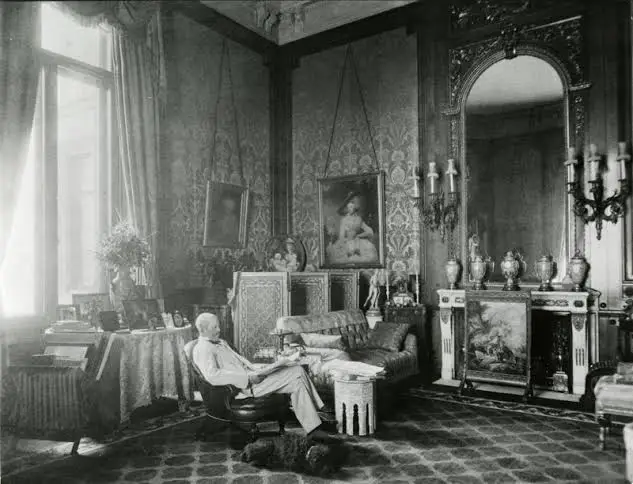
Yet despite living surrounded by luxury, Ferdinand struggled with chronic loneliness and a profound sense of inner emptiness.
His wealth could purchase masterpieces of art, but not inner peace.
His family was hardly unique.
Victor Rothschild became one of Britain's richest men during the twentieth century. To outsiders he appeared to possess everything a person could desire: influence, prestige, intellectual achievement, political connections, and enormous wealth.
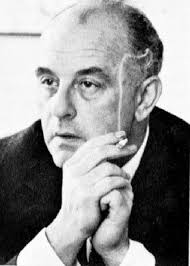
Yet those who met him often saw something very different.
British journalist Malcolm Muggeridge once remarked after meeting Victor Rothschild:
"It is ironic. Everyone wants to be rich, but when you meet a very rich man he is never happy."
Victor himself acknowledged the same truth years later.
"Having a lot of money does not necessarily mean that one is happy."
Perhaps the most revealing description came from Brown University mathematician Philip J. Davis after spending time with Rothschild.
He observed that Rothschild's face showed little sign of tranquility. He smoked heavily and admitted that he had once been a chain smoker before giving it up on medical advice.
Then Davis reflected on something much deeper.
"To have all would be the end. All tension removed. All desire, all passion spent. To have all would be to have nothing. And the other way around, as mystics often assert, to have nothing might very well be to have all."
It is an extraordinary observation.
Human beings imagine that reaching the summit of worldly success will satisfy every longing.
Yet perhaps desire itself gives life its vitality.
If nothing remains to strive for, what remains to live for?
The family's tragedy did not end there.
Victor's son, Amschel Rothschild, was found dead in a Paris hotel room in July 1996 at the age of forty-one. His wife attributed his death to untreated depression, worsened by the recent loss of his mother.
Their lives reveal something profoundly important about human nature: Money can solve many problems, but it cannot solve the problem of being human.
Howard Hughes: The Man Who Could Buy Anything
If the Rothschilds represent inherited wealth, Howard Hughes represented limitless personal ambition.
He became one of America's richest men.
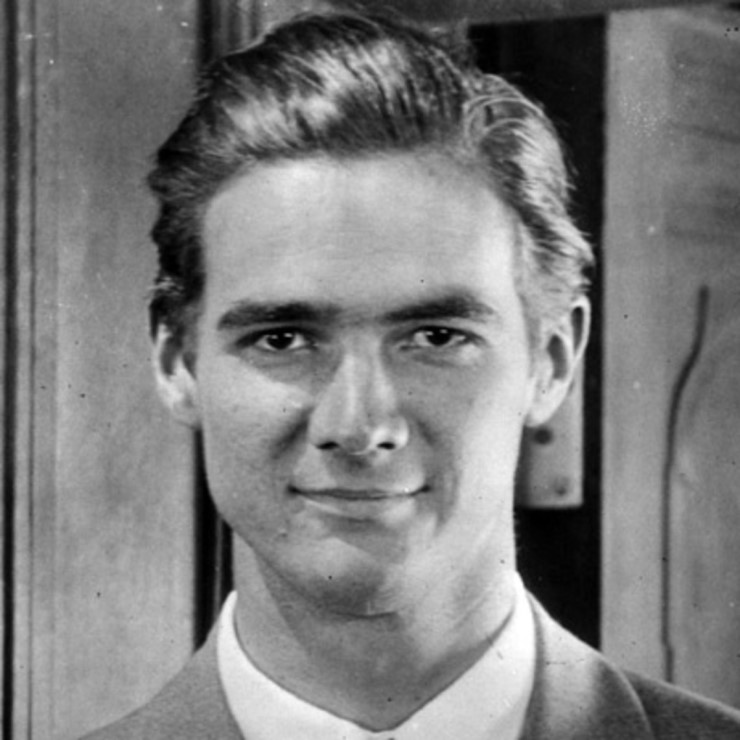
As a young man he slept with many of Hollywood's biggest actresses.
He financed whatever films interested him, regardless of whether they were commercially successful.
His fascination with aviation pushed him to break transcontinental flight records.
Whenever he wanted something, he simply bought it.
When Hughes lived in Las Vegas, owning one luxury hotel was not enough.
He purchased five.
He bought another simply because he wanted somewhere quiet to sleep.
He even purchased a neighboring hotel because its illuminated sign disturbed his rest.
Wanting complete control over what appeared on television, he bought a local television station as well.
To the outside world, this looked like the ultimate freedom.
But it was not freedom.
It became isolation.
As he grew older, Hughes developed severe mental illness, obsessive compulsive behavior, and overwhelming paranoia.
He shut himself away from nearly everyone.
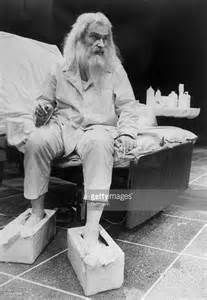
The man who could buy virtually anything eventually barricaded himself from humanity itself.
His fortune had expanded beyond imagination.
His world had shrunk to a prison.
Money had conquered nearly every external obstacle.
It could not rescue its owner from his own mind.
J. Paul Getty: The Billionaire Who Could Not Let Go
Another striking example is J. Paul Getty.
Getty was once regarded as one of the richest men on earth.
His lifestyle became legendary.
Yet so did his obsession with money.
Stories of Getty's extreme frugality became famous.
He reportedly washed his own clothes rather than pay someone else to do it.
He reused envelopes.
He bargained over almost every purchase.
At Sutton Place, his enormous English estate, he even installed a coin-operated pay phone so guests would pay for their own telephone calls.
The episode that permanently defined his public image came in 1973.
His sixteen-year-old grandson, John Paul Getty III, was kidnapped in Italy.
The kidnappers demanded a ransom of seventeen million dollars.
Getty initially refused to pay.
Only after kidnappers mailed the boy's severed ear to a newspaper did he finally agree to contribute part of the ransom.
Even then, he structured much of the payment as a loan to his own son, charging interest.
His grandson survived, but the trauma left permanent scars.
Years later he suffered devastating neurological damage following years of drug addiction and declining health.
The Getty fortune remained intact.
The Getty family did not.
Getty spent his life accumulating wealth beyond imagination.
Yet some of his deepest memories became associated not with generosity, but with fear, mistrust, and isolation.
His story raises an uncomfortable question.
At what point does possessing wealth become being possessed by it?
Bernard Madoff: Wealth Was Never Enough
Bernard Madoff had already accumulated a fortune that most people could scarcely imagine before he orchestrated the largest Ponzi scheme in history.
He had served as chairman of NASDAQ.
He enjoyed enormous prestige on Wall Street.
By any conventional standard, he had already won.
So why wasn't it enough?
When asked why he continued committing fraud despite already being extraordinarily wealthy, Madoff reportedly gave a remarkably revealing answer.
"I wanted to be in the inner circle."
That simple sentence exposes one of the deepest illusions surrounding wealth.
Money is never absolute.
It is almost always relative.
A billionaire compares himself to centibillionaires.
A millionaire envies billionaires.
A successful entrepreneur compares himself with an even more successful entrepreneur.
The finish line constantly moves farther away.
The problem, therefore, is not the size of one's bank account.
It is the size of one's ambition.
A person living in a small apartment can genuinely feel wealthy if he believes he has enough.
A man living inside a Manhattan penthouse can feel poor if his neighbors are richer.
Human desire rarely says, "This is enough."
It almost always whispers,
"Just a little more."
Madoff's story demonstrates that greed is not created by poverty.
It often survives abundance.
Rudolf Diesel, George Eastman, and Kim Jung-ju
The same pattern appears repeatedly across history.
Rudolf Diesel revolutionized transportation by inventing the diesel engine.
George Eastman transformed photography by founding Kodak.
Kim Jung-ju built Nexon into one of Asia's most successful gaming companies.
Each accumulated enormous wealth and worldwide recognition.
Yet none of those accomplishments guaranteed inner peace.
Diesel disappeared under mysterious circumstances before later being found dead.
Eastman, suffering from severe spinal disease and chronic pain late in life, ultimately took his own life.
Kim Jung-ju, despite becoming one of South Korea's richest entrepreneurs, also died after struggling with depression.
Their stories remind us that depression does not discriminate.
It is not impressed by inventions.
It is not intimidated by wealth.
It is not persuaded by success.
Anthony Bourdain: Success Cannot Silence Inner Pain
Anthony Bourdain seemed to possess the life millions dream about.
He traveled the world.
He enjoyed global fame.
He earned admiration as a writer, chef, and television personality.
Millions envied his career.
Very few saw his private struggles.
His death shocked people precisely because it contradicted the public's assumptions about happiness.
If someone who had experienced extraordinary success, wealth, travel, recognition, and admiration could still lose hope, perhaps the equation between success and happiness had always been flawed.
Kevin Systrom: Selling Instagram Didn't End the Struggle
Kevin Systrom became a billionaire before most people have settled into their careers.
Instagram, with only thirteen employees and barely three years of existence, was sold to Facebook for approximately one billion dollars.
Before founding Instagram, Systrom reportedly had little money in his bank account.
After the acquisition, he possessed more wealth than most people could earn in hundreds of lifetimes.
For a while, it felt exhilarating.
Then came something unexpected.
The excitement faded.
Life became difficult in entirely different ways.
Systrom has spoken openly about agreeing with the Buddhist observation that suffering is an inevitable part of life.
Success changes the scale of one's problems.
It does not eliminate problems.
There will always be someone wealthier.
Someone more influential.
Someone building a larger company.
That realization, he says, ultimately taught him humility.
His advice is surprisingly simple.
Choose a game you genuinely enjoy playing.
Life inevitably contains suffering.
The important question is whether the struggle itself is meaningful.
Justin Kan: Success Became Another Competition
Justin Kan experienced a remarkably similar journey.
After selling Twitch for roughly one billion dollars, he assumed happiness would naturally follow.
It did not.
Instead, he found himself comparing his achievements with fellow entrepreneurs who had founded companies like Airbnb and Dropbox.
Although he had already achieved what almost anyone would call extraordinary success, he became obsessed with building something even larger.
Eventually he recognized what Buddhism has taught for centuries.
Human desire has no natural endpoint.
If happiness depends entirely on external achievements, it will always remain just beyond reach.
Real contentment must come from somewhere deeper than money or status.
Bo Shao: The Billion-Dollar Void
Bo Shao's life appears almost impossibly successful.
He became the first Chinese student admitted to Harvard University on a full scholarship.
He later built companies worth billions.
Yet he has described feeling profoundly empty throughout much of that journey.
Only after shifting his attention inward—toward emotions, relationships, and self-understanding—did life begin to change.
Rather than forcing outcomes, he learned to move with life's natural flow.
Ironically, he found that clarity emerged precisely when he stopped obsessing over achievement.
The most important transformation was not financial.
It was psychological.
David Rubenstein's Observation
Carlyle Group co-founder David Rubenstein has spent decades among America's wealthiest people.
His conclusion is refreshingly blunt.
"I know about half of the people on the Forbes 400 list. They are not happy."
He adds another uncomfortable observation.
Many of them also make other people miserable.
The public often assumes that great fortunes must produce great lives.
Someone who has actually spent his career surrounded by billionaires tells a different story.
Wealth and happiness are related.
They are not identical.
Ed Mylett: The Happiest People on the Construction Site
Entrepreneur Ed Mylett recalls an experience that permanently changed the way he thought about success.
At the time, he was building an enormous mansion.
It was the kind of home many people spend their entire lives dreaming about.
Yet while watching the construction, he noticed something that deeply unsettled him.
The Latino construction workers building his dream house laughed together.
They danced while they worked.
They joked with one another.
Despite earning only a tiny fraction of his income, they appeared genuinely joyful.
Meanwhile, he—the owner of the mansion—was anxious, stressed, and constantly focused on what came next.
That moment forced him to confront an uncomfortable possibility.
Perhaps happiness is not something waiting at the finish line.
Perhaps it is something experienced along the road itself.
Too many people postpone happiness.
"I'll be happy when I become rich."
"I'll be happy when I retire."
"I'll be happy when I buy the house."
"I'll be happy when I sell my company."
The tragedy is that life often ends before they ever arrive at that imagined destination.
Charlie Munger: Bigger Isn't Always Better
Charlie Munger spent decades alongside Warren Buffett building Berkshire Hathaway into one of the most successful investment firms in history.
Unlike many billionaires, Munger rarely glorified luxury.
He often argued that excessive wealth creates unnecessary complexity.
A larger house does not simply mean more comfort.
It also means more maintenance.
More decisions.
More employees.
More responsibilities.
More things that can go wrong.
Munger joked that if success means needing a map to find your own bathroom, perhaps something has gone terribly wrong.
His point was serious.
Many luxuries quietly exchange simplicity for complication.
People often mistake complexity for progress.
They are not always the same thing.
Warren Buffett: Happiness Doesn't Begin at Fifty Million Dollars
Warren Buffett has spent his life surrounded by extraordinarily wealthy people.
Few individuals are in a better position to compare wealth with happiness.
His conclusion is remarkably consistent.
"If you're not happy with $50,000 or $100,000 a year, you won't suddenly become happy with $50 million or $100 million."
Buffett has repeatedly observed that becoming extraordinarily rich does not automatically produce a happier life.
More recently, when asked about the secret to aging well, Buffett gave an answer that surprised many people.
He did not mention investment strategies.
He did not mention diet.
He did not mention exercise.
Instead, he pointed toward the people sitting around him.
His longtime business partner.
His family.
His friends.
According to Buffett, by the time someone reaches old age, success is measured by a single question:
How many of the people you want to love actually love you back?
That, he suggested, is the real balance sheet of a human life.
Jean Paul DeJoria: Redefining Success
Jean Paul DeJoria built a multibillion-dollar business after starting with almost nothing.
His rise from living out of his car to becoming one of America's richest entrepreneurs is often celebrated as the classic American success story.
Yet DeJoria defines success very differently from most people.
To him, success is not measured by net worth.
It is measured by health.
Peace of mind.
And happiness.
He often points to another billionaire as evidence.
J. Paul Getty possessed one of history's greatest fortunes.
Yet wealth alone did not produce a joyful life.
For DeJoria, that lesson is impossible to ignore.
Money can be an extraordinary tool.
It should never become the definition of success itself.
Gabor Maté: The Price of Success
Physician and trauma expert Gabor Maté believes modern society often teaches people to sacrifice the very things that make life worth living.
Children naturally play.
They imagine.
They laugh.
They explore.
As adults pursue achievement, careers, and status, many gradually abandon those qualities.
In Maté's words, they leave behind the "magic forest" of friendship, curiosity, and joy.
They become successful.
But they forget how to live.
Asked what he would change if given another life, Maté has suggested he would protect those parts of himself far more carefully.
Success purchased at the expense of one's humanity is simply another form of failure.
Donald Hoffman: History Doesn't Remember Your Wealth
Cognitive scientist Donald Hoffman offers another sobering perspective.
Think about the richest person alive in the year 1743.
Most people cannot even name him.
Even if they could, what difference would it make?
History forgets fortunes astonishingly quickly.
Eventually every billionaire becomes another name in a history book.
Every CEO becomes another obituary.
Every entrepreneur returns to dust.
If success is so temporary, Hoffman argues, then perhaps people should stop organizing their entire lives around accumulating symbols that time inevitably erases.
Live your own life.
Not the one society expects you to perform.
Robert Herjavec: The Final Test
Entrepreneur Robert Herjavec believes the ultimate measure of success comes at the very end of life.
Imagine lying on your deathbed.
Could you honestly say,
"I couldn't have given any more than I did."
That—not wealth, fame, or status—is success.
Because every fortune eventually stays behind.
Only the life we actually lived travels with us to the end.
A Prince Who Walked Away
Perhaps one of the most remarkable examples comes from Malaysia.
Ananda Krishnan became one of Southeast Asia's richest businessmen, building a fortune worth billions of dollars.
Yet his son chose a radically different path.
Rather than inherit immense wealth, he renounced it and embraced the life of a Buddhist monk.
To many observers, giving up billions seemed irrational.
But viewed another way, the decision raises a profound question.
If wealth were truly the highest good, why would anyone willingly walk away from it?
Perhaps he believed there was something more valuable than inheritance.
Something no fortune could purchase.
By now, a pattern has become impossible to ignore.
From banking dynasties and oil magnates to technology founders, celebrity chefs, investors, and billionaires, the evidence points in the same direction.
Money removes many hardships.
It expands choices.
It creates comfort.
It buys freedom from countless practical worries.
But it cannot purchase meaning.
It cannot manufacture love.
It cannot guarantee friendship.
It cannot eliminate loneliness.
It cannot silence regret.
If that is true, then the obvious question follows.
If money is not the ultimate source of happiness, what is?
What Actually Makes Human Beings Happy?
If the lives of the Rothschilds, Howard Hughes, J. Paul Getty, Bernard Madoff, Anthony Bourdain, Kevin Systrom, Justin Kan, and so many others teach us anything, it is this:
Money is immensely valuable—but only up to a point.
It can remove many forms of suffering.
It cannot, by itself, produce a fulfilling life.
For decades, psychologists, economists, neuroscientists, and philosophers have tried to answer the same question:
If wealth is not the ultimate source of happiness, what is?
Remarkably, researchers from entirely different disciplines have reached strikingly similar conclusions.
Money Matters—But Less Than Most People Think
Let's begin by acknowledging an obvious truth.
Money does matter.
Anyone who has struggled to pay rent, worried about medical bills, or wondered where their next meal would come from understands this immediately.
Poverty creates chronic stress.
Financial insecurity damages both physical and mental health.
No serious researcher argues otherwise.
Ed Diener—often called one of the founders of modern happiness research—spent decades studying subjective well-being across more than one hundred countries.
His findings consistently showed that wealthier nations generally report higher life satisfaction than poorer ones. As countries become more prosperous, average life satisfaction tends to increase as well.
Money clearly improves life.
But only to a certain extent.
Diener also found that income affects how people evaluate their lives more strongly than it affects their day-to-day emotional experiences.
In other words, earning more money often makes people say their life is going well.
It does not necessarily make them feel joyful on an ordinary Tuesday afternoon.
That distinction turns out to be enormously important.
The Famous Income Threshold
One of the most influential studies on money and happiness was published in 2010 by Nobel laureate Daniel Kahneman and economist Angus Deaton.
Analyzing data from hundreds of thousands of Americans, they concluded that emotional well-being increased as income rose—but only up to roughly $75,000 per year (about $80,000 in later estimates, depending on inflation).
Beyond that point, additional income did little to improve people's everyday emotional happiness.
The finding quickly entered popular culture.
Many interpreted it as proof that there was a financial ceiling beyond which money simply stopped making people happier.
More recently, however, psychologist Matthew Killingsworth challenged that conclusion.
Using real-time experience sampling from tens of thousands of participants, he found that happiness continued to rise with income, even far beyond the original threshold.
Rather than arguing publicly, Kahneman and Killingsworth did something rare in academia.
They collaborated.
Their joint analysis reached a more nuanced conclusion.
For most people, higher income continues to correlate with greater happiness well beyond $75,000.
But there remains a significant minority for whom more money changes very little.
These individuals typically struggle with deep emotional wounds, grief, depression, chronic illness, or unresolved psychological suffering.
No matter how much their income rises, happiness remains stubbornly out of reach.
Money can solve financial problems.
It cannot automatically heal emotional ones.
The Happiest People Aren't Always the Richest
Perhaps the most surprising evidence comes from societies that possess very little money at all.
A recent study published in the Proceedings of the National Academy of Sciences surveyed nearly three thousand people living in nineteen Indigenous and small-scale societies across Asia, Africa, and Latin America.
Many households had little or no regular cash income.
By conventional economic standards, they were poor.
Yet many reported life satisfaction comparable to, or even exceeding, that found in some of the world's wealthiest countries.
Several communities scored as highly as Scandinavian nations that routinely dominate international happiness rankings.
The implication is profound.
Material prosperity certainly contributes to human well-being.
But it is not the only path to a satisfying life.
Researchers suggested that family bonds, social support, spirituality, and close relationships with nature may explain much of the difference.
These findings challenge one of modern society's deepest assumptions.
Economic growth alone does not automatically produce happier human beings.
The Danish Lesson
Denmark consistently ranks among the happiest countries on Earth.
At first glance, many observers assume the explanation must simply be wealth.
That is only part of the story.
Denmark's educational system minimizes unnecessary competition from an early age.
Academic rankings carry far less social prestige than they do in many countries.
Vocational careers are respected rather than stigmatized, and students who initially choose technical education can later pursue university if their interests change.
The result is a society in which young people spend less of their lives obsessing over status comparisons.
Denmark also maintains one of the world's strongest social safety nets.
Taxes are high.
In return, citizens receive universal healthcare, free education, substantial pension support, and extensive welfare protections.
Financial catastrophe is far less common.
Perhaps most importantly, however, Danish society places enormous value on trust and community.
People are generally comfortable interacting with strangers.
Neighbors know one another.
Communities remain socially connected.
In surveys comparing life satisfaction, Denmark consistently outperforms countries with similar levels of income.
Ed Diener referred to this as part of the "Danish Effect."
The difference cannot be explained by money alone.
The Roseto Mystery
One of the most fascinating natural experiments in public health occurred in a small Pennsylvania town called Roseto.
During the 1950s and 1960s, researchers noticed something astonishing.
Despite eating diets rich in meat and saturated fat, Roseto's residents experienced unusually low rates of heart disease.
At first, scientists searched for dietary explanations.
They found none.
They examined genetics.
Nothing unusual emerged.
Eventually they discovered something far more significant.
Roseto functioned as an extraordinarily close-knit community.
Families lived near one another.
Neighbors visited constantly.
Several generations often shared the same household.
People knew nearly everyone around them.
Researchers concluded that this dense web of social relationships appeared to protect residents from chronic stress and its harmful effects on the body.
The lesson was unexpected.
Human connection itself seemed to function almost like medicine.
The Harvard Study That Lasted Nearly Eight Decades
Perhaps no research project has transformed our understanding of happiness more than the Harvard Study of Adult Development.
Beginning in 1938, researchers followed hundreds of individuals across nearly their entire lives.
Eventually the study expanded to include more than eight hundred participants and became the longest-running longitudinal study of adult development ever conducted.
George Vaillant, who directed the study for decades, reached a conclusion that surprised many observers.
Neither intelligence nor wealth predicted who would enjoy the happiest and healthiest old age.
Relationship quality consistently mattered far more.
His successor, psychiatrist Robert Waldinger, summarized the findings in a sentence that has since become famous:
"Good relationships keep us happier and healthier. Period."
The happiest participants were not necessarily the richest.
Nor were they the most accomplished.
They were the people who maintained warm marriages, close friendships, supportive families, and strong communities throughout their lives.
Loneliness, by contrast, proved toxic.
It increased the risk of depression, physical illness, cognitive decline, and premature death.
The study reached the same conclusion suggested by Roseto, Denmark, and the Indigenous societies.
Human beings are fundamentally social creatures.
Our happiness depends less on what we own than on whom we share our lives with.
Ed Diener's Most Important Discovery
Ed Diener's research repeatedly highlighted the importance of social relationships.
In one study conducted with Martin Seligman at the University of Illinois, researchers examined the happiest ten percent of students—those who reported the highest levels of life satisfaction and the fewest symptoms of depression.
What made them different?
It was not intelligence.
It was not wealth.
It was not exceptional academic achievement.
The single most consistent characteristic was the strength of their relationships with family and close friends.
These students deliberately invested time in the people they loved.
Diener later summarized the implication simply.
To become happier, people should actively develop social skills, cultivate close relationships, and strengthen their social support networks.
This finding would eventually be echoed again and again across psychology.
We Are Literally Wired to Give
Relationships become even more powerful when generosity enters the picture.
Many people assume happiness comes from receiving.
Receiving more money.
Receiving more recognition.
Receiving more possessions.
Receiving more admiration.
Neuroscience suggests the opposite is often true.
Studies using brain imaging have shown that acts of generosity activate the brain's reward circuitry.
Giving to others stimulates regions associated with pleasure, motivation, and emotional satisfaction.
Researchers have also found that helping others can increase the release of hormones associated with trust, bonding, and emotional connection, including oxytocin.
This may help explain why volunteering, charitable giving, and caring for others consistently correlate with greater well-being.
Human beings appear to be biologically designed not merely to consume but to contribute.
The happiest lives are often those directed outward rather than inward.
If relationships increase happiness, why has modern society become increasingly lonely?
One answer may lie inside the smartphone.
Research consistently finds that moderate social media use can enhance connection.
Excessive use often produces the opposite effect.
The more people compare themselves with carefully curated versions of other people's lives, the more dissatisfied they become with their own.
Psychologists refer to this as social comparison.
Someone else always appears wealthier.
More attractive.
More successful.
More accomplished.
More popular.
Eventually the comparison itself becomes addictive.
Ironically, the platforms designed to connect us can gradually replace genuine relationships with endless comparison.
Studies suggest this effect is especially severe among adolescents between the ages of ten and fifteen, whose identities are still developing.
Increased unhappiness has also been observed among young adults entering the workforce and among older adults later in life.
The mechanism is remarkably simple.
The less we compare ourselves with real people we know, and the more we compare ourselves with idealized strangers online, the less satisfied we become.
Money Removes Misery. Relationships Create Happiness.
Taken together, decades of research suggest an important distinction.
Money is exceptionally good at removing certain forms of suffering.
It provides food.
Shelter.
Medical care.
Education.
Security.
Freedom from constant financial anxiety.
Those benefits are enormous.
But once those basic needs are reasonably satisfied, additional income produces diminishing returns compared with other factors.
Relationships continue paying dividends long after wealth reaches comfortable levels.
A trusted spouse.
Faithful friends.
Supportive parents.
Loving children.
Neighbors who genuinely care.
A community where people know one another.
These are the investments that compound across an entire lifetime.
Unlike financial assets, they cannot be purchased on an exchange.
They must be built patiently, day after day.
Why Happiness Is a Journey, Not a Destination
If relationships are so important, why do some people with loving families remain unhappy?
Why do successful entrepreneurs become depressed after achieving their lifelong goals?
Why do celebrities who seem to have everything continue searching for something more?
The answer may lie in a simple truth about human nature.
Human beings do not experience happiness as a permanent possession.
We experience it as movement.
Happiness is rarely found in simply having something.
It is found in becoming.
In almost every area of life, fulfillment emerges not from the destination itself but from the journey that precedes it.
Think about some of life's simplest pleasures.
You are starving after a long day's work, and the first meal tastes extraordinary.
You recover from a serious illness and suddenly appreciate the health you once took for granted.
You spend years searching for the right person and finally fall in love.
You struggle through confusion before finally gaining wisdom.
In each case, joy arises because something has changed.
There is movement from deficiency to fulfillment.
From darkness to light.
From emptiness to abundance.
Without the initial lack, the fulfillment would lose much of its emotional power.
That is why happiness has a dialectical character.
It depends upon contrast.

Why Having Everything Can Become a Curse
This also explains one of the great paradoxes of wealth.
Most people spend their lives envying those who were born rich.
Yet beginning life with every conceivable advantage may deprive a person of one of the greatest sources of fulfillment—the experience of gradual growth.
Imagine starting a video game with every level already completed.
Every weapon unlocked.
Every achievement already earned.
The game would quickly become boring.
The excitement comes from leveling up.
The satisfaction lies in overcoming obstacles.
Life is remarkably similar.
The joy of planting a seed and watching it grow often exceeds the pleasure of simply owning a fully grown tree.
Developing strength is more rewarding than merely possessing it.
Learning is more satisfying than already knowing everything.
The process itself gives life meaning.
This is why many ordinary people quietly experience greater happiness than those born into extraordinary privilege.
A modest family.
Limited resources.
Plenty of room for improvement.
Each step forward becomes meaningful because it represents genuine progress.
As Goethe famously observed,
"He who has never eaten his bread in sorrow does not know the heavenly powers."
Only those who have known hardship fully appreciate deliverance.
The Most Blessed Life
Contrary to popular imagination, the happiest life is not necessarily the one that begins with every possible advantage.
Nor is it one consumed by crushing poverty.
Both extremes carry their own dangers.
Perhaps the most fortunate life is one that begins with enough stability to survive but enough limitations to keep growing.
A person born into an ordinary middle-class family may begin with modest financial means, imperfect relationships, limited knowledge, and countless weaknesses.
Yet each improvement becomes a genuine achievement.
Every lesson learned.
Every friendship formed.
Every hardship overcome.
Every skill acquired.
Every act of personal growth adds another layer of meaning.
Happiness, then, is not simply the accumulation of pleasant experiences.
It is the continual expansion of one's life.
Aristotle: Wealth Is Not the Highest Good
More than two thousand years ago, Aristotle reached a remarkably similar conclusion.
He argued that human beings become unhappy when they mistake external goods—wealth, fame, health, or honor—for the ultimate purpose of life.
These things certainly possess value.
But they are not life's highest aim.
True flourishing, or eudaimonia, comes from living virtuously and developing excellence of character.
Aristotle did not threaten people with divine punishment for pursuing money.
Instead, he made a more subtle observation.
Those who devote themselves entirely to external success eventually become miserable.
Because they spend their lives chasing things that cannot satisfy the deepest parts of human nature.
Character matters more than possessions.
Virtue outlasts wealth.
Bertrand Russell: The Prison of Self-Absorption
Bertrand Russell reached a similar conclusion from a different direction.
In The Conquest of Happiness, he argued that many people create their own misery by becoming excessively preoccupied with themselves.
The more we obsess over our own status, appearance, success, failures, and anxieties, the smaller our world becomes.
Happiness grows when attention turns outward.
Toward meaningful work.
Toward other people.
Toward curiosity.
Toward interests beyond one's own ego.
The happiest individuals are rarely those who spend all day thinking about whether they are happy.
They are too busy living.
Carl Jung: Live According to Your Own Values
Carl Jung believed that every individual possesses a unique psychological path.
Many people suffer not because they fail, but because they succeed at goals that were never truly their own.
Society hands us a ready-made definition of success.
A prestigious career.
Status.
Recognition.
Money.
Yet Jung argued that genuine fulfillment comes only when a person lives according to his own deepest values.
Arthur Brooks tells a similar story.
Earlier in his career, Brooks worked at one of America's most respected think tanks.
It was prestigious.
Meaningful.
Successful.
Yet something felt fundamentally wrong.
Only after becoming a writer did he feel that his life aligned with who he actually was.
He has described conversations with lawyers who privately admitted feeling trapped in careers that impressed everyone except themselves.
Brooks also recounts sitting beside an elderly man on an airplane who bitterly complained that nobody appreciated him and that life was hardly worth living.
At first Brooks assumed he was listening to a failed man.
Later he recognized the passenger as one of the most successful businessmen in the world.
That encounter forced him to rethink everything he believed about success.
External achievement and internal fulfillment are not the same thing.
Often they are barely related at all.
Viktor Frankl: Meaning Is Stronger Than Happiness
If Aristotle explained what human flourishing looks like, Viktor Frankl explained how people survive when happiness disappears altogether.
Frankl, an Austrian psychiatrist and Holocaust survivor, endured the unimaginable horrors of Auschwitz.
He witnessed people stripped of their possessions, their families, their dignity, and even their names.
Under such circumstances, happiness was impossible.
Yet Frankl observed something astonishing.
Some prisoners still found reasons to keep living.
Not because they were happy.
Because their lives still had meaning.
After the war, Frankl summarized his insight in one of the most influential psychological works ever written, Man's Search for Meaning.
His conclusion overturned one of modern society's favorite assumptions.
The primary motivation of human life is not happiness.
It is meaning.
Those who possess a reason to live can endure suffering that would otherwise seem unbearable.
Happiness is fragile.
Meaning is resilient.
Happiness comes and goes with circumstances.
Meaning can survive even inside suffering.
That is why pursuing happiness directly often fails.
People who devote themselves to meaningful work, meaningful relationships, and meaningful service frequently discover happiness as an unexpected by-product.
Happiness Is Fleeting. Meaning Endures.
Investor and writer Takeshi Chin expressed the same distinction in a remarkably simple way.
Happiness is fickle and temporary.
Meaning is strong and everlasting.
A person may experience happiness while enjoying a good meal, receiving a promotion, or taking a vacation.
Those moments are wonderful.
But they inevitably pass.
Meaning is different.
A parent raising children.
A doctor treating patients.
An artist creating beauty.
A teacher shaping young minds.
These pursuits often involve sacrifice, frustration, and exhaustion.
Yet they provide something deeper than pleasure.
They give life direction.
The happiest people are not necessarily those who maximize comfort.
They are those who know why they wake up each morning.
Byron Katie: Our Greatest Enemy Is Often Our Own Mind
Not all suffering comes from external circumstances.
Much of it originates inside our own thoughts.
Author Byron Katie built her philosophy around a simple observation.
"It is not my life that hurts me. It is my thoughts about my life."
She argues that people often become imprisoned by unquestioned beliefs.
"I am a failure."
"I should have achieved more."
"Other people are happier."
"I will never be enough."
These thoughts gradually harden into identities.
Yet when examined carefully, many prove surprisingly fragile.
Katie encourages people to question every painful belief rather than automatically accepting it as truth.
The suffering often begins to dissolve.
This idea closely resembles Bertrand Russell's observation that many forms of unhappiness arise from excessive self-preoccupation.
Our own minds can become the harshest critics we will ever encounter.
Freedom begins when we stop believing every thought that passes through them.
Success Without Meaning
Arthur Brooks argues that modern society has confused achievement with fulfillment.
People climb ladders they never chose.
They pursue careers admired by everyone else.
They collect promotions.
Awards.
Titles.
Prestige.
Only after arriving do they discover that they climbed the wrong mountain.
Brooks recalls meeting highly accomplished professionals who quietly admitted they no longer enjoyed the work that had made them successful.
The tragedy was not failure.
The tragedy was succeeding at someone else's definition of success.
Carl Jung anticipated this insight decades earlier.
He believed psychological health depends upon becoming the person one is uniquely meant to become.
When people ignore their deepest values in order to satisfy external expectations, inner conflict becomes almost inevitable.
No amount of public admiration can compensate for private emptiness.
The Treasure We Search for Is Often Already Ours
The same truth appears again and again—not only in psychology and philosophy, but also in humanity's oldest stories.
One of the most beautiful examples comes from a Jewish folktale preserved by Heinrich Zimmer and later retold by Joseph Campbell.
It tells the story of Rabbi Eisik of Kraków.
After years of hardship, the rabbi dreamed repeatedly that a great treasure lay buried beneath a bridge in Prague.
Finally convinced the dream carried divine meaning, he traveled the long distance to the city.
But soldiers guarded the bridge day and night, making it impossible to dig.
As the rabbi lingered there day after day, the captain eventually approached him and asked why he kept returning.
Embarrassed but honest, Eisik described his recurring dream.
The captain burst into laughter.
"If I believed dreams," he said, "I would travel to Kraków. I once dreamed that a treasure was buried behind the stove in the house of a Jewish rabbi named Eisik, son of Jekel. Imagine searching every Jewish home in Kraków looking for such a man!"
The captain laughed again, amused by the absurdity.
The rabbi, however, immediately understood.
He returned home.
He dug behind his own stove.
There he found the treasure.
Joseph Campbell explained the story's meaning beautifully.
The treasure that ends our suffering is rarely found in distant places.
It lies buried within ourselves.
Yet paradoxically, we often must journey far away before we are ready to recognize what was waiting at home all along.
Sometimes it even takes a stranger to reveal what we ourselves cannot see.
The journey was never about Prague.
It was about discovering home.
The Blue Bird
Maurice Maeterlinck's The Blue Bird tells almost the same story.
Two poor children leave home searching for the mythical Blue Bird of Happiness.
They travel through magical worlds, convinced that fulfillment lies somewhere far away.
After countless adventures, they finally return home empty-handed.
Only then do they discover that the blue bird had been living in their own house all along.
The lesson is timeless.
Human beings have a remarkable tendency to search everywhere except the place they should look first.
We imagine happiness waiting in another city.
Another job.
Another relationship.
Another promotion.
Another million dollars.
Another achievement.
Yet many of life's deepest blessings are already quietly present.
We simply fail to notice them until we stop searching elsewhere.
A Hindu Parable About Happiness
A remarkably similar lesson appears in Hindu tradition.
Across Hindu mythology and philosophy, people often set out in search of something they believe exists somewhere beyond themselves—wealth, enlightenment, power, fulfillment, or liberation.
Yet again and again, the journey leads them back to the same realization.
The greatest treasure is not hidden in a distant kingdom.
It is hidden within the human heart.
The search itself is necessary because people are rarely prepared to recognize that truth at the beginning.
Only after wandering through the world do they become capable of seeing what was there all along.
This is why the Rabbi Eisik story, The Blue Bird, and countless Eastern parables all arrive at nearly the same conclusion despite emerging from completely different civilizations.
Human beings instinctively search outward.
Wisdom eventually teaches them to look inward.
The Greatest Investment
Warren Buffett once observed that, by the end of life, success is measured by how many of the people you hoped would love you actually do.
The Harvard Study of Adult Development reached essentially the same conclusion after following hundreds of lives for nearly eighty years.
Robert Waldinger summarized decades of evidence in a single sentence:
"Good relationships keep us happier and healthier. Period."
The residents of Roseto unknowingly demonstrated it.
The Danes continue to demonstrate it.
Small Indigenous societies demonstrate it.
Ed Diener's research demonstrated it.
George Vaillant demonstrated it.
Even the lives of the Rothschilds, Howard Hughes, J. Paul Getty, Bernard Madoff, Anthony Bourdain, Kevin Systrom, Justin Kan, and countless others demonstrate it—if only by negative example.
History's wealthiest individuals repeatedly show us what money cannot buy.
Science increasingly tells us what can.
Conclusion: The Treasure Was Never Money
The tragedy of many extraordinarily wealthy people is not that they failed to accumulate enough.
It is that they mistook wealth for the treasure itself.
The real treasure was something else entirely.
It was the spouse who remained faithful.
The friend who stayed.
The child who still wanted to visit.
The community that welcomed them.
The work that gave life meaning.
The quiet satisfaction of becoming a better human being.
The joy of helping another person.
The peace that comes from living according to one's deepest values rather than chasing society's definition of success.
Money matters.
But it is only one ingredient in a flourishing life.
Relationships matter more.
Meaning matters more.
Character matters more.
In the end, perhaps the greatest irony is this:
The world's richest people spent their lives proving that happiness cannot be purchased.
The treasure humanity has searched for across civilizations, religions, philosophies, and centuries was never hidden inside a vault.
It was hidden in the ordinary things we so often overlook—in the people we love, the lives we build together, and the meaning we create along the way.


Loading comments...