President Donald Trump met privately with Israeli Prime Minister Benjamin Netanyahu in Washington before the two leaders joined senior American officials and foreign dignitaries at the funeral of former Senator Lindsey Graham. The meeting focused on Iran’s nuclear program and the widening regional conflict, while Graham’s funeral became a rare bipartisan gathering to honor one of Washington’s most influential national security hawks.
President Donald Trump and Israeli Prime Minister Benjamin Netanyahu held private talks at the White House on July 28 before attending the funeral of former U.S. Senator Lindsey Graham, a longtime supporter of Israel and one of Washington’s most outspoken advocates for a hard line against Iran.
The roughly 90-minute meeting came at a critical moment in the conflict with Iran. The two leaders discussed Tehran’s nuclear program, the ongoing regional war and the threat posed by Iran-backed forces across the Middle East.
White House Press Secretary Karoline Leavitt described the meeting as positive and productive. Netanyahu later said the discussion was broad and detailed, adding that both leaders reaffirmed their determination to ensure that Iran never obtains a nuclear weapon.
Trump and Netanyahu Reaffirm a Common Iran Policy
The meeting underscored the close security coordination between Washington and Jerusalem, even as both governments weigh how to bring the conflict to an end without allowing Iran to rebuild its military and nuclear capabilities.
Trump has kept both diplomatic and military options open. Before meeting Netanyahu, he warned that the United States could easily destroy further Iranian nuclear development at the site known as Pickaxe Mountain.
“We can take it out very easily,” Trump said during an interview with Fox & Friends.
Netanyahu has continued to argue that pressure on Iran must be maintained until Tehran’s nuclear threat and regional terror network are dismantled. Israel has repeatedly warned that any agreement that leaves Iran capable of rebuilding its nuclear program would only delay the next confrontation.
No detailed joint statement was issued after the meeting, but both governments emphasized their shared objective of preventing a nuclear-armed Iran.
Iran Strikes Hours After White House Meeting
Only hours after the Trump-Netanyahu talks ended, Iran launched ballistic missiles toward American forces in the Middle East.
U.S. Central Command said the Islamic Revolutionary Guard Corps fired several missiles at approximately 5:45 p.m. local time. All were intercepted, and no successful strike was reported.
Axios reported that the target was a U.S. military base in Jordan, while CNN reported that four ballistic missiles were launched.
The timing of the attack reinforced the urgency of the White House discussions. It also showed that Tehran remains willing to target American forces while relying on missiles, drones and proxy militias to widen the conflict.
American and Saudi aircraft later struck Iran-linked terror logistics and weapons sites in eastern Iraq. CENTCOM said the action followed more than 30 drone attacks directed by the Revolutionary Guard over the previous 72 hours.
A Washington Farewell to Lindsey Graham
After their meeting, Trump and Netanyahu joined Ukrainian President Volodymyr Zelensky and other international leaders at Washington National Cathedral for Graham’s funeral.
The former South Carolina senator was remembered as a major figure in Republican foreign policy and one of the strongest voices in Congress against Iran, Russia, China and North Korea. He was also a consistent defender of Israel and an advocate for stronger action against terror regimes and hostile powers.
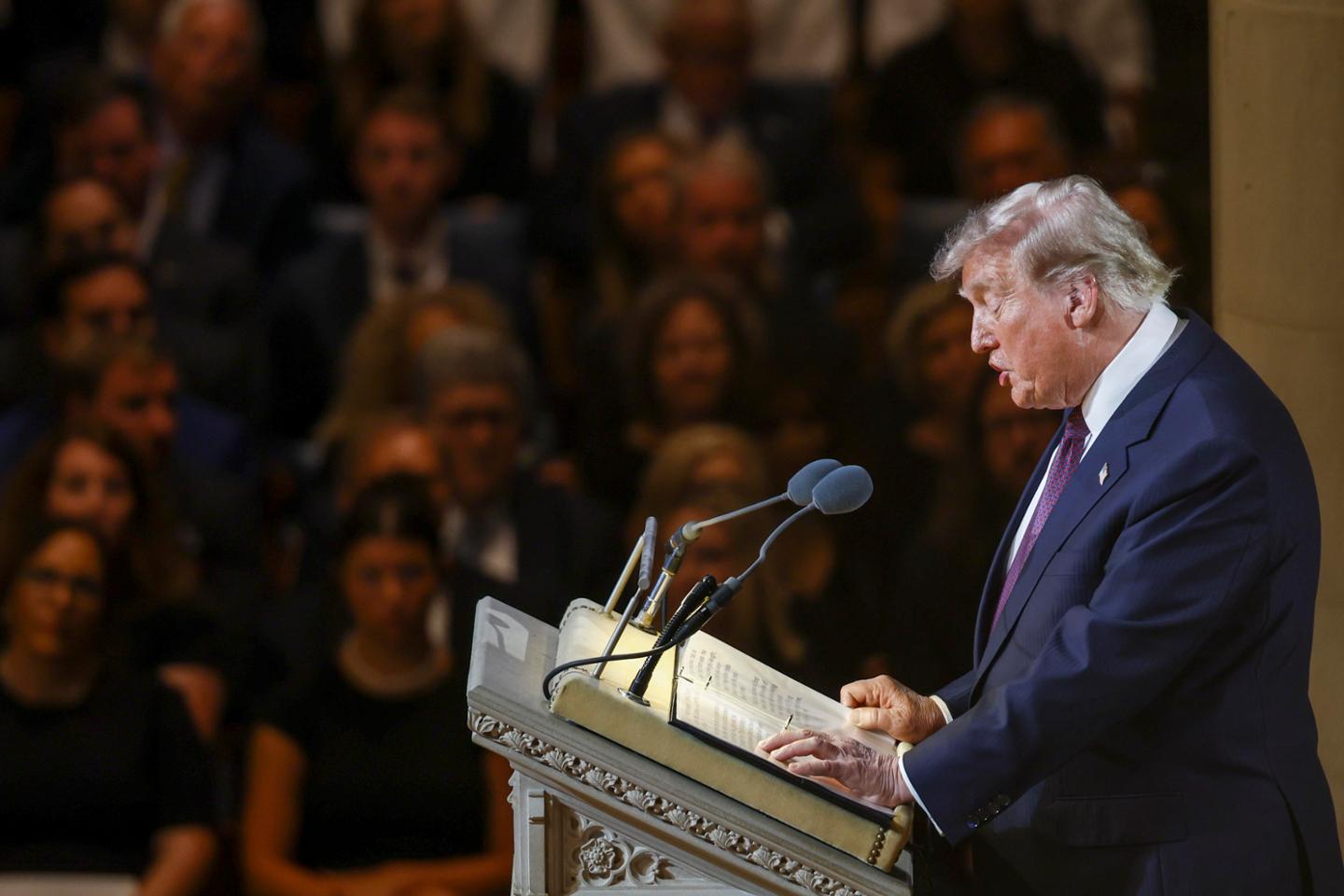
Trump praised Graham as a respected statesman, a giant of the Senate and a “true American original.”
“For more than 30 years, nothing important happened in this capital that Lindsey Graham did not know about,” Trump said. “Nothing important happened anywhere in the world that Lindsey Graham did not have an opinion about.”
Trump also described Graham as intensely hawkish, joking that he had never seen a war Graham did not want to discuss or confront.
A Rare Bipartisan Gathering
Graham’s funeral brought together Republicans and Democrats at a time of deep political division in Washington.
Vice President JD Vance remembered Graham’s loud, infectious laugh and his willingness to persuade people rather than simply dismiss them. Senate Majority Leader John Thune noted that lawmakers from both parties had gathered together to say goodbye.
Graham often took firm conservative positions, but he also defended the Senate as an institution and resisted efforts to eliminate political opposition through procedural shortcuts. That record helped explain why his funeral drew figures from across the political spectrum.
Senior members of the Trump administration attended, including Secretary of State Marco Rubio, Treasury Secretary Scott Bessent and White House Chief of Staff Susie Wiles. Finnish President Alexander Stubb also joined Netanyahu and Zelensky at the service.
Graham’s Foreign Policy Legacy
The gathering reflected Graham’s unusual influence in both American politics and international affairs. Though he never reached the presidency, his funeral drew a level of attention normally reserved for a head of state.
His legacy was especially visible in the events surrounding the service. Trump met separately with Netanyahu and Zelensky, discussing two wars that Graham had followed closely and spoken about forcefully throughout his career.
For Israel, Graham was more than a political ally. He was one of the clearest voices in Washington arguing that Iran, Hamas, Hezbollah and other terror forces must be confronted before they can pose an even greater threat.
His funeral became both a tribute to a major American political figure and a reminder that the national security battles he spent decades warning about remain unresolved.

Loading comments...