Collapse From the Inside
The core of Trump’s approach is that Iran should be made to fall apart internally, not simply be attacked externally. The regime’s greatest weakness may not be its military sites, but its own people’s growing anger over hunger, inflation, unemployment, and a collapsing currency.
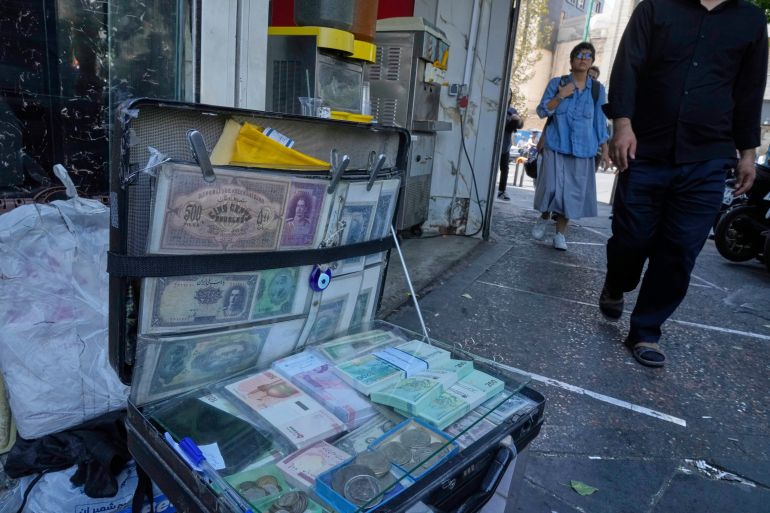
Iran’s rial has reportedly fallen to historic lows on the Tehran black market, while basic food prices are soaring. Ordinary Iranians are struggling to buy meat, dairy, cooking oil, and other essentials. For many families, even red meat has become impossible to afford.
Food inflation has reportedly reached extreme levels, with cooking oil prices rising more than 200% and dairy and meat prices more than doubling. The middle class is being pushed into poverty, and working families are being crushed by prices that rise far faster than wages.
The Regime Is Losing Its Economic Lifeline
The maritime pressure has cost Iran billions in lost oil revenue. With oil exports blocked or reduced, the regime is losing access to the foreign currency it needs to keep the state running.
That creates a dangerous cycle for Tehran: less oil money, fewer imports, more shortages, higher prices, rising unemployment, and deeper public anger.
The Gulf states are reportedly divided on direct strikes against Iran. They may support military action only if the United States and Israel fully commit to regime change. But Trump’s current bet appears to be that the regime can be weakened first by economic suffocation.
The Risk in Trump’s Timeline
Balazada warned that Trump’s timeline may be based on the belief that Iran could reach economic collapse within three to four months. But he also cautioned that Iranians have shown a strong ability to endure suffering.
That is the key risk. The Iranian people may suffer longer than Washington expects, while the regime continues using repression to survive.
Still, the pressure is real. Iran is facing war strain, a collapsing currency, food inflation, lost oil revenue, and growing fear of public unrest. Trump’s strategy is to make the regime rot from the inside until it has no choice left.
Bottom Line
The Trump-Netanyahu disagreement is not only about whether to strike Iran. It is about how to bring the regime to its weakest point.
Netanyahu sees Iran as a military threat that must be dealt with directly. Trump appears to believe the regime can be forced toward collapse by economic pressure, lost oil income, and internal unrest.
The target is the same: the Iranian terror regime. The question is whether it falls by force from the outside, or by collapse from within.
Members-only
Continue reading with a paid membership.
Upgrade to Patriot or Founding Member to unlock this section and other members-only posts.

Loading comments...