2013: approximately 2 lira per U.S. dollar
Recent levels: roughly 46 lira per U.S. dollar
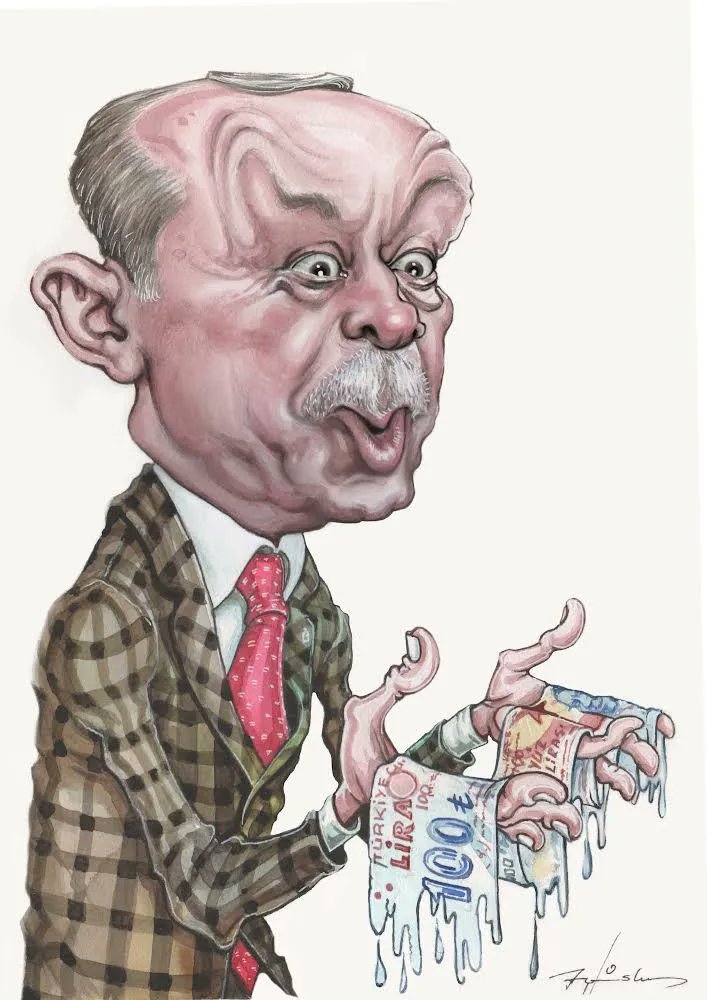
Total currency depreciation: approximately 96%
This means that while stock prices were rising dramatically in local currency, the purchasing power of that currency was collapsing at nearly the same time.
For investors measuring wealth in dollars or gold, the picture looks completely different.
Liquidity, Not Productivity
One of the primary drivers behind Turkey's market rally was an extended period of loose monetary policy. President Recep Tayyip Erdoğan repeatedly advocated lower interest rates despite rising inflation. Several central bank governors who resisted these policies were replaced.
Large amounts of liquidity entered the economy, boosting demand for financial assets and real estate before eventually feeding broader consumer inflation.
This created an environment where stocks appreciated not because businesses became dramatically more profitable, but because cash itself was rapidly losing value.
Negative Real Interest Rates Destroyed Savings
In 2022, Turkey's policy interest rate stood around 9% while consumer inflation reached approximately 85.5%.
Such deeply negative real interest rates encouraged households to abandon traditional savings accounts.
Instead, many shifted their money into:
Dollar deposits increased from roughly 35% of deposits in 2012 to approximately 68% by 2021, reflecting declining confidence in the national currency.
Millions Entered the Stock Market
The number of retail investors exploded from roughly 2.3 million in 2021 to approximately 9.3 million by 2023.
For many Turks, buying stocks was less about optimism for corporate earnings than protecting purchasing power from inflation.
The government also expanded mandatory pension fund allocations to equities, increasing required exposure from 10% to 30%, further supporting stock prices.
Stocks Rose, But Real Wealth Did Not
The biggest misconception surrounding Turkey's market is that soaring stock prices automatically created wealth.
Measured in Turkish lira, investors who placed 100 units into the stock market in 2013 would have seen that investment grow dramatically.
Measured in U.S. dollars, however, those returns were far less impressive. Evaluated against gold, the market actually lost value over the same period.
In other words, much of the apparent gain reflected currency debasement rather than genuine economic expansion.
Foreign Investors Left
International investors recognized the currency risks early.
Domestic investors increasingly replaced foreign capital, helping sustain elevated stock prices despite weakening economic fundamentals.
Gold Became the Ultimate Safe Haven
Turkey has one of the world's largest private gold holdings.
Households reportedly own around 5,000 tons of gold—far exceeding the reserves held by many central banks.
Restrictions on gold imports also pushed domestic gold prices even higher than international benchmarks, reinforcing gold's role as a store of value.
Rising Inequality and the Collapse of the Middle Class
Asset inflation disproportionately benefited those who already owned stocks and real estate.
Meanwhile, wage earners and households holding cash experienced severe losses in purchasing power.
According to the figures cited:
The richest 10% control approximately 68% of total wealth.
The bottom 50% hold only about 2.6% of net wealth.
Median real household wealth has declined despite booming asset prices.
This widening gap has contributed to pressure on household finances, declining affordability, and long-term social challenges.
Economic Growth Has Slowed Sharply
While financial markets surged, economic momentum weakened.
GDP growth slowed from approximately 11.4% in 2021 to around 3.2% in 2024.
Industrial production has contracted.
Corporate insolvencies have increased.
High borrowing costs continue to pressure businesses and consumers.
After inflation accelerated, the central bank ultimately raised interest rates sharply, creating additional strain on heavily indebted companies.
Three Types of Stock Market Rallies
Not every bull market reflects a healthy economy.
Earnings-driven rallies: Corporate profits improve and stock prices rise accordingly.
Liquidity-driven rallies: Easy money pushes asset prices higher.
Currency flight rallies: Investors abandon cash because they no longer trust the currency.
Turkey's experience appears to combine the second and third categories, making headline market gains a poor indicator of overall economic health.
Conclusion
Turkey's stock market performance demonstrates why headline index returns can be misleading. A nearly 1,800% increase in stock prices did not translate into broad-based prosperity. Instead, a collapsing currency, persistent inflation, capital flight, weakening real purchasing power, and widening inequality reveal a far more fragile economic reality.
For investors, the key lesson is simple: stock market gains should always be evaluated alongside currency stability, inflation, and real purchasing power—not headline percentages alone.

Loading comments...