U.S. Intelligence Assesses Iran’s New Supreme Leader May Favor Advanced Nuclear Weapons | Achla News
world
U.S. Intelligence Assesses Iran’s New Supreme Leader May Favor Advanced Nuclear Weapons
U.S. intelligence agencies reportedly assess that Iran’s new supreme leader, Mojtaba Khamenei, may be more interested than his father in developing advanced nuclear weapons. Iran has also moved centrifuges into a deeply buried facility near Natanz that may be beyond the reach of conventional U.S. bunker-buster bombs.
U.S. intelligence agencies assess that Iran’s new supreme leader, Mojtaba Khamenei, may be more open to pursuing nuclear weapons than his father, former Supreme Leader Ali Khamenei, according to a report cited by The New York Times.
Mojtaba Khamenei has not publicly called for building a nuclear bomb. However, U.S. officials reportedly believe that Iran’s new hardline leadership may support the development of an advanced nuclear weapon capable of being carried by a long-range missile.
The assessment is based largely on statements and intercepted communications collected before the latest war, officials cautioned. Mojtaba has reportedly limited his communications and public activity since being wounded early in the conflict.
Iran Moved Centrifuges Into Deep Underground Facility
Iran has not shown clear signs that it has restarted uranium enrichment or resumed full nuclear operations. Still, U.S. officials say Tehran has taken steps to preserve important nuclear equipment.
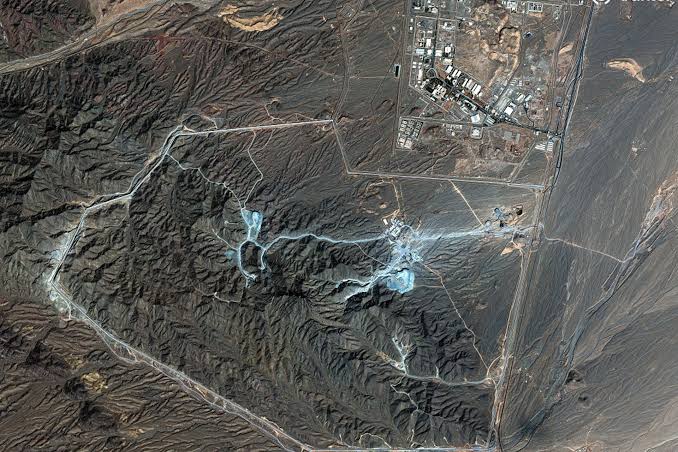
Some centrifuges were reportedly moved to the fortified Pickaxe Mountain complex near the Natanz nuclear site in central Iran. The underground facility is believed to be buried so deeply that even the most powerful conventional U.S. bombs may be unable to destroy it from the air.
The site was not targeted during last year’s American strikes on Iran’s main nuclear facilities. According to U.S. assessments, Iran studied the damage from those attacks and concluded that the Pickaxe Mountain tunnels were deep enough to survive conventional airstrikes.
Iran nevertheless appears concerned that U.S. forces could launch a ground raid, enter the complex, and destroy it from inside. Intelligence reports indicate that Tehran has moved additional forces to the area to deter such an operation.
Last year’s U.S. strikes succeeded in halting the immediate progress of Iran’s nuclear program, officials said. Intelligence assessments found that the damage could have delayed the program by only several months if Iran had immediately repaired its centrifuges or restarted enrichment elsewhere.
Iran did not take those steps, according to the report. However, its stockpile of highly enriched uranium reportedly remains intact, leaving Tehran with a dangerous foundation for any future weapons effort.
Hardliners May Feel Vindicated
Ali Khamenei had publicly endorsed a religious decree prohibiting the use of nuclear weapons. U.S. officials reportedly believe Mojtaba does not share the same level of hesitation.
He is said to have distanced himself from a recent agreement with the United States that included a commitment not to pursue nuclear weapons, saying he permitted the arrangement but did not support it as a matter of principle.
Iranian hardliners who have long argued that only nuclear weapons can deter attacks by Israel or the United States may now believe their position has been strengthened.
The latest assessment could increase pressure on President Donald Trump to consider stronger military action. Iran’s regime must not be allowed to hide critical nuclear assets underground while preserving the option to build a weapon that could threaten Israel, the United States, and the wider region.

Loading comments...