The United States and Iran appear close to signing a ceasefire Memorandum of Understanding (MOU), potentially opening the door to broader negotiations after months of conflict. However, Washington, Tehran, and Israel continue to present sharply different views on key issues, including Iran’s nuclear program, sanctions relief, the future of the Strait of Hormuz, and regional security. At the same time, Israel is maintaining military pressure against Hezbollah in southern Lebanon, signaling that major regional disputes remain unresolved despite progress toward a U.S.-Iran agreement.
Conflicting Narratives Surround Proposed U.S.-Iran Agreement
American and Iranian officials have both indicated that a ceasefire MOU could be signed within days, but their public descriptions of the agreement differ significantly.
The Trump administration has presented the deal as a pathway toward dismantling Iran’s nuclear program. Senior U.S. officials have stated that Iran would commit to never developing nuclear weapons and that future negotiations would focus on removing nuclear materials and dismantling facilities.
Iranian officials, however, insist that the current MOU is focused primarily on ending hostilities and extending a ceasefire. Tehran argues that nuclear negotiations will only begin in a later phase and has rejected several American characterizations of the agreement.
Nuclear Disputes Remain Unresolved
One of the largest disagreements involves Iran’s enriched uranium stockpile.
U.S. officials have suggested that enriched nuclear material would ultimately be removed and destroyed under future technical negotiations. Iran, however, maintains that any handling of enriched uranium must occur inside Iran and has proposed dilution rather than removal.
The conflicting statements underscore how many of the most sensitive nuclear issues have been deferred into a proposed 60-day follow-up negotiation process.
Disagreement Over Economic Benefits and Sanctions Relief
Washington and Tehran also disagree on what economic benefits Iran will receive.
The Trump administration has repeatedly stated that Iran will receive no immediate financial rewards simply for signing the agreement. U.S. officials describe the arrangement as performance-based, with any sanctions relief or economic benefits tied to verified Iranian compliance.
Iranian media, meanwhile, have reported that the proposed framework includes access to frozen assets and sanctions-related provisions. President Trump has rejected those reports, calling them inaccurate and inconsistent with the negotiated text.
Strait of Hormuz Remains a Key Flashpoint
The future operation of the Strait of Hormuz remains another major point of contention.
According to U.S. officials, the agreement would immediately reopen the strategic waterway while ending American maritime restrictions against Iran. Washington expects international cooperation to restore normal shipping activity.
Iran, however, has indicated that conditions in the strait will not simply return to their pre-war status. Iranian officials have suggested that transit fees may be imposed on vessels using the waterway and have emphasized Iranian sovereignty over the region.
President Trump is expected to raise post-war stabilization efforts during the G7 summit in France, including possible international cooperation to clear naval mines from the Strait of Hormuz. U.S. officials have indicated that several G7 members possess mine-clearing capabilities and could participate in reopening global shipping lanes.
Israel Continues Operations Against Hezbollah
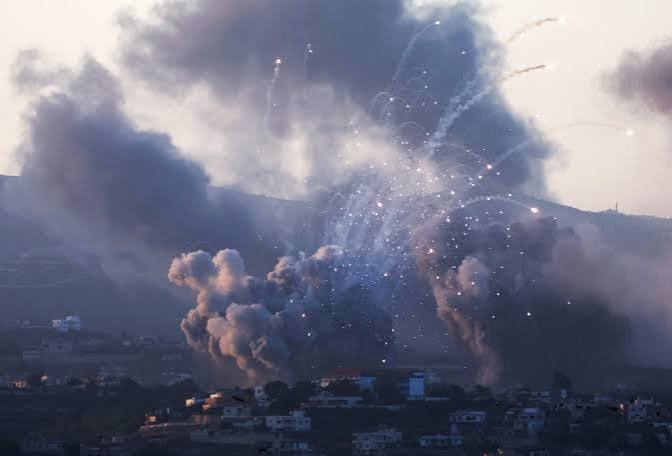
While U.S. and Iranian negotiators move closer to a ceasefire agreement, Israel continues military operations against Hezbollah terrorists in southern Lebanon.
The IDF issued evacuation warnings across multiple areas near Nabatieh before conducting airstrikes targeting Hezbollah-linked positions. Lebanese reports claimed casualties following the strikes.
Additional reports indicate Israeli forces have advanced toward strategically important terrain overlooking key transportation routes in southern Lebanon. The operations come amid ongoing efforts to prevent Hezbollah from rebuilding military infrastructure near Israel's northern border.
Israel has consistently maintained that any regional arrangement must address the threat posed by Hezbollah and other Iran-backed terror networks operating along its borders.
Iran Coordinates with Russia and China
As negotiations continue, Iran has also intensified consultations with Russia and China.
Iranian Deputy Foreign Minister Kazem Gharibabadi confirmed meetings with the Russian and Chinese ambassadors in Tehran to discuss the status of the proposed Islamabad MOU. Tehran emphasized that strategic cooperation among the three countries would continue to expand.
Both Moscow and Beijing have criticized previous U.S. military actions against Iran while advocating diplomatic solutions to the conflict.
Major Questions Remain Despite Progress
Although all sides acknowledge that an agreement may be imminent, fundamental disagreements remain unresolved.
The United States views the MOU as the beginning of a process that could ultimately dismantle Iran’s nuclear capabilities. Iran portrays it primarily as a ceasefire framework while resisting key American interpretations of its obligations. Israel, meanwhile, continues military action against Hezbollah and remains focused on eliminating threats from Iran-backed terrorist organizations operating in Lebanon.
With conflicting positions from Washington, Tehran, and Jerusalem still evident, the signing of a ceasefire MOU may mark the beginning of a new diplomatic phase rather than the end of regional tensions.

Loading comments...