U.S.-Iran Conflict Escalates as Washington Launches New Strikes and Tehran Threatens Hormuz Closure | Achla News
breaking
U.S.-Iran Conflict Escalates as Washington Launches New Strikes and Tehran Threatens Hormuz Closure
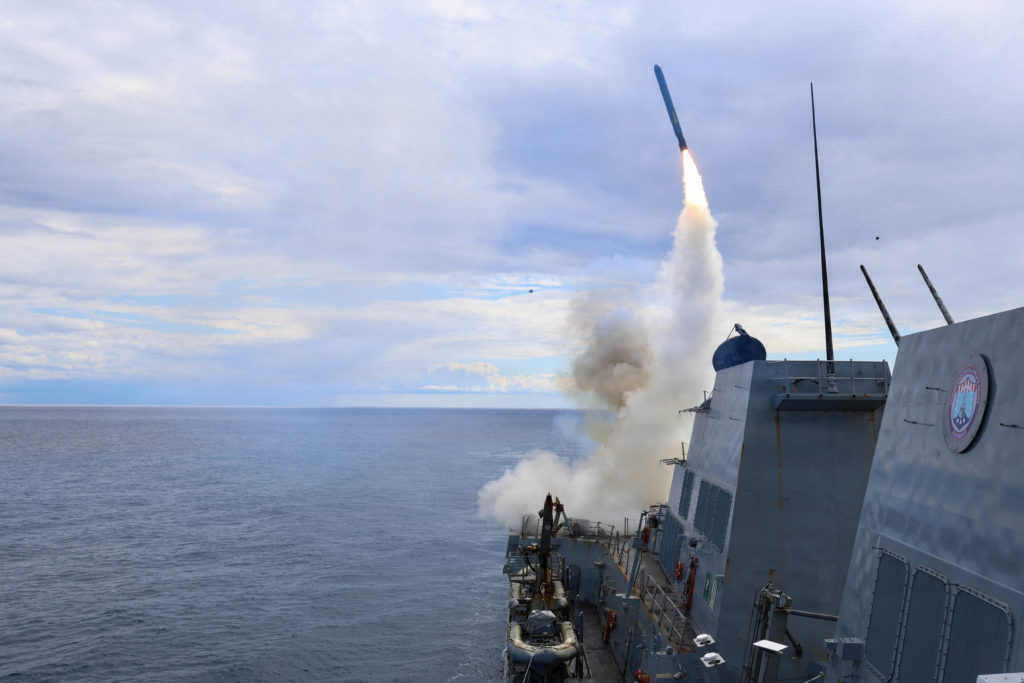
The United States and Iran exchanged major military attacks for a second consecutive day, pushing tensions in the Middle East to their highest level since the April ceasefire. President Donald Trump confirmed that U.S. forces launched dozens of Tomahawk missiles against Iranian military targets, while Iran responded with missile and drone attacks against U.S. bases across the region and announced an indefinite closure of the Strait of Hormuz. The confrontation is now raising concerns about global energy supplies, inflation, and the risk of a broader regional war.
President Donald Trump confirmed that U.S. forces launched 49 Tomahawk cruise missiles against multiple Iranian military targets, including sites near Tehran and along Iran's southern coastline. According to U.S. Central Command (CENTCOM), the strikes targeted radar systems, communications networks, military surveillance assets, and air defense positions.
U.S. officials described the operation as a defensive response following recent Iranian attacks that included the downing of a U.S. Army Apache helicopter. CENTCOM stated that the strikes were intended to protect American forces and international shipping operating in the region.
Reports from Iran indicated explosions near Tehran, Karaj, Bandar Abbas, Qeshm Island, Kish Island, and other strategic locations. Iranian media also reported that air defense systems were activated around key energy infrastructure, including the Assaluyeh petrochemical complex.
Trump Issues New Warning to Tehran
Trump warned that further military action could follow if Iran refuses to accept a U.S.-backed agreement currently under discussion.
"If Iran does not agree, we will hit them again tomorrow night," Trump said during an interview with Fox News.
Defense Secretary Pete Hegseth reinforced the administration's position, saying that if negotiations must be conducted through military pressure, the United States is prepared to do so.
According to Axios, the White House reportedly informed Iranian officials before the strikes that the operation was limited to military targets and was not intended to cause casualties or trigger a wider war.
Iran Launches Retaliatory Attacks
Iran responded within hours by launching missiles and drones toward U.S. military facilities across the Middle East. The Islamic Revolutionary Guard Corps (IRGC) claimed attacks against 18 U.S. military installations in Bahrain, Jordan, Iraq, Kuwait, and other locations.
Iran released footage claiming to show ballistic missile strikes against the Al-Azraq Air Base in Jordan. Regional air defense systems reportedly intercepted many of the incoming projectiles.
Kuwait temporarily closed its airspace, while American diplomatic missions in Iraq and Jordan reportedly advised U.S. citizens to remain alert or prepare for evacuation measures.
Iran Declares Strait of Hormuz Closure
In one of the most significant developments, Iranian authorities announced an indefinite closure of the Strait of Hormuz, one of the world's most important oil shipping routes.
The Persian Gulf and Strait Authority (PGSA) stated that all vessel traffic through the waterway would be suspended due to what it described as escalating U.S. aggression. Iranian military officials warned that any ship attempting to transit the strait could become a target.
Iranian state media reported that military forces had already fired warning shots at two vessels allegedly attempting to violate the restriction. U.S. Central Command disputed claims that the strait had been fully closed.
Tehran Says Ceasefire Has Lost Meaning
Iran's Foreign Ministry declared that the latest American strikes effectively rendered the April 8 ceasefire meaningless. Tehran accused Washington of violating international law and warned neighboring countries against allowing their territory or facilities to be used for future U.S. military operations.
The Iranian government also stated that it reserves the right to defend itself and neutralize what it described as the sources of aggression.
Economic Fallout Begins to Spread
The renewed conflict is already affecting global markets. Rising energy prices linked to fears over the Strait of Hormuz contributed to a sharp increase in U.S. inflation.
The U.S. Consumer Price Index rose 4.2% year-over-year in May, the highest level in three years. Energy prices surged as traders assessed the risk of disruptions to Gulf oil exports.
Market analysts are also warning that prolonged instability could increase pressure on global shipping, energy supplies, currencies, and financial markets. Bitcoin and other risk assets have faced renewed volatility amid growing concerns about inflation and geopolitical uncertainty.
Risk of Wider Conflict Growing
Despite reports that backchannel negotiations involving Qatar continue, both Washington and Tehran appear determined to maintain military pressure while avoiding the appearance of backing down.
Analysts describe the current situation as a dangerous war of attrition in which neither side appears to want a full-scale conflict, yet both are demonstrating readiness to continue military operations if necessary.
With U.S. strikes continuing, Iranian retaliation expanding, and threats against international shipping increasing, the Middle East now faces its most serious security crisis since the April ceasefire.

Loading comments...