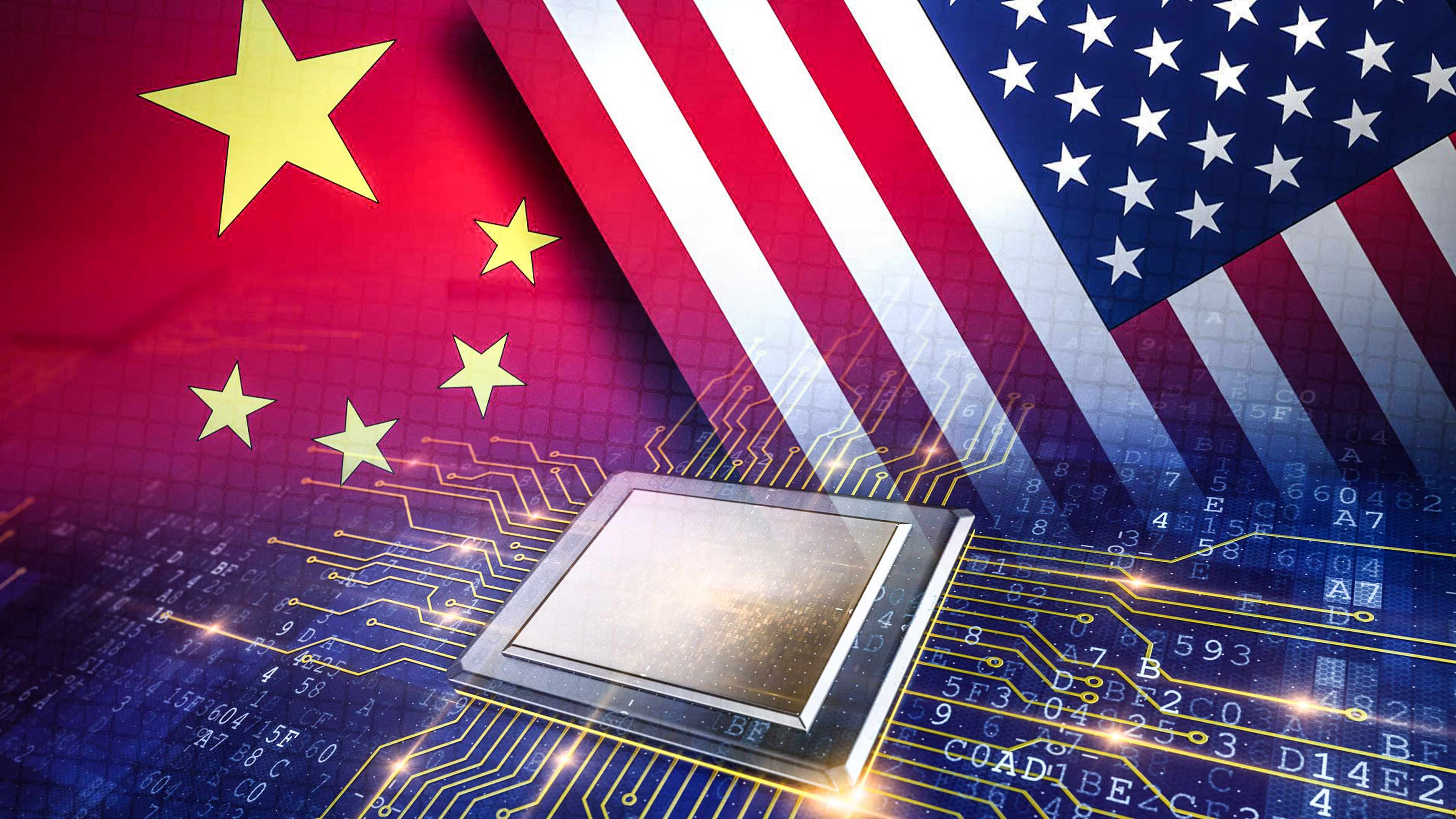
Washington’s increasingly aggressive effort to reduce American dependence on Chinese technology could become another major tailwind for established memory-chip manufacturers as artificial intelligence drives unprecedented demand for storage, bandwidth and data-center capacity. Reports that U.S. officials have pressed Apple over the use of Chinese memory products add another strategic dimension to an already tight market. Companies such as SK Hynix, Micron and other established suppliers could benefit if Chinese manufacturers lose access to major American customers, while the wider AI infrastructure boom continues to strengthen demand for memory, servers, networking equipment, power and data-center capacity.
Reports that U.S. officials have directly warned Apple against relying on Chinese memory suppliers are particularly significant. If Washington continues tightening restrictions on Chinese memory products, the policy could redirect business toward established non-Chinese manufacturers and accelerate the restructuring of the global semiconductor supply chain.
Washington Is Treating Semiconductors as a National Security Issue
The larger story extends well beyond Apple or any single memory manufacturer. The United States increasingly views advanced semiconductors, AI infrastructure, drones, critical minerals and other strategic technologies through the lens of national security and competition with China.
That creates a potentially powerful combination for established memory producers: government policy could restrict Chinese competition just as commercial demand for memory is accelerating because of AI.
Apple and other major American technology companies operate global supply chains where even relatively small changes in approved suppliers can redirect billions of dollars of business. Restrictions affecting Chinese components could therefore have consequences across South Korea, Japan, the United States and other major semiconductor-producing economies.
For investors, the key question is whether tighter U.S. restrictions become a durable structural policy rather than a limited action affecting individual products or companies.
Why AI Is Making Memory More Valuable
The semiconductor industry has historically been highly cyclical. Memory manufacturers expanded capacity during periods of strong pricing, only to face oversupply and collapsing margins when demand slowed. The AI boom could alter parts of that traditional cycle.
Modern AI systems require enormous amounts of data to be moved, stored and retrieved rapidly. Training advanced models requires memory close to high-performance processors, while AI inference and AI agents create additional demand throughout data centers and edge devices.
The expansion of AI beyond centralized cloud computing could increase that requirement even further. Robots, autonomous vehicles, AI-enabled smartphones and other intelligent devices need to process and retain increasingly large amounts of information.
This is why memory is increasingly being discussed as a potential bottleneck rather than a commodity component sitting in the shadow of CPUs and GPUs.
SK Hynix and the Growing Importance of Memory Supply
SK Hynix has become one of the most important companies in the AI hardware supply chain, particularly through its position in high-bandwidth memory. The company has emphasized the enormous memory requirements created by increasingly capable AI systems and the possibility of continued supply constraints as demand expands.
The relationship between memory manufacturers and leading AI-chip companies is also changing. Suppliers capable of delivering advanced memory at sufficient scale are no longer simply interchangeable component vendors. Their production capacity can determine how quickly expensive AI processors and entire computing systems can be deployed.
That gives leading memory manufacturers substantially greater strategic importance.
If U.S. policy simultaneously limits the ability of Chinese manufacturers to compete for American customers, established suppliers could gain additional pricing power, contract visibility and negotiating leverage.
SanDisk Highlights Confidence in Long-Term Storage Demand
Optimism has also spread across the broader memory and storage sector. SanDisk has outlined a bullish long-term outlook built around continued demand growth, longer customer commitments and shareholder returns.
Long-term agreements are especially important for a historically cyclical industry. Greater visibility into future volumes can help manufacturers plan capital spending while reducing some of the uncertainty associated with the traditional boom-and-bust memory cycle.
AI could reinforce that shift. Hyperscalers and other large technology customers cannot afford to discover that critical memory or storage components are unavailable after spending billions of dollars on processors, data centers and power infrastructure.
Securing supply years in advance can therefore become a strategic necessity rather than simply a procurement decision.
The AI Bottleneck Is Expanding Beyond GPUs
The AI investment cycle is increasingly demonstrating that processors alone are not enough. A functioning AI data center requires GPUs, memory, storage, networking, cooling, electricity, buildings and high-speed connections between systems.
Shortages in any one of those categories can prevent the rest of the infrastructure from operating at full capacity.
This helps explain why investor attention has broadened from Nvidia and other chip designers into memory manufacturers, networking companies, server makers, data-center operators and power suppliers.
Elon Musk has also repeatedly emphasized the extraordinary infrastructure requirements associated with increasingly advanced AI. The broader industry is preparing for a world in which AI agents and machines generate and consume vastly more data than today's conventional software applications.
Data-Center Demand Remains a Critical Indicator
Strong demand for data-center capacity provides another important piece of the AI infrastructure story. Operators such as Nebius and CoreWeave have expanded rapidly as technology companies seek access to scarce high-performance computing capacity.
Customers' willingness to accept higher prices for computing infrastructure suggests that supply remains constrained in important areas of the market. Demand for even older generations of computing hardware can remain strong when customers are more concerned about obtaining usable capacity than securing only the newest equipment.
That environment matters for memory manufacturers because every additional AI cluster requires far more than GPUs. It requires memory and storage throughout the system.
If data-center construction continues at its current pace, the memory industry could benefit from a multiyear infrastructure buildout rather than a short-lived hardware replacement cycle.
Dell, Networking and Power Companies Join the AI Infrastructure Trade
The investment opportunity surrounding AI has consequently expanded across the hardware stack. Server manufacturers such as Dell are positioned to benefit from enterprise and data-center spending, while optical networking companies provide the high-speed connections required to move enormous quantities of data between processors and facilities.
Electricity is another increasingly important constraint. AI data centers consume extraordinary amounts of power, forcing technology companies and infrastructure developers to secure new sources of generation and grid capacity.
As AI models become larger and inference workloads multiply, power availability could become as important as semiconductor availability in determining where new data centers are built.
That means the AI investment cycle increasingly touches semiconductors, memory, storage, networking, cooling, construction, utilities and energy infrastructure.
Big Tech Is Raising Capital for the AI Arms Race
The scale of the spending required is also becoming visible through corporate financing. Major semiconductor and technology companies have been raising capital to fund increasingly expensive investment programs.
AMD and other companies are competing in a market where maintaining technological relevance requires enormous research, manufacturing and infrastructure spending. Intel is simultaneously navigating its own capital requirements as it attempts to strengthen its competitive position.
The important signal for the broader market is the magnitude of capital being committed. AI is no longer a limited software trend. It has become a physical infrastructure buildout involving factories, power plants, data centers, networking systems and semiconductor supply chains.
America Is Building a Technology Supply Chain Less Dependent on China
The U.S.-China competition could reinforce that investment cycle. Washington has increasingly pushed to secure strategic supply chains and reduce American exposure to Chinese technology in sectors considered critical to national security.
Semiconductors sit at the center of that strategy because advanced computing is essential to AI, military systems, communications, intelligence, autonomous systems and the broader digital economy.
A tougher American position toward Chinese memory products would fit into a wider strategy of preventing critical technology supply chains from becoming dependent on Beijing.
For American and allied manufacturers, that could create significant opportunities. Companies operating within trusted supply chains could gain market share even when Chinese competitors offer aggressive pricing.
Apple Could Face Higher Costs as Supply Chains Shift
There is another side to the equation. Restrictions on Chinese suppliers can increase costs for American technology companies if cheaper components are removed from consideration.
Apple, with its enormous manufacturing footprint and constant focus on component costs, is particularly exposed to changes in the global electronics supply chain.
Moving purchases toward established non-Chinese suppliers could support memory prices and margins, but higher component expenses can create pressure for device manufacturers. The ultimate impact therefore depends on how much additional cost suppliers can pass through and whether memory availability remains tight.
For memory producers, however, fewer eligible competitors for major American contracts would generally improve the competitive environment.
Trump's Industrial Policy Is Expanding Into Strategic Technologies
The semiconductor fight is part of a broader American effort to strengthen domestic capacity in technologies considered critical to economic and military power. Drones, rare earths, defense technology, space systems and quantum computing have all attracted increased attention as Washington confronts vulnerabilities created by dependence on Chinese production.
Drones are a particularly important example. Their enormous battlefield importance has transformed them from relatively specialized equipment into essential military technology. Reducing dependence on Chinese drones and components is therefore increasingly tied to U.S. national security policy.
Rare-earth minerals present a similar challenge. China has long held a powerful position in the processing of minerals required for electronics, defense systems and advanced manufacturing. American efforts to build alternative supply chains could support domestic producers and allied suppliers, although these sectors remain volatile and highly sensitive to government policy.
SpaceX and the Next Stage of AI Infrastructure
Elon Musk's companies illustrate how the boundaries between AI, communications, robotics, transportation and space are becoming increasingly blurred.
SpaceX's Starlink network provides a global communications infrastructure capable of supporting a growing number of connected devices. If autonomous machines and AI agents begin generating dramatically more internet traffic, satellite communications could become another component of the AI infrastructure ecosystem.
Musk has also tied the future of his businesses increasingly closely to AI, including Grok and the broader development of autonomous systems.
The long-term thesis is that AI will not remain confined to chatbots running inside conventional data centers. It will spread into vehicles, robots, factories, satellites and consumer devices. Every step in that direction increases demand for computing, memory, connectivity and electricity.
Falling Rate Fears Could Support the AI Trade
Macroeconomic conditions remain another major factor for technology stocks. Markets generally benefit when investors believe interest rates have peaked or that additional tightening is becoming less likely.
High-growth technology companies are particularly sensitive to interest-rate expectations because much of their valuation depends on future earnings. Lower expected rates can support higher valuations, while rising bond yields can quickly pressure expensive technology shares.
A combination of resilient economic activity, easing inflation pressure and reduced expectations for additional tightening would therefore provide a favorable backdrop for AI and semiconductor stocks.
The opposite is equally important. A renewed inflation shock, higher rates or a stronger dollar could pressure valuations even if the fundamental AI infrastructure story remains intact.
Geopolitical Risk Remains Part of the Equation
Investors must also account for geopolitical risk. American sanctions targeting Iran and the continuing strategic confrontation with China can create sudden volatility across energy, technology and financial markets.
For semiconductors, U.S.-China tensions are particularly complicated. Restrictions can benefit selected American and allied companies by limiting Chinese competition, but escalating trade conflict can also disrupt manufacturing, reduce access to Chinese customers and increase costs.
The semiconductor industry is one of the world's most globally interconnected businesses. Design, manufacturing, packaging, memory, equipment and raw materials frequently cross several national borders before reaching the final customer.
Any serious attempt to reorganize those supply chains will create both winners and losers.
Could SK Hynix, Micron and Other Memory Producers Be Major Winners?
If the United States continues restricting Chinese memory in American products, the most obvious beneficiaries would be established suppliers capable of meeting the scale, performance and security requirements of major technology companies.
SK Hynix is already deeply connected to the AI boom through high-bandwidth memory. Micron offers the United States a major domestic memory supplier. Samsung remains one of the world's largest memory manufacturers and possesses enormous manufacturing capacity.
The precise benefits would differ by product category. NAND flash, conventional DRAM and high-bandwidth memory serve different markets and have different competitive structures. A restriction affecting one type of Chinese memory would not automatically produce the same benefit across every segment.
Nevertheless, removing or limiting a significant competitor from major U.S. supply chains would generally improve the opportunity available to approved suppliers.
The Biggest Bull Case: AI Demand Meets Restricted Supply
The strongest argument for the memory sector comes from the intersection of two forces.
First, AI is increasing the amount and performance of memory required throughout the computing ecosystem. Second, geopolitical policy could reduce the pool of suppliers considered acceptable for sensitive American technology supply chains.
Rising demand combined with constrained supply is traditionally favorable for pricing.
If long-term contracts become more common at the same time, established manufacturers could gain better visibility into revenue and reduce some of the extreme volatility that historically defined the memory business.
That does not mean the memory cycle has disappeared. Semiconductor companies can still overbuild capacity, customers can cut spending and technological changes can alter demand. But AI may be creating a structurally higher baseline for memory consumption.
Investors Should Not Ignore the Risks
The extraordinary enthusiasm surrounding AI also creates significant risks. Rapidly rising share prices can move well ahead of earnings, while aggressive capital spending can eventually create excess capacity.
The IPO market is another indicator worth monitoring. Late-stage bull markets often produce a rush of companies attempting to raise capital while investor appetite is strong. A wave of major technology and AI listings could absorb liquidity and test whether enthusiasm has become excessive.
Investors should also distinguish between companies with durable cash flow and those whose valuations depend primarily on expectations of future AI demand.
Even within the semiconductor industry, being exposed to AI does not guarantee profitability. Manufacturing costs, technological execution, customer concentration, debt and competition remain critical.
ETFs Offer an Alternative to Picking Individual Winners
The growing complexity of the AI supply chain makes identifying a single winner difficult. One company may dominate processors while another leads in memory, networking, power or data-center infrastructure.
Broad-market index funds and semiconductor ETFs can provide diversified exposure without requiring investors to correctly identify every individual winner. Specialized funds focused on semiconductors, memory or AI infrastructure can provide more concentrated exposure, although concentration also increases risk.
The appropriate approach depends on an investor's time horizon and tolerance for volatility. The extraordinary gains seen in portions of the AI sector should not be assumed to continue indefinitely.
Nvidia Earnings and Jackson Hole Remain Key Market Tests
Near-term market direction will remain sensitive to major corporate and macroeconomic events. Nvidia's earnings are closely watched because the company has become one of the clearest indicators of global AI infrastructure spending.
Investors will be watching not only Nvidia's revenue but also demand visibility, supply constraints, customer spending and expectations for future generations of AI hardware.
Federal Reserve signals from Jackson Hole will also matter. Changes in the expected path of interest rates can rapidly alter valuations across technology and other risk assets.
The Bigger Story Is the Reorganization of Global Technology
The potential U.S. restrictions on Chinese memory should ultimately be viewed as more than a story about Apple or the quarterly earnings of individual semiconductor companies.
Artificial intelligence is becoming intertwined with national security, industrial policy and geopolitical power. The United States does not want critical AI infrastructure dependent on strategic competitors, while China is determined to build an independent semiconductor and AI ecosystem of its own.
That rivalry is likely to produce increasingly distinct technology supply chains.
Memory manufacturers occupy a strategically valuable position in that new landscape because advanced AI cannot operate on processing power alone. It needs enormous amounts of fast, reliable memory and storage.
If Washington further limits Chinese memory products while AI demand continues to accelerate, established American and allied suppliers could emerge as some of the clearest beneficiaries.
Bottom Line
The AI investment cycle is evolving from a GPU story into a much broader infrastructure race. Memory, storage, data centers, networking, electricity, drones, space communications and secure semiconductor supply chains are all becoming part of the same strategic competition.
For the memory industry, the timing could be especially important. AI is creating extraordinary new demand just as the United States is seeking to reduce China's role in critical technology supply chains.
That combination could strengthen established memory manufacturers, including major American and allied suppliers, while putting additional pressure on Chinese semiconductor companies seeking access to U.S. customers.
The central question for investors is no longer simply how many AI chips the world needs. It is whether the entire infrastructure surrounding those chips — especially memory — can expand quickly enough to meet demand.
If memory becomes one of the next major AI bottlenecks, Washington's campaign to secure America's technology supply chain could make an already tight market even more strategically important.

Loading comments...