U.S. Signals Progress on Hormuz Deal as Iran and Oman Report Positive Talks | Achla News
world
U.S. Signals Progress on Hormuz Deal as Iran and Oman Report Positive Talks
The Trump administration says an agreement to improve safe passage through the Strait of Hormuz may be close, while Iran says its talks with Oman are progressing at both technical and political levels. Hopes for reduced regional tensions pushed oil prices sharply lower and helped major U.S. stock indexes reach record highs.
The United States expressed optimism that an agreement involving Iran and Oman could soon improve maritime security and expand safe commercial passage through the Strait of Hormuz.
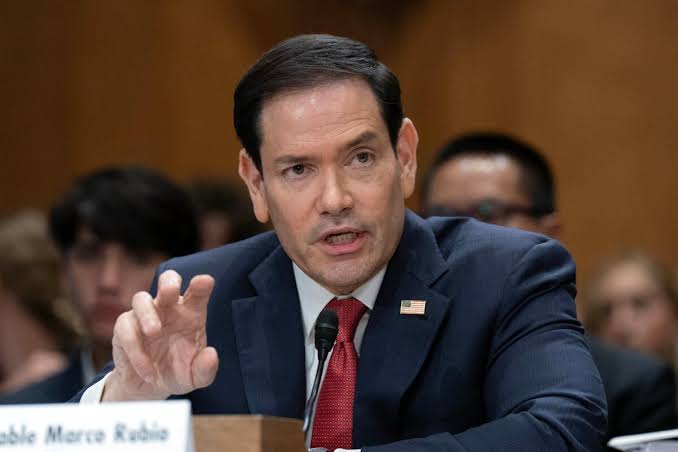
Secretary of State Marco Rubio said negotiations had made progress but had not yet produced a final agreement. He said the immediate focus was on arrangements concerning the Strait of Hormuz and the Bab el-Mandeb Strait, while stressing that the broader U.S. objective remains preventing Iran from obtaining a nuclear weapon.
“There has been progress in those talks, but they have not yet reached a final agreement,” Rubio said, adding that Washington hoped the negotiations would conclude soon.
Treasury Secretary Scott Bessent also voiced optimism, saying an agreement could be reached soon to secure the Strait of Hormuz and move the conflict toward a more stable phase.
Iran Says Oman Talks Are Advancing
Iranian Foreign Ministry spokesman Esmail Baghaei said discussions with Oman were proceeding positively at both technical and political levels. He said the talks were focused on establishing safe shipping routes while protecting the sovereignty and national security of both countries bordering the strait.
Baghaei said Iran and Oman were working on future mechanisms to manage maritime traffic through the strategic waterway. Iran, however, continued to deny that it was holding direct negotiations with the United States.
Reuters reported, citing a senior Iranian official, that Tehran was seeking control over vessels entering the strait and monitoring authority over ships leaving it. Separate reports suggested that Iran and Oman had discussed charging vessels a service fee and dividing the revenue, although no final arrangement has been announced.
President Donald Trump has made clear that the United States will not accept Iranian tolls imposed on international shipping.
Qatar Pushes for De-escalation
Qatari Foreign Ministry spokesman Majed bin Mohammed Al Ansari said the Hormuz negotiations had reached an advanced stage and that a possible draft agreement was being circulated among the parties.
Qatar said regional mediators were working to reduce tensions, prevent further escalation and create conditions for continued direct communication between the United States and Iran.
Qatar’s royal court also said President Trump and Emir Sheikh Tamim bin Hamad Al Thani discussed efforts to resolve disputes and establish the basis for a sustainable agreement.
Oil Falls as Wall Street Rallies
Expectations of progress in the negotiations sent international oil prices sharply lower. October Brent crude fell 5.3% to $79.36 per barrel, while September West Texas Intermediate dropped 5.7% to $75.77.
U.S. stocks rallied as investors welcomed the prospect of lower geopolitical risk and stronger technology-sector earnings.
The Dow Jones Industrial Average rose 907.47 points, or 1.71%, to 54,085.88.
The S&P 500 gained 136.02 points, or 1.79%, to 7,736.52.
The Nasdaq Composite climbed 671.10 points, or 2.59%, to 26,584.99.
The Dow and S&P 500 both closed at record highs.
AI and Semiconductor Stocks Lead Gains
Technology shares strengthened as concerns over artificial-intelligence spending eased and investors looked ahead to major corporate earnings.
Palantir surged 29.45% after reporting stronger-than-expected second-quarter results and raising its full-year revenue outlook. Micron rose 7.62%, SanDisk gained 10.97%, Marvell Technology climbed 12.81% and Intel advanced 10.84%.
SK Hynix’s U.S.-traded shares rose 8.17% following positive Wall Street reports, while Caterpillar gained 5.60% after improving its outlook amid stronger demand connected to AI data-center construction.
The negotiations remain unfinished, and key questions over Iranian control, possible shipping fees and enforcement mechanisms have not been resolved. Any final agreement must protect freedom of navigation and prevent Tehran from using one of the world’s most important energy routes as a tool of pressure.

Loading comments...