U.S. Strikes Iran After Apache Helicopter Downed Near Strait of Hormuz | Achla News
breaking
U.S. Strikes Iran After Apache Helicopter Downed Near Strait of Hormuz
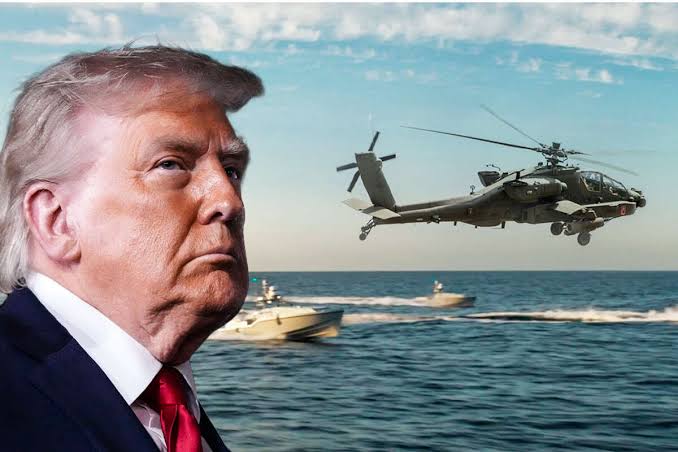
The United States launched what it called a proportional self-defense strike on Iran after President Donald Trump said an American Apache helicopter was shot down near the Strait of Hormuz. The key question now is how Iran responds.
The United States carried out a self-defense strike against Iran after President Donald Trump said an American Apache helicopter was shot down while patrolling near the Strait of Hormuz.
U.S. Central Command said the operation began at 5:00 p.m. Eastern Time on June 9, under the direction of the president. The command described the strike as a proportional response to what it called an unjustified Iranian attack.
The Apache helicopter reportedly went down near the Strait of Hormuz. Two crew members were rescued safely and were not injured, according to Trump.
Trump said on Truth Social that the United States had received a report that the helicopter was shot down by Iran and that America would have to respond. Later, speaking to ABC News, Trump said the response had to be strong and forceful.
Explosions Reported Near Hormuz
Reuters and regional reports said explosions were heard in several areas near the Strait of Hormuz, including Sirik Island and other locations in southern Iran. Iranian media also reported blasts near Bandar Abbas and Qeshm.
The exact targets of the U.S. strike have not yet been fully confirmed. Based on the U.S. description of the operation as defensive and proportional, the targets may have included Iranian military infrastructure connected to drone or air-defense activity.
Iran’s Response Is Now the Critical Factor
Iranian Foreign Minister Abbas Araghchi warned that any attack would be answered. Before the U.S. strike, he also argued that foreign forces operating near Iranian territory face the risk of accidents, human error, or clashes, and said the best way to reduce risk is for them to leave the area.
That message signals the danger ahead. If Iran chooses a limited response or avoids further escalation, the fragile ceasefire and ongoing talks may survive. If Iran launches additional attacks, the situation around the Strait of Hormuz could quickly spiral into a wider confrontation.
Washington is presenting the strike as a limited act of self-defense, not a move to collapse the current ceasefire framework. Trump has continued to suggest that a broader agreement with Iran may still be possible.
But the next step belongs largely to Tehran. Iran’s decision now will determine whether this remains a contained military exchange or becomes a new and dangerous stage in the conflict.

Loading comments...