What Ukraine's Drone Warfare Teaches Us | Achla News
Opinion
What Ukraine's Drone Warfare Teaches Us
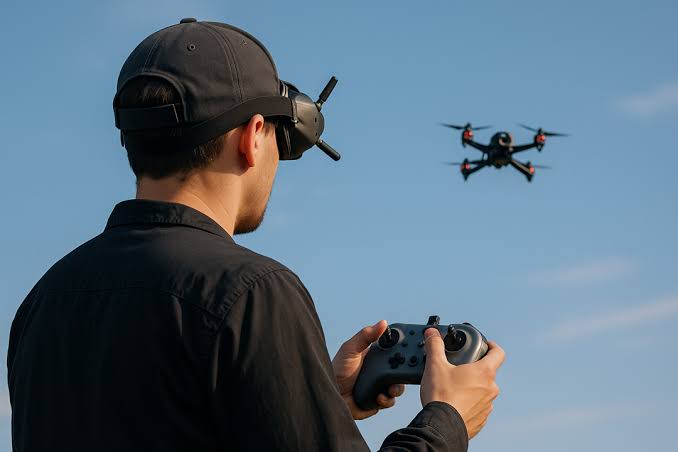
One of the main reasons Ukraine has managed to hold out against Russia for more than four years is its effective use of drones. Despite Russia's overwhelming military and economic advantages, low-cost drones have helped offset part of that imbalance.
Small first-person view (FPV) drones, often costing only a few thousand dollars, have destroyed armored vehicles and military equipment worth millions. This has enabled a cost-effective style of warfare in which inexpensive weapons destroy far more expensive targets.
As wars become prolonged, the side capable of deploying large numbers of cheap drones gains an economic advantage. Military analysts describe this as the collapse of the cost exchange ratio. Precision strike capabilities once limited to superpowers are now increasingly available to middle powers and even non-state armed groups.
Of course, drones alone do not determine the outcome of a war. Most Ukrainian drones are intercepted, and Russia continues to dominate through its larger military and weapons such as cruise missiles, ballistic missiles, Iskander systems, and Kinzhal hypersonic missiles. The longer the war continues, the greater the likelihood that Ukraine will ultimately be defeated.
Nevertheless, Ukraine's extensive use of inexpensive drones allowed it to fight at relatively low cost and remain in the war far longer than many expected.
The lesson is simple: efficiency matters.
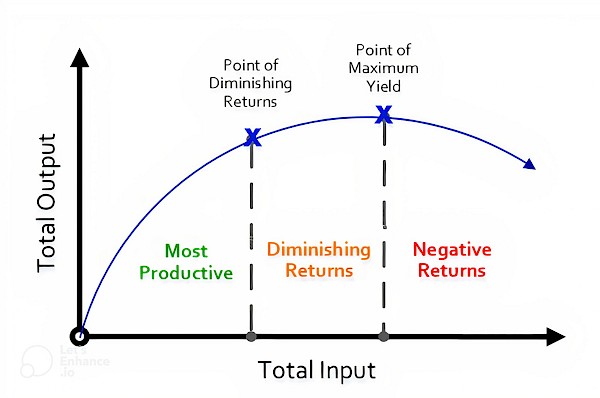
The difference between wealthy and poor countries is largely a difference in efficiency. Economies dependent on agriculture and natural resources eventually face the law of diminishing returns, where additional labor and capital produce progressively smaller gains.
By contrast, advanced manufacturing, finance, and technology benefit from economies of scale. As production expands, unit costs decline, creating increasing returns to scale.
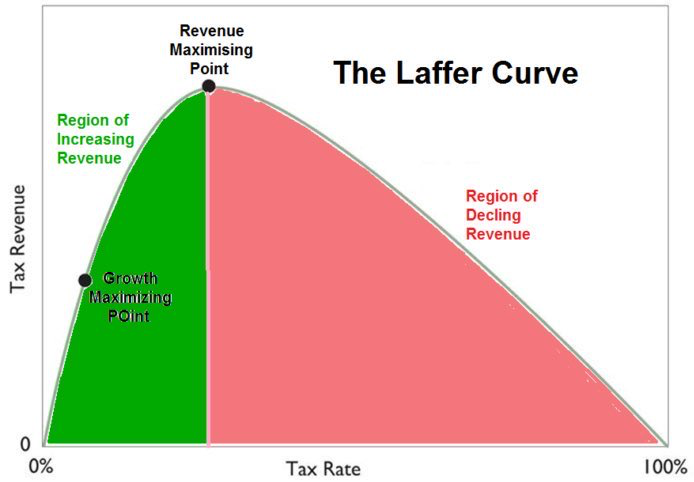
The same principle applies to taxation. As the Laffer Curve shows, collecting either too much or too little tax can reduce government revenue. There is an optimal range that maximizes efficiency.
Individuals face the same reality. Two people may work equally hard, but one creates far more wealth by building scalable systems. A restaurant owner who develops a franchise can earn far more than one who simply works longer hours at a single location.
Language learning is no different. U.S. diplomats use Language Island, in which learners repeatedly speak on a topic, identify missing vocabulary through authentic materials, and speak again. This cycle quickly develops practical fluency. By contrast, memorizing isolated vocabulary or focusing mainly on complex grammar can leave someone studying for years with little real progress.
Whether in war, economics, business, taxation, or education, success ultimately depends on efficiency.
Efficiency is one of the most powerful forces shaping success.

Loading comments...