I remember a Chinese man proudly saying to me, “You see that product? It was made in China,” while pointing to the label. It was actually a Sony product made in China by an OEM contractor. He did not understand what “Made in China” really meant.
Many Chinese raised in mainland China firmly believe China is the greatest country in the world, the center of the world, and that the Chinese are the greatest ethnic group on Earth.
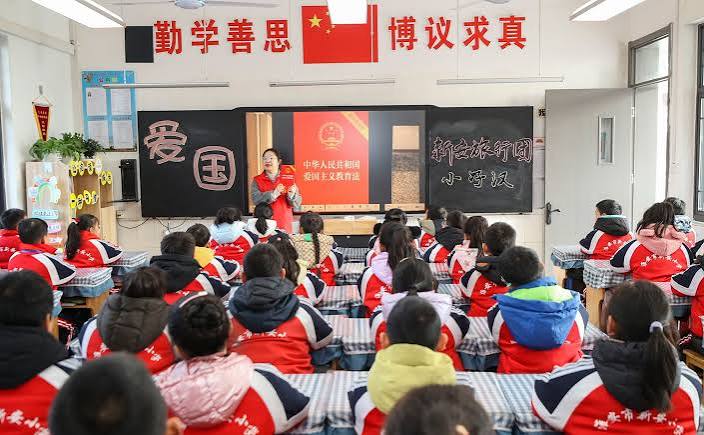
I believe this is largely the result of nationalist education beginning in elementary school.
During the Mao Zedong era (1949–1976) and Deng Xiaoping era (1978–1989), China was too poor to reshape its education system. That changed under Jiang Zemin (1989–2002), when patriotic education became a government priority. Under Xi Jinping (2012–present), nationalist education became even more systematic, leading many children to believe that “China is the best at everything.”
Despite Li Keqiang's 2020 admission that 600 million Chinese earned only about 1,000 yuan ($140) a month, many still believe China is a G2 superpower and one of the world's greatest economies.
Many also believe China is democratic, even though people can be arrested for publicly discussing or criticizing Xi Jinping, the 1989 Tiananmen Square massacre, or Falun Gong. Many believe the West simply misunderstands China.
Many also fail to recognize how serious China's social problems are, including food safety, air pollution, jaywalking, and cutting in line.
Many highly educated Chinese understand China's realities. But most ordinary Chinese genuinely believe China is the center of the world and superior in almost every respect.
Before the Industrial Revolution, China truely was among the world's most advanced civilizations. Yet the modern concept of a single Chinese nation did not exist throughout most of Chinese history.
In 1901, scholar Liang Qichao introduced the concept of Zhonghua Minzu (“Chinese nation”). For most of China's history, the mainland was ruled by dynasties founded by different ethnic groups, with no widely shared belief that “we are all one Chinese people.” Even today, China recognizes 56 ethnic groups.
The Han Chinese, about 91% of China's population, founded only about six major dynasties, while much of modern China's territory was incorporated through the expansion of the Manchu-led Qing dynasty.
For that reason, I believe today's “One China” narrative is more a modern political narrative than an accurate description of history.
Treating the history of many peoples who ruled the Chinese mainland as the history of one nation is like claiming the French, Germans, Italians, and British developed together as one country.
People often carry childhood beliefs throughout their lives. That is why brainwashing can be so powerful.

Loading comments...