Wristwatches and Coordinated Military Operations
Portable watches existed before the world wars, and wrist-worn watches were not created solely by modern warfare. However, military operations greatly accelerated their acceptance among men and helped transform them from a specialized accessory into standard equipment.
Pulling a pocket watch from inside a uniform could waste precious time and occupy one hand. During trench warfare, officers also needed to synchronize attacks, artillery fire, troop movements, and other operations down to the minute or second.
Soldiers and officers increasingly wore watches on straps around their wrists, where the time could be checked immediately. Military models were improved with luminous dials for night operations, stronger cases, protective covers, and more durable glass. These watches became widely known as trench watches.
After the war, returning soldiers continued wearing them. Leather straps, practical designs, and military associations helped establish the modern wristwatch as an everyday item.
The Trench Coat
The trench coat became closely associated with military service because soldiers needed outerwear that was lighter and more practical than traditional heavy coats. Conditions in the trenches were cold, wet, muddy, and physically demanding.
The coat’s water-resistant fabric and relatively flexible design made movement easier. Features such as shoulder straps, belts, rings, storm flaps, and reinforced panels had practical military uses. Straps could help secure equipment, while belts and attachments could support maps, weapons, and other field items.
After the war, the coat moved into civilian fashion. Its military origins remained visible, but it became a standard raincoat and later an international symbol of formal style.
Zippers
Early fasteners resembling the modern zipper existed before the First World War, but many were unreliable and prone to failure. Wartime demand increased the need for fast, durable closures on uniforms, equipment, boots, and flight suits.
Buttons were slow to fasten, especially in emergencies or harsh weather. For pilots and other personnel wearing specialized clothing, a dependable sliding fastener could save time and provide better protection.
Military use pushed manufacturers to improve the zipper’s strength and reliability. After the war, veterans and manufacturers were already familiar with its advantages, helping it spread into clothing, shoes, bags, luggage, and countless other civilian products.
Sunglasses and Pilot Eye Protection
Protective tinted lenses existed before modern military aviation, but the needs of pilots helped drive improvements in glare reduction, lens quality, and large-scale distribution.
At high altitudes, pilots faced intense sunlight and glare that could reduce visibility, cause headaches, and interfere with their ability to operate an aircraft. Military researchers and manufacturers developed specialized tinted lenses, including green-tinted designs intended to reduce glare without excessively darkening a pilot’s view.
Aviation-style sunglasses became more widely recognized during the Second World War. Afterward, military pilots helped turn them into a symbol of confidence and modernity. Hollywood actors and popular culture then transformed functional eye protection into a global fashion product.
Vacuum Flasks in Extreme Cold
The vacuum flask was invented before the world wars, but wartime aviation demonstrated its value as survival equipment. Bomber crews often operated at high altitudes where cabin temperatures could fall dangerously low.
Insulated containers helped crews carry hot drinks and reduce the effects of prolonged exposure to cold. After the war, the same heat-preserving technology became common in homes, workplaces, schools, and outdoor activities.
1.2 Massive Government Support and the Removal of Barriers
Developing new technology during peacetime can be difficult. Researchers must secure funding, convince investors, comply with regulations, manage commercial risks, and accept the possibility that years of work may produce no profitable result.
During war, governments often view technological development as a national-security requirement rather than a normal business decision. Projects with uncertain prospects may receive enormous budgets because even a small chance of success could alter the course of the conflict.
Governments can also assemble scientists, engineers, universities, military units, and private companies under one national program. Resources that would normally be spread across competing institutions are concentrated on a single objective.
This environment can produce rapid progress, although the removal of normal oversight also creates serious ethical and political risks. Wartime research shows how far technology can advance when money, labor, materials, and political authority are mobilized without ordinary commercial limitations.
Microwave Technology and the Microwave Oven
The microwave oven emerged from research connected to radar technology during the Second World War. Britain and the United States invested heavily in systems that used microwave energy to detect aircraft and improve military radar performance.
A central component of this work was the cavity magnetron, a device capable of generating powerful microwaves. During radar-related research, engineer Percy Spencer reportedly noticed that a chocolate bar in his pocket had melted while he was working near active microwave equipment.
Further experiments showed that microwave energy could heat food. The discovery did not immediately produce the compact kitchen appliance familiar today, but it created the foundation for microwave cooking.
The Internet’s Military Roots
The modern internet was not created in a single moment, but military-funded research played a major role in its development. The United States Department of Defense supported work on communication systems that could continue operating even if part of the network were damaged or destroyed.
Instead of relying entirely on a single central point, researchers explored distributed communication and packet switching. Information could be divided into smaller units and transmitted through different routes before being reassembled at its destination.
This approach initially appeared less straightforward than traditional centralized communications, but it offered resilience and flexibility. With government funding and the participation of leading universities and scientists, ARPANET became one of the most important early computer networks.
The project helped establish technologies and practices that later contributed to the global internet.
GPS
The Global Positioning System was developed by the United States as a major military project during the Cold War. American forces needed an accurate way to determine the positions of aircraft, ships, troops, and weapons across the world.
A satellite-navigation system of this scale was extraordinarily expensive and offered no immediate commercial return that could justify the investment. Military necessity, however, made normal profit calculations secondary.
The United States funded the satellites, launch systems, ground infrastructure, receivers, and scientific work required to build a global positioning network. GPS eventually became one of the clearest examples of a government-funded military technology that transformed the civilian economy.
1.3 The Transfer of Military Technology Into Civilian Life
Many military technologies remain classified or restricted while they provide a strategic advantage. When wars end, security conditions change, or governments decide that civilian access serves the public interest, these technologies may be released for commercial development.
Private companies then redesign expensive and complicated military systems for ordinary consumers. Components become smaller, manufacturing costs fall, and products that once required government-level resources become affordable household tools.
From Radar Equipment to a Kitchen Appliance
After the Second World War, defense companies searched for civilian uses for technologies developed during the conflict. Microwave heating offered one possible commercial market.
Early microwave ovens were extremely large and expensive. Some were roughly the size of a refrigerator and could cost as much as a car. They were used mainly by restaurants, institutions, and commercial kitchens.
Over time, improvements in manufacturing reduced their size and price. The microwave oven eventually became a normal household appliance, turning a radar-related discovery into one of the most common methods of heating food.
From ARPANET to the Global Web
Early computer networks were limited mainly to government-supported universities, research institutions, and defense-related organizations. They were technical systems designed for specialized users rather than the general public.
The development of internet protocols allowed different networks to communicate with one another. The arrival of the World Wide Web in the early 1990s made online information far easier to organize, access, and share.
A network that began through military-funded research expanded into the commercial infrastructure that now supports communication, banking, media, trade, education, entertainment, and government services across the world.
The Civilian Opening of GPS
GPS was originally designed for the United States military. A major turning point came after Korean Air Lines Flight 007 was shot down by the Soviet Union in 1983 after entering restricted Soviet airspace.
Following the incident, the United States announced that GPS would eventually be made available for civilian use when the system became operational. Civilian signals were initially subject to intentional accuracy limits under a policy known as Selective Availability.
In 2000, the United States ended Selective Availability, sharply improving civilian GPS accuracy. The decision accelerated the expansion of satellite navigation into cars, mobile phones, shipping, aviation, delivery networks, agriculture, surveying, drones, emergency services, and autonomous-driving research.
Modern navigation applications, smartphone maps, logistics systems, and many location-based services depend on the civilian availability of GPS and related satellite-navigation systems.
1.4 Alternative Technologies Created by Shortages
War redirects raw materials toward military production. Metal, rubber, fuel, fabric, chemicals, and food can be rationed, requisitioned, or reserved for armed forces.
When familiar products become unavailable, societies search for substitutes that can perform the same function with different materials. Some substitutes disappear when the shortage ends. Others prove cheaper, lighter, or more practical than the products they replaced and remain in use long after the war.
Bras, Corsets, and Wartime Metal Conservation
Bras existed in various forms before the First World War, but wartime social and material changes accelerated the decline of the metal-reinforced corset and the adoption of lighter undergarments.
Corsets restricted movement and used significant amounts of metal. As men left for military service, more women entered factories and other forms of industrial employment, creating demand for clothing that allowed greater physical freedom.
Authorities also urged women to reduce purchases of corsets so the metal could be redirected toward military production. Contemporary claims held that the amount of metal saved in the United States could have been sufficient for the construction of two warships.
The combination of material conservation, wartime labor, and changing expectations for women’s clothing helped make lighter fabric-based undergarments more common. The modern bra was not created by one wartime order, but the conflict significantly accelerated a broader change in fashion and daily life.
Nylon Stockings
Nylon was developed shortly before the Second World War and quickly became popular in women’s stockings. Once the United States entered the war, nylon production was redirected toward military needs, including parachutes, ropes, cords, and reinforcement materials.
Nylon stockings largely disappeared from civilian stores. Demand remained intense, and shortages encouraged repair, reuse, and black-market sales.
When factories resumed civilian production after the war, shoppers rushed to buy the newly available stockings. The resulting crowds and shortages became known as the “nylon riots,” showing how wartime industrial controls could create enormous postwar consumer demand.
Fanta
Fanta was created in Germany during the Second World War after the local Coca-Cola operation could no longer obtain the company’s standard syrup from the United States.
The German branch used ingredients that remained available under wartime conditions, including byproducts and fruit-based materials. Employees were encouraged to use their imagination—“Fantasie” in German—when naming the new drink, leading to the name Fanta.
The original wartime beverage differed from later versions of the brand, but it remains a prominent example of a commercial product created because international conflict disrupted a company’s normal supply chain.
Margarine
Margarine was first developed in 19th-century France as an alternative to butter. It was not a product of the world wars, but wartime shortages and rationing helped establish it as a widely used substitute.
During both world wars, butter and other animal fats became scarce or expensive in many countries. Margarine offered a more accessible replacement and became a regular part of household diets.
Its wartime role helped turn a specialized substitute into a major international food product.
1.5 Mass Distribution and the Creation of Global Standards
Modern war requires governments to supply millions of people with food, clothing, medicine, ammunition, spare parts, and equipment. The scale of military logistics makes inconsistent sizes and incompatible designs unacceptable.
Factories must produce interchangeable goods in enormous quantities. Packages must fit transportation systems. Replacement parts must work across units. Food must survive long journeys and months of storage.
As a result, war can force standardization and mass production at a speed that might otherwise take decades. After the war, the same factory systems, packaging methods, and technical standards often spread throughout civilian industry.
Canned Food
The development of canned food began during the Napoleonic era. Napoleon’s government offered a prize for a reliable way to preserve food for soldiers and sailors facing long supply lines.
Nicolas Appert developed a method of preserving food in sealed glass containers. The idea later moved to Britain, where metal containers made from tin-plated iron were introduced.
Military demand during the 19th century and the two world wars expanded canned-food production on a massive scale. Manufacturers improved sealing methods, container durability, factory speed, storage practices, and transportation.
Can sizes and production techniques became increasingly standardized. After the wars, the same system expanded through the civilian food industry, extending shelf life and transforming global food distribution.
Spam
Spam was introduced before the Second World War, but the conflict gave it global reach. The canned meat was durable, easy to transport, ready to eat, and suitable for military supply chains.
Hundreds of millions of cans were distributed to American and Allied forces during the war. Soldiers carried their familiarity with the product into the countries where they served.
After the war, Spam became embedded in the food cultures of several regions, including parts of East Asia and the Pacific. In South Korea, surplus processed meat associated with American military bases contributed to the creation of budae-jjigae, or army-base stew.
A mass-produced military ration had become an ingredient in local cuisine.
Instant Coffee
Instant coffee existed before the world wars, but military distribution greatly expanded its popularity. It was light, easy to store, simple to prepare, and required only hot water.
Caffeine also helped soldiers remain alert during long shifts, difficult operations, and periods of limited sleep. Large numbers of servicemen encountered instant coffee through military rations and continued drinking it after returning home.
Wartime habits therefore helped make instant coffee a permanent part of modern consumer culture.
1.6 Medical Progress Through Disease Control and Trauma Care
Throughout much of military history, disease killed more soldiers than enemy weapons. Large numbers of people living in crowded camps or trenches created ideal conditions for infection to spread.
Armies therefore had a direct strategic interest in sanitation, vaccination, insect control, wound treatment, blood management, surgery, and medical evacuation. A military force weakened by disease could lose a campaign without suffering a major battlefield defeat.
War pushed medical and public-health systems to operate at enormous scale. Some advances were created during conflict, while others were existing ideas that received funding, emergency testing, mass production, and broad implementation.
Sanitary Pads and Cellucotton
During the First World War, Kimberly-Clark developed and supplied Cellucotton, a highly absorbent material made from wood pulp. It was used in surgical dressings because cotton was expensive and in short supply.
Military nurses reportedly recognized that the absorbent material could also be used during menstruation. After the war, the company adapted the material for a civilian disposable sanitary product.
Kotex was introduced in 1920 and became one of the first widely marketed disposable sanitary-pad brands. A wartime medical dressing had been transformed into a consumer product that changed menstrual hygiene.
Kleenex Tissues
Kleenex developed from related work with cellulose-based materials. After the war, manufacturers needed civilian uses for production capacity and remaining expertise connected to Cellucotton.
Kleenex was initially marketed as a disposable facial tissue for removing cold cream and cosmetics. Consumers soon began using it as a disposable handkerchief, and the company shifted its marketing accordingly.
The same family of absorbent technologies that supported military medicine helped create two major categories of personal-hygiene products.
Sunscreen
Forms of sun protection existed before the Second World War, but military service in the Pacific intensified demand for portable protection against severe sun exposure.
Soldiers and sailors operating in tropical environments suffered painful burns that could reduce their ability to function. Military-linked research and field use contributed to the development and distribution of protective formulas, including heavy petroleum-based substances designed to block ultraviolet radiation.
After the war, improved formulations entered the civilian market and helped establish modern sunscreen as a common health and recreation product.
Aerosol Spray
The modern portable aerosol can was significantly advanced during the Second World War as American forces sought an effective way to protect soldiers from mosquitoes and insect-borne diseases.
Researchers developed a compact pressurized dispenser that could release insecticide as a fine mist. The device became known as the “bug bomb” and was used in tropical combat zones.
After the war, aerosol technology spread into civilian products, including insecticides, air fresheners, cleaning products, paints, deodorants, and hair sprays.
2. The Brutal Contradiction Between War and Innovation
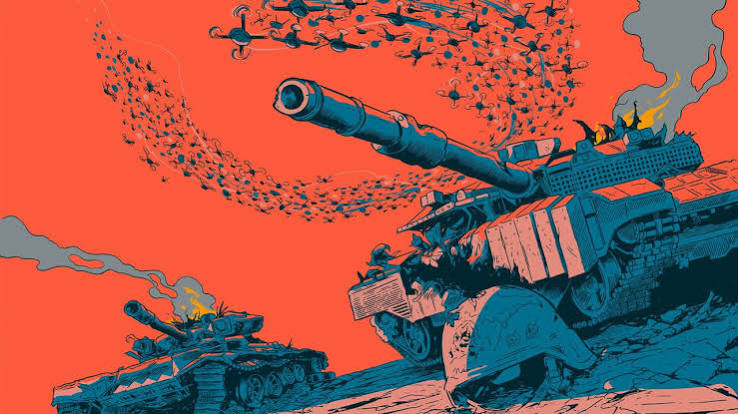
Wars continue across the world, and the technologies being developed for current conflicts will almost certainly influence civilian life in the future. Advances in drones, communications, artificial intelligence, emergency medicine, robotics, cybersecurity, and energy systems may eventually move far beyond the battlefield.
Technology itself is not automatically moral or immoral. The same navigation system can guide a missile or an ambulance. A drone can conduct surveillance, deliver a weapon, inspect damaged infrastructure, or carry medical supplies. A communication network can coordinate military units or connect families and businesses.
The tragedy lies in the conditions that force these technologies forward. War creates urgency through death, destruction, fear, scarcity, and the possibility of national collapse.
It would therefore be misleading to describe war as beneficial simply because useful inventions emerge from it. Innovation does not compensate for the lives lost, the civilians displaced, the cities destroyed, or the generations affected by trauma.
The central lesson is that humanity is capable of extraordinary scientific and industrial progress when survival is at stake. The cruel contradiction is that societies so often mobilize unlimited money, talent, and political will only after a crisis has become catastrophic.
Many objects used every day carry traces of that history. Wristwatches reflect the need to coordinate troops. Trench coats preserve the design of military clothing. Microwave ovens grew from radar research. The internet and GPS emerged partly from strategic defense programs. Canned food, Spam, and instant coffee were spread through military logistics. Sanitary pads, tissues, sunscreen, and aerosol sprays were shaped by urgent medical and environmental needs.
These products are reminders of both human ingenuity and human failure. They show how quickly people can solve difficult problems under pressure—and how often that pressure has come from war.

Loading comments...