Xi’s older half-sister, Xi Heping, died during the Cultural Revolution. Accounts differ over the exact circumstances, but her death became part of the family’s wider trauma. Xi himself was reportedly detained after resisting pressure from Red Guards and later sent to a detention facility for children of politically disgraced officials.
He attempted to escape and return home.
According to accounts of his youth, his mother feared that sheltering him would place the rest of the family in further danger. Xi was reported and returned to custody.
The lesson was severe. Even family loyalty could be overridden by political survival.
Xi was still a teenager, but he was already learning one of the central realities of Communist politics: the Party could enter every part of a person’s life, including the family home.
Years later, Xi would build a political system centered on discipline, loyalty, ideological control, and the constant threat of investigation. Those characteristics did not begin when he became China’s leader. Their roots can be traced to the period when his own family was broken by political purges.
Xi did not emerge from the Cultural Revolution as a dissident.
He drew the opposite conclusion.
Rather than rejecting the Party, he decided that the only secure position was inside it.
Life in Liangjiahe
In 1969, at the age of 15, Xi was sent to the countryside as part of Mao’s campaign to relocate urban youth and have them learn from poor farmers.
He was sent to Liangjiahe, a remote village in Shaanxi Province.
The conditions were harsh. Xi lived in a cave dwelling, worked in the fields, carried manure, dug irrigation channels, and struggled with fleas and poor food. For a teenager raised in Beijing’s political elite, the change was extreme.
Xi has repeatedly used his years in Liangjiahe as a central part of his official political biography. Chinese state media portrays the period as the time when he developed endurance, humility, and a deep connection to ordinary people.
The reality was more complicated.
Xi arrived as the son of a purged official. He was politically vulnerable and socially isolated. Villagers reportedly viewed him as physically unprepared for agricultural work. At one point, he fled the countryside and returned to Beijing, only to be detained and sent back.
He eventually adapted.
Xi learned local speech patterns, worked alongside villagers, and gradually earned their acceptance. He became involved in village projects and later served as the local Party branch secretary.
The transformation was important.
Xi’s early instinct had been to escape hardship. When escape failed, he changed strategy. He stopped resisting his circumstances and began using them to build political credibility.
That pattern would appear repeatedly throughout his life.
When confronted by a stronger political force, Xi often did not attack directly. He endured, adjusted, built relationships, and waited for the balance of power to change.
Liangjiahe also gave Xi a political identity that distinguished him from other members of China’s elite. He could present himself not only as the son of a revolutionary leader but also as someone who had lived among poor farmers and experienced hardship firsthand.
That image later became central to his rise.
It allowed Xi to combine two powerful claims to legitimacy: revolutionary bloodline and personal suffering.
He belonged to the Communist aristocracy, but he could also say that the Party had punished him, tested him, and forced him to prove himself.
In China’s political culture, that combination carried enormous value.
Rejected Again and Again
Xi’s decision to join the Communist Party did not produce immediate acceptance.
Because of his father’s political status, his applications were repeatedly rejected.
Accounts of the period state that Xi applied for Party membership as many as 10 times before finally being admitted in 1974.
The repeated rejection became another defining episode in his political development.
Xi did not respond by abandoning the Party. He continued applying.
That persistence is often presented by Chinese state media as evidence of ideological devotion. It can also be understood as evidence of political calculation.
Xi had already seen what happened to those placed outside the Communist system. He understood that the Party controlled education, employment, status, security, and political rehabilitation. Remaining outside it would have left him permanently vulnerable.
Joining the Party was not simply a career choice.
It was the only path back into public life.
Once admitted, Xi began rebuilding his political standing from the lowest level. He served as Party branch secretary in Liangjiahe and gained experience organizing local work. He promoted practical projects, including water storage, agricultural improvements, and a biogas system intended to provide energy to villagers.
These achievements later became part of his official legend, though the broader importance lies in how Xi learned to operate.
He did not begin as a charismatic national figure. He began by working within small institutions, learning local networks, and presenting himself as reliable.
His political style was based less on public brilliance than on endurance.
Xi was not known as a great speaker or intellectual theorist. He advanced because he was disciplined, cautious, and difficult to remove.
After the Cultural Revolution ended and Deng Xiaoping began rehabilitating officials purged under Mao, Xi Zhongxun gradually returned to public life. That rehabilitation reopened doors for the family, but Xi still had to build his own career.
He studied chemical engineering at Tsinghua University as a worker-peasant-soldier student, a category shaped by the political education system of the period. He later returned to Tsinghua for further study in Marxist theory and ideological education.
His academic record would later become part of his official credentials, but his real education took place inside the Party.
He learned how careers were made, how alliances were protected, and how political danger could be concealed behind formal language.
Most importantly, he learned not to confuse temporary weakness with final defeat.
Building a Career Far from Beijing
Xi’s first significant government position brought him back close to the center of power.
In 1979, he became a secretary to Geng Biao, a senior official who served in military and diplomatic roles and later became defense minister. The position gave Xi direct exposure to Beijing’s political and military leadership.
It also gave him an opportunity to remain in the capital and build a career through family connections.
Instead, Xi left.
In 1982, he requested a local posting and moved to Zhengding County in Hebei Province.
The decision later became an important part of Xi’s political image. Rather than relying entirely on his father’s status, he appeared willing to work in an ordinary local position.
Zhengding was poor and heavily burdened by agricultural production requirements imposed by the central government. Xi reportedly pushed for reduced grain quotas and promoted local economic development, including tourism and commercial activity.
He also cultivated a reputation for accessibility. Accounts describe him riding a bicycle between villages, meeting local officials, and working to understand the practical problems facing the county.
These stories were later polished by Chinese propaganda, but they reflect a broader truth about Xi’s career.
He spent decades in provincial government.
Unlike officials who rose rapidly through Beijing ministries, Xi built his record in Hebei, Fujian, Zhejiang, and Shanghai. He moved through county, municipal, provincial, and regional leadership positions, accumulating experience while avoiding the most dangerous factional battles in the capital.
Fujian became especially important.
Xi served there for roughly 17 years, holding positions in Xiamen, Ningde, Fuzhou, and eventually the provincial leadership. The province sat directly across the Taiwan Strait and played a major role in trade, military planning, and cross-strait relations.
His time there exposed him to both economic reform and national security issues.
Fujian also allowed Xi to build relationships with military officers stationed in the region. Those connections would later matter when he rose to the top of the Party and began reorganizing the People’s Liberation Army.
Xi’s provincial career was not marked by dramatic ideological campaigns. He generally presented himself as cautious, practical, and loyal to the central leadership.
That lack of a sharply defined political identity helped him.
He did not appear threatening to the dominant factions associated with Jiang Zemin or Hu Jintao. He had revolutionary credentials but was not seen as the leader of a powerful independent network. He had local experience but did not attract the national attention of more ambitious rivals.
Xi became acceptable to multiple groups precisely because few believed he would dominate them.
His rise accelerated in Zhejiang, one of China’s wealthiest provinces. As provincial Party secretary, he oversaw an economy driven by private business, exports, and manufacturing. He wrote a series of short political essays that emphasized practical governance, discipline, and long-term thinking.
In 2007, Xi was sent to Shanghai after the city’s Party chief, Chen Liangyu, was removed in a corruption scandal.
Shanghai was politically sensitive and closely associated with former leader Jiang Zemin. Xi’s brief tenure there demonstrated that senior Party leaders considered him reliable enough to stabilize the city without provoking further conflict.
Later that year, he entered the Politburo Standing Committee and became the leading candidate to succeed Hu Jintao.
His ascent surprised many observers.
Other officials appeared more charismatic, more experienced in central government, or more closely tied to established factions. Xi’s advantage was that he seemed less dangerous.
He was the son of a respected revolutionary, had survived personal hardship, possessed decades of local administrative experience, and had maintained relationships across competing political networks.
He appeared to be a compromise.
That judgment would prove to be one of the greatest miscalculations in modern Chinese political history.
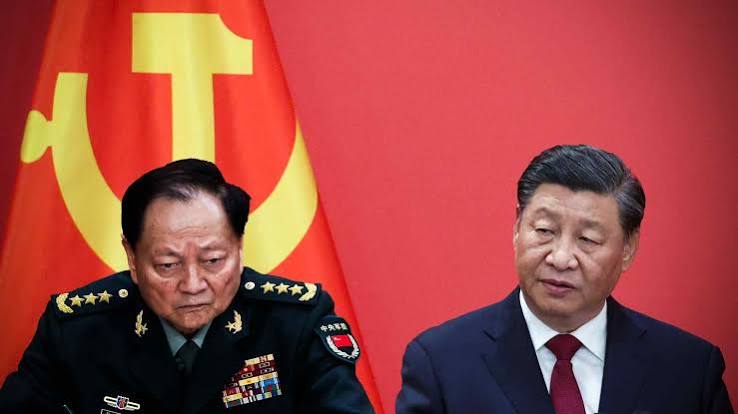
Xi and Zhang: Brothers Before Rivals
As Xi Jinping advanced toward national leadership, his political future became increasingly connected to another member of China’s revolutionary elite.
Zhang Youxia was not a civilian politician. He was a professional soldier whose family history, battlefield experience, and standing inside the People’s Liberation Army gave him a level of credibility few Chinese generals could match.
Their relationship began long before either man reached the highest levels of power.
The Revolutionary Families
Xi Jinping and Zhang Youxia were both born into families shaped by the Communist revolution.
Xi’s father, Xi Zhongxun, was a veteran Party leader who helped build Communist power in northwestern China. Zhang’s father, Zhang Zongxun, was a senior PLA general and one of the military commanders associated with the revolutionary generation.
The two fathers reportedly knew each other through their service in the Communist movement.
That connection placed Xi and Zhang within the social world often described as China’s “princeling” class—the sons and daughters of senior revolutionary officials.
These families shared more than privilege.
They shared memories of war, political campaigns, internal purges, and the unstable rewards of Communist service. Their children grew up understanding that family history could provide access, but also danger.
Zhang Youxia was born in 1950, making him several years older than Xi. He joined the PLA as a teenager and built his career through the army rather than through civilian Party administration.
Unlike most of the officers who later reached China’s senior command, Zhang possessed direct combat experience.
He served during the 1979 Sino-Vietnamese War and later border clashes with Vietnam in the 1980s. Those operations were costly and exposed serious weaknesses in the PLA, including poor coordination, outdated tactics, and weak logistics.
Zhang’s experience gave him standing among officers who valued battlefield service.
By the time Xi reached the highest levels of the Party, China had not fought a major war for decades. Most senior generals had risen through peacetime commands, political departments, or technical institutions.
Zhang was different.
He could claim that he had commanded soldiers under fire.
That distinction became increasingly important as Xi began demanding that the PLA prepare for what he described as real combat conditions.
The relationship between Xi and Zhang was strengthened by family history, generational identity, and mutual political value.
Xi needed a senior officer he could trust as he confronted entrenched military networks.
Zhang needed the support of a political leader capable of promoting him beyond the limits of ordinary military retirement conventions.
For years, their interests aligned.
The General Xi Trusted Most
When Xi Jinping became general secretary of the Communist Party and chairman of the Central Military Commission in 2012, he inherited a military filled with corruption, factional ties, and officers whose loyalties had been shaped under previous leaders.
Formal command did not automatically guarantee real control.
Xi needed allies inside the PLA who could help him break existing patronage networks and restructure the armed forces around his authority.
Zhang Youxia became one of the most important.
At the time of Xi’s rise, Zhang was already a senior general. He was promoted to lead the PLA’s General Armament Department, which oversaw weapons development and military procurement.
The position placed him at the center of China’s modernization effort.
It also placed him inside one of the military’s most corruption-prone systems.
Xi’s early anti-corruption campaign quickly reached the highest levels of the PLA. Former Central Military Commission vice chairmen Xu Caihou and Guo Boxiong were investigated and removed. Both had been powerful figures under earlier leadership and were accused of selling promotions and building extensive patronage networks.
Their downfall sent a clear message.
Rank, revolutionary history, and previous political protection would no longer guarantee safety.
Zhang’s role during this period was critical.
He was widely viewed as one of the officers helping Xi replace the old military establishment with commanders loyal to the new leadership.
In 2015 and 2016, Xi launched the most extensive PLA reorganization in decades. The seven military regions were replaced by five theater commands. The old general departments were broken apart and placed under a new Central Military Commission structure. New branches and support forces were created, while command authority was further centralized under Xi.
The reforms disrupted careers, eliminated positions, and threatened long-standing institutional interests.
Without support from influential generals, Xi would have faced far greater resistance.
Zhang survived and advanced.
At the 19th Party Congress in 2017, he was promoted to vice chairman of the Central Military Commission, becoming one of the highest-ranking officers in China.
His age made the appointment especially notable.
Under the Party’s informal retirement conventions, Zhang could easily have been expected to leave office. Xi instead elevated him.
The decision reinforced the perception that Zhang was not merely another general.
He was Xi’s trusted partner inside the military.
Zhang’s responsibilities expanded as China accelerated military modernization, increased pressure around Taiwan, strengthened its nuclear forces, and prepared for possible confrontation with the United States.
He oversaw equipment development and played a major role in military planning. His combat background gave him authority in discussions about readiness, while his family ties to Xi helped support political trust.
For much of Xi’s first decade in power, the relationship appeared mutually reinforcing.
Xi supplied the political authority.
Zhang supplied military experience, institutional reach, and credibility among senior officers.
Together, they helped dismantle rival networks, remove powerful generals, and reshape the PLA around Xi’s command.
Their alliance also reflected a deeper bond between two sons of the revolution.
Both had watched their families rise through Communist victory. Both understood the brutality of internal Party politics. Both had learned that loyalty was never assumed and power was never permanent.
But their backgrounds were not identical.
Xi’s career taught him to survive by waiting, adapting, and controlling political institutions.
Zhang’s career gave him influence within an armed organization whose loyalty Xi could never afford to take for granted.
As long as their interests remained aligned, the difference strengthened their partnership.
Xi needed a general capable of enforcing his will.
Zhang needed a chairman capable of protecting his position.
By 2022, however, the structure of that alliance had begun to change.
Xi was preparing to secure an unprecedented third term as China’s top leader. The informal rules governing retirement and succession were being rewritten. Zhang, already beyond the age when most senior officers would have stepped down, remained at the summit of the military.
The two men who had spent years helping each other consolidate power were no longer merely leader and subordinate.
They had become the two most consequential figures in China’s political-military system.
By the time Xi secured his unprecedented third term in 2022, few could have imagined that the general he trusted most inside the People’s Liberation Army would soon stand at the center of the greatest internal power struggle of his rule.
The Alliance Begins to Crack
When Xi Jinping secured a third term as general secretary of the Chinese Communist Party in October 2022, the result appeared to settle the question of political power in Beijing.
Xi had already spent a decade dismantling rival networks, tightening ideological control, and concentrating authority around himself. The presidential term limit had been removed. The Politburo Standing Committee was filled with officials considered personally loyal to him. No obvious successor had been elevated.
To most outside observers, Xi had become the strongest Chinese leader since Mao Zedong.
His position inside the military appeared equally secure.
Xi had used anti-corruption investigations to remove senior generals, reorganized the command system, and repeatedly declared that the Communist Party—and specifically the chairman of the Central Military Commission—must exercise absolute control over the armed forces.
General Zhang Youxia had been one of the most important officers supporting that campaign.
For years, Zhang helped Xi dismantle older military patronage networks and impose a new structure on the People’s Liberation Army. His revolutionary family background, combat experience, and long relationships across the officer corps made him uniquely valuable.
But Xi’s third term changed the balance between the two men.
The alliance that had once helped both of them rise now placed two unusually powerful figures at the top of China’s political-military system.
Xi controlled the Party.
Zhang possessed influence within the military that could not be explained by rank alone.
The Third Term
The 20th Party Congress marked a break with the succession practices developed after the Mao era.
Following decades of political chaos, Chinese leaders had gradually created informal rules intended to limit personal rule and make leadership transitions more predictable. Those rules were never fully constitutional, but they helped establish expectations regarding retirement, promotion, and succession.
Xi dismantled many of them.
He remained general secretary after completing two terms. He also continued as chairman of the Central Military Commission and later began a third term as state president.
His continued rule demonstrated that no informal convention could limit him.
That decision created an immediate question for other senior leaders.
If retirement norms no longer applied to Xi, why should they automatically apply to everyone else?
Zhang Youxia was already older than most officials serving at the top of the Chinese system. Under previous practices, he would normally have been expected to leave the Central Military Commission.
Instead, he remained.
At the 20th Party Congress, Zhang was reappointed as first-ranked vice chairman of the Central Military Commission. The decision confirmed that he remained indispensable—or at least too important to remove.
It also meant that Xi began his third term with a senior general whose authority extended far beyond a normal military appointment.
Zhang had served in combat. He had managed military procurement and equipment development. He had helped oversee the largest military reforms in decades. He also belonged to the same revolutionary aristocracy as Xi.
Few other officers possessed the same combination of political access and institutional standing.
As long as Zhang remained loyal, Xi benefited from that strength.
If the relationship deteriorated, the same strength could become a threat.
The Retirement Dispute
Much of the speculation about the relationship between Xi and Zhang centered on China’s informal retirement convention known as qishang baxia, commonly translated as “seven up, eight down.”
Under that practice, officials aged 67 could remain in office or receive promotion, while those aged 68 or older were generally expected to retire.
The rule was never absolute. It was also never written into China’s constitution. Yet for years it served as a powerful political expectation within the Communist Party.
Xi’s third term broke that expectation.
According to accounts circulated among overseas Chinese political commentators, Xi expected Zhang to retire despite choosing to remain in power himself.
One widely repeated story claimed that Xi raised the retirement issue directly with Zhang. Zhang reportedly answered by questioning why Xi should be exempt from the same rule.
The exact exchange has never been confirmed by Beijing.
It may have been embellished, distorted, or entirely invented.
But the story spread because it captured a real political contradiction.
Xi had justified his continued leadership by placing himself above the informal rules of succession. If Zhang also refused retirement, Xi faced a difficult choice.
Removing him could destabilize the military.
Keeping him would preserve a second center of influence at the highest level of the armed forces.
For much of Xi’s first decade, he had relied on Zhang’s authority.
By the beginning of the third term, that reliance may have started to look dangerous.
The structure of their relationship had changed.
Zhang was no longer simply the general who helped Xi consolidate control.
He was the senior officer best positioned to resist further centralization if he believed Xi’s actions threatened the military establishment or his own network.
Two Centers of Power
Officially, China’s command hierarchy remained clear.
Xi Jinping was chairman of the Central Military Commission. Zhang Youxia was his subordinate.
In practice, the relationship between civilian political leadership and military command was more complicated.
Xi did not rise through the armed forces. He had limited direct military experience and depended on senior officers to translate political decisions into operational planning.
Zhang had spent his entire adult life in uniform.
He understood the internal culture of the PLA, knew senior commanders personally, and possessed credibility among officers who respected combat experience.
Xi could appoint generals.
Zhang could influence whether those generals were trusted by the rest of the military.
That distinction mattered as China expanded its missile forces, modernized its nuclear arsenal, increased military activity around Taiwan, and prepared for possible confrontation with the United States.
The PLA had become central not only to national defense but also to Xi’s political legitimacy.
Xi presented himself as the leader restoring China’s power after what the Communist Party describes as a century of national humiliation. A strong military was essential to that image.
But a military with powerful internal networks could also become the institution most capable of limiting him.
Xi had spent years declaring that “the Party commands the gun.”
By his third term, the more immediate question was whether every part of the gun answered directly to Xi.
The Military Purges
The first major signs of upheaval appeared in 2023.
China’s Rocket Force, one of the most sensitive branches of the People’s Liberation Army, suddenly became the center of a sweeping investigation.
Senior commanders disappeared. Officers were removed. Procurement networks came under scrutiny. Before long, the purge spread to the defense ministry and the Central Military Commission itself.
Beijing described the campaign as an attack on corruption.
Many outside observers saw the possibility of a deeper struggle over control of the military.
The Rocket Force Purge
The Rocket Force is responsible for China’s land-based conventional and nuclear missiles.
It would play a central role in any conflict involving Taiwan, Japan, U.S. military bases in the region, or a wider confrontation with the United States.
Its missile units form a major part of China’s strategy for preventing foreign intervention in a Taiwan conflict. The force also manages a growing nuclear arsenal intended to strengthen Beijing’s ability to deter attacks and compete strategically with Washington.
Because of that mission, the Rocket Force is one of the most secretive institutions in China.
Its sudden leadership collapse therefore attracted global attention.
In 2023, Commander Li Yuchao disappeared from public view. Other senior officers also stopped appearing at official events. Beijing offered no immediate explanation.
As speculation spread, reports emerged that the leadership was under investigation for corruption, procurement abuses, and possible leaks of sensitive information.
One allegation linked the investigation to detailed foreign research about the Rocket Force’s organization, deployment locations, and missile brigades.
The China Aerospace Studies Institute, a research organization associated with the U.S. Air Force, had published an extensive examination of the Rocket Force’s structure. Some overseas Chinese commentators later claimed that Beijing suspected internal information had been passed abroad.
Another widely circulated allegation involved Li Yuchao’s son, who was said to have studied overseas and may have become connected to the investigation.
Those claims were never publicly confirmed by Chinese authorities.
What followed was not disputed.
Li Yuchao was removed.
Other senior Rocket Force officers fell with him.
The leadership of the branch responsible for China’s most important strategic weapons was effectively dismantled.
Beijing later appointed new commanders from outside the Rocket Force, a move that suggested Xi no longer trusted the institution’s existing leadership.
The new commander, Wang Houbin, came from the navy rather than the missile force. The new political commissar, Xu Xisheng, came from the air force.
Bringing outsiders into the Rocket Force sent a powerful message.
The problem was not believed to involve only one or two officers.
The entire command structure appeared compromised.
Corruption Inside China’s Strategic Forces
Rumors about the Rocket Force became increasingly severe.
Some reports alleged that officers had stolen military fuel or manipulated missile procurement contracts. One sensational claim stated that water had been found in missiles where fuel should have been stored.
Publicly available evidence has not established the accuracy of those stories.
They should therefore be treated with caution.
However, the rumors gained credibility among some observers because they appeared alongside real investigations and removals.
China’s military had a long history of corruption.
Before Xi came to power, promotions were frequently reported to have been bought and sold. Procurement systems created opportunities for bribery, inflated contracts, and the diversion of military funds.
Xi’s early anti-corruption campaign had removed former Central Military Commission vice chairmen Xu Caihou and Guo Boxiong, both accused of building extensive patronage networks.
The Rocket Force investigation suggested that the problem had not been eliminated.
That posed a political danger for Xi.
He had personally overseen the creation of the Rocket Force in its modern form as part of the 2015 military reforms. He repeatedly presented military modernization as one of the defining achievements of his leadership.
If corruption had penetrated the branch responsible for nuclear and strategic missiles, it raised questions about both military readiness and Xi’s ability to control the institutions he had rebuilt.
A failed anti-corruption campaign would damage Xi’s reputation.
A disloyal missile force would be even more dangerous.
Li Shangfu Falls
The investigation soon moved beyond the Rocket Force.
In July 2023, the Equipment Development Department of the Central Military Commission released an unusual public notice requesting information about corruption in military procurement dating back to October 2017.
The chosen date immediately attracted attention.
October 2017 was when General Li Shangfu became head of the Equipment Development Department.
The department oversees weapons procurement, research programs, military contracts, and the acquisition of advanced systems across the PLA.
It is one of the most financially powerful institutions in China’s defense establishment.
Li Shangfu had built his career through aerospace and equipment programs. He previously directed the Xichang Satellite Launch Center and later rose through the General Armament Department and its successor institutions.
In March 2023, Xi appointed him minister of national defense.
The promotion appeared to place Li among the most trusted officers in the Chinese leadership.
Only months later, he disappeared.
Li stopped attending public events. Meetings with foreign officials were canceled without explanation. Chinese state media avoided discussing his status.
In October 2023, he was formally removed as defense minister.
He was later expelled from the Communist Party and accused of accepting large bribes and abusing his authority in military procurement.
Li’s fall was significant for more than his cabinet title.
China’s defense minister does not exercise the same operational authority as the U.S. secretary of defense. Real command power remains concentrated in the Central Military Commission.
But Li’s earlier role in military procurement placed him close to the networks now under investigation.
It also connected the inquiry to Zhang Youxia.
Zhang had previously overseen the PLA’s armament and equipment systems before Li rose through the same structure. Overseas commentators frequently described Li as part of Zhang’s military network, though Beijing never publicly used that label.
If investigators were tracing procurement corruption backward through the Equipment Development Department, the trail could move toward Zhang.
The question was whether Xi intended to follow it that far.
Yan’an and Xi’s Warning
In June 2024, Xi summoned senior military leaders to Yan’an for the Central Military Commission Political Work Conference.
The location was carefully chosen.
Yan’an had served as the Communist Party’s revolutionary headquarters before the establishment of the People’s Republic of China. It remained a symbol of discipline, ideological unity, sacrifice, and Mao’s control over the revolutionary army.
It also held personal meaning for Xi.
Liangjiahe, where he had spent years during the Cultural Revolution, was located in the same region.
By returning senior officers to Yan’an, Xi connected the military purge to the Party’s revolutionary mythology and to his own political biography.
His speech focused heavily on loyalty and corruption.
Xi warned that serious political problems remained inside the armed forces. He said corruption had damaged the military’s combat capability and declared that those who violated Party discipline would have nowhere to hide.
He also emphasized the Central Military Commission Chairman Responsibility System.
Under that doctrine, ultimate authority over the PLA rests with the chairman of the Central Military Commission.
That chairman was Xi.
The repeated emphasis on the system suggested that the problem was not limited to financial misconduct.
Xi appeared concerned about command loyalty.
In a military already shaken by investigations, the Yan’an conference sounded like a warning to every senior officer.
No military relationship, faction, or previous service would be allowed to stand above Xi’s authority.
Yet the months that followed raised the possibility that Xi’s warning had not ended the struggle.
Instead, officers widely viewed as loyal to Xi began to fall.
Zhang Strikes Back
The investigation of Admiral Miao Hua marked a major shift.
Miao served as director of the Central Military Commission’s Political Work Department, one of the most powerful positions in the PLA.
The department controls political education, personnel evaluations, promotions, ideological discipline, and the Party’s organizational network throughout the armed forces.
It helps determine which officers advance and which careers end.
Miao was widely regarded as a Xi loyalist.
Both men had spent significant periods of their careers in Fujian Province. Miao’s rise after Xi became national leader was commonly interpreted as part of Xi’s effort to place trusted figures in control of military personnel.
When Miao came under investigation, the political meaning appeared very different from the Rocket Force purge.
The Rocket Force leadership had often been described as connected to older procurement and military networks.
Miao represented Xi’s own system.
His fall suggested that either Xi was willing to purge even close allies or another center of power had gained the ability to strike at Xi’s personnel network.
Overseas Chinese commentators increasingly promoted the second interpretation.
They argued that Zhang Youxia had survived the investigations targeting officers linked to him and had begun turning the campaign against Xi’s allies.
The theory remained speculative.
China’s political system provides little reliable information about internal investigations. Public announcements rarely explain who initiated a case or which faction benefits.
But the appearance of retaliation became harder to ignore as another senior Xi ally disappeared.
He Weidong Disappears
General He Weidong was the second-ranked vice chairman of the Central Military Commission.
He had commanded the Eastern Theater Command, which is responsible for operations involving Taiwan and China’s eastern coastline.
His promotion after the 20th Party Congress was widely viewed as evidence of Xi’s trust.
He possessed experience in one of China’s most strategically important theaters and had been elevated rapidly into the top military leadership.
Then he vanished from major public events.
As with other senior officials, Beijing initially provided no detailed explanation.
His absence immediately triggered speculation that he had been detained or placed under investigation.
The disappearance of He Weidong, following the case against Miao Hua, created the impression that Xi’s military network was collapsing.
Two senior officers associated with Xi had been removed from public view.
Zhang Youxia remained in office.
For analysts who believed the conflict had become a factional struggle, the pattern appeared clear.
Xi had attempted to weaken Zhang through the Rocket Force and equipment investigations.
Zhang had survived and answered by targeting Xi’s closest military allies.
Whether events were truly coordinated in that manner remains unproven.
It is also possible that Xi himself authorized every investigation as part of a broader campaign against corruption and disloyalty.
But political perception matters in an opaque system.
By early 2025, the perception was that Zhang remained standing while Xi’s allies were disappearing.
Why Everyone Thought Xi Was Finished
Rumors of Xi Jinping’s decline spread rapidly in 2024 and 2025.
Overseas Chinese commentators claimed he had lost control of the military. Taiwan-based media discussed possible leadership changes. Social media accounts analyzed every absence, seating arrangement, state media headline, and public interaction involving Xi and Zhang.
Brief footage from the National People’s Congress in March 2025 attracted particular attention.
Some viewers interpreted the body language between Xi and Zhang as unusually cold. The video showed no open confrontation, but it became a symbol of the alleged split.
In China’s highly controlled political environment, even minor gestures can generate major speculation.
Commentators began naming possible successors to Xi.
Ding Xuexiang, Chen Jining, Wang Yang, and Hu Chunhua appeared in competing theories. Some claimed retired Party elders were pressing for a return to collective leadership. Others argued that Xi would retain only ceremonial authority while another official assumed practical control.
Former U.S. National Security Advisor Michael Flynn also amplified claims that major political change was taking place inside Beijing.
None of the succession scenarios was confirmed.
Many relied on indirect evidence, anonymous accounts, and interpretations of official silence.
Yet the rumors did not emerge from nothing.
China was facing serious economic pressure. The property sector remained troubled. Local governments carried heavy debt. Relations with the United States had deteriorated. Foreign investment confidence had weakened.
At the same time, the military leadership was being torn apart by investigations.
The officials disappearing were no longer only representatives of older factions.
They included officers Xi had personally promoted.
Xi also appeared absent from several events where some observers expected him to be present. Changes in official language were interpreted as evidence that his ideological dominance was weakening.
Political analysts began arguing that Zhang Youxia had become the real authority inside the PLA.
Some claimed Xi remained Party leader in name but could no longer issue military orders without Zhang’s approval.
Others suggested that the Central Military Commission had divided into competing camps.
The lack of reliable information allowed increasingly dramatic claims to spread.
By the middle of 2025, a broad narrative had taken hold outside China.
Xi had overreached.
His third term had alienated the Party elite.
His military purges had triggered resistance.
Zhang had protected himself, removed Xi’s allies, and stripped the chairman of effective control over the armed forces.
After more than a decade of concentrating power, Xi Jinping finally appeared to have created an opponent he could not defeat.
By the summer of 2025, many believed Xi Jinping had already lost.
They were wrong.
Xi’s Counterattack
By the summer of 2025, Xi Jinping faced the most damaging political narrative of his rule.
For more than a year, overseas Chinese commentators, Taiwan-based media outlets, former officials, and political analysts had argued that Xi was losing control of the People’s Liberation Army.
The evidence appeared persuasive to many observers.
Admiral Miao Hua, a senior officer widely regarded as close to Xi, had come under investigation. General He Weidong, another trusted figure and vice chairman of the Central Military Commission, had disappeared from major public events. General Zhang Youxia, meanwhile, remained visible and powerful.
Xi’s critics interpreted the pattern as proof that the military purge had turned against him.
Some claimed Zhang had taken control of the Central Military Commission. Others suggested that retired Party leaders were preparing to remove Xi or force him into a reduced role. Possible successors were discussed as though a transition had already begun.
The assumptions were understandable.
They were also premature.
Xi had built his career by surviving periods in which stronger forces appeared to control the immediate political situation. He had learned early that open confrontation was not always the most effective response to danger.
During the Cultural Revolution, he adapted rather than breaking with the Party. In provincial politics, he advanced without presenting himself as an obvious threat. After reaching the top, he used disciplinary institutions, personnel appointments, and anti-corruption investigations to remove rivals one at a time.
His political method was rarely based on dramatic public reaction.
It was based on patience, institutional control, and timing.
Xi Returns to the Center
As rumors about his decline intensified, Xi did not publicly confront them.
Chinese state media continued presenting him as the unquestioned center of the Party, the government, and the military. He appeared at major meetings, delivered speeches on discipline and loyalty, and maintained the formal responsibilities of general secretary and chairman of the Central Military Commission.
Those appearances mattered because China’s political system is highly choreographed.
A leader who had genuinely lost authority would eventually be expected to show signs of institutional displacement: reduced media coverage, missing titles, altered protocol, canceled meetings, or the visible rise of another official.
None of those changes occurred in a decisive way.
Xi remained at the center of official reporting.
He continued chairing major Party meetings. His ideological slogans remained embedded in official documents. Senior civilian and military leaders continued appearing beneath him in the formal hierarchy.
General Zhang Youxia was still present at important events, but he was never publicly elevated above Xi.
The Fourth Plenum of the 20th Central Committee became a major test of the rumors.
Before the meeting, overseas commentators predicted that it could produce a leadership transition, reduce Xi’s authority, restore collective rule, or reveal a compromise imposed by Party elders.
Those predictions did not materialize.
Xi remained general secretary.
No successor was announced.
No alternative center of authority emerged.
The result did not prove that internal conflict had never existed. It did show that Xi’s opponents, if they existed as a coordinated force, had failed to remove him through the Party’s formal institutions.
The political structure Xi had built remained intact.
Zhang Shengmin and the Machinery of Discipline
One figure became increasingly important as the struggle moved toward its final stage: General Zhang Shengmin.
Zhang Shengmin served as secretary of the Central Military Commission’s Discipline Inspection Commission, the military institution responsible for investigating corruption and violations of Party rules.
He was not one of the PLA’s best-known operational commanders.
He did not possess Zhang Youxia’s battlefield reputation or public stature.
But in Xi Jinping’s political system, control over discipline could be more decisive than control over a field command.
The Discipline Inspection Commission has the power to investigate officers, review financial records, examine personnel decisions, detain suspects within the Party disciplinary system, and refer cases for prosecution.
It also operates with a high degree of secrecy.
Officials targeted by investigators often disappear from public view before any formal announcement is made. Their colleagues may not know the full accusations, the evidence, or the scope of the investigation until the political decision has already been settled.
Xi had used the civilian version of this system throughout his anti-corruption campaign.
Senior officials once considered politically untouchable were isolated, investigated, expelled from the Party, and prosecuted. The process weakened rival factions while reinforcing the message that every official remained dependent on Xi’s political protection.
The same system operated inside the military.
As long as Xi retained the loyalty of the disciplinary apparatus, he still possessed a mechanism capable of reaching senior commanders regardless of their rank or relationships.
Zhang Shengmin’s continued position therefore carried major significance.
While outside observers focused on public appearances and rumored military factions, the institution responsible for investigating the officer corps remained active.
Xi may have lost trusted generals.
He had not lost the system that could remove other generals.
The Net Tightens
The military investigations continued to expand.
What began with the Rocket Force and equipment procurement system had already reached the defense ministry, the Political Work Department, and the vice chairmanship of the Central Military Commission.
The widening scope suggested that investigators were no longer targeting one isolated corruption network.
They were examining the structure of military power itself.
Procurement records could reveal relationships between commanders, defense companies, and officials responsible for approving weapons programs.
Promotion files could expose networks inside the Political Work Department.
Rocket Force investigations could lead to officers involved in strategic planning, nuclear command, and missile procurement.
Once those cases overlapped, almost every senior military figure became vulnerable.
That vulnerability was especially serious for Zhang Youxia.
Zhang had spent years at the center of China’s military procurement and equipment system. Before becoming vice chairman of the Central Military Commission, he had led the General Armament Department and later played a central role in supervising modernization programs.
His long career gave him influence.
It also connected him to decades of decisions that investigators could examine.
Li Shangfu’s fall had already brought the corruption inquiry close to Zhang’s former institutional network. The cases involving other senior officers further reduced the distance between the disciplinary campaign and the top of the military hierarchy.
If Xi intended to move against Zhang, he needed more than political suspicion.
He needed the ability to isolate him from the officer corps, prevent organized resistance, and present the action as enforcement of Party discipline rather than an open military confrontation.
The anti-corruption system provided that method.
The Fall of Zhang Youxia
In January 2026, the struggle entered its most dramatic phase.
Chinese authorities announced investigations involving General Zhang Youxia and General Liu Zhenli over alleged serious violations of discipline and law.
Zhang was the first-ranked vice chairman of the Central Military Commission and the highest-ranking uniformed officer in China.
Liu served as chief of the Central Military Commission Joint Staff Department, placing him at the center of operational planning and military command coordination.
Both men also possessed something increasingly rare among China’s senior commanders: direct combat experience.
Zhang had fought in the conflicts with Vietnam. Liu had also served during border fighting and later built a career through major ground-force commands.
Their removal therefore represented far more than another corruption case.
Two of the PLA’s most experienced and institutionally important commanders had been placed under investigation at the same time.
The announcement shocked observers who had spent the previous year arguing that Zhang had defeated Xi politically.
If Zhang had genuinely taken control of the military, his sudden fall required explanation.
Some commentators suggested that Xi had carefully waited until Zhang’s network had been weakened by earlier investigations. Others argued that Zhang had been lured into a controlled setting and detained before supporters could organize a response.
Accounts circulated claiming that he had been summoned to a routine meeting, separated from his normal security arrangements, and taken into custody.
Those operational details were not publicly confirmed.
China’s leadership provided little information about how the investigations were conducted.
What mattered was the result.
The general widely described as Xi’s strongest rival was no longer in a position to command, organize, or protect his military network.
Xi had survived the period in which many believed he was finished.
Zhang had not.
The Chairman Responsibility System
The political language surrounding the case indicated that the accusations extended beyond ordinary corruption.
Zhang and Liu were accused of seriously damaging the Central Military Commission Chairman Responsibility System.
The phrase is central to Xi Jinping’s command structure.
Under the system, the chairman of the Central Military Commission holds ultimate authority over the People’s Liberation Army. Military institutions, commanders, and Party organizations inside the armed forces are required to follow the chairman’s decisions.
Because Xi is the chairman, challenging the system effectively means challenging Xi’s personal command authority.
Chinese officials did not publicly explain the precise actions behind the accusation.
The language could refer to resisting orders, interfering with personnel decisions, building independent military networks, obstructing investigations, or attempting to exercise authority outside the formal chain of command.
We are not sure which of those possibilities, if any, formed the basis of the case.
But the wording itself was highly significant.
Officials accused only of bribery can be portrayed as corrupt individuals.
Officials accused of undermining the chairman’s responsibility system are portrayed as threats to the political command of the military.
The case therefore became part of a larger ideological argument.
Xi was not simply removing officers accused of financial crimes.
He was reasserting the principle that no general, regardless of family background, combat history, or institutional support, could become an independent center of power.
The message reached every level of the PLA.
The Party commands the gun.
Inside Xi’s system, the chairman commands the Party’s military apparatus.
What Xi’s Victory Means for China
The apparent defeat of Zhang Youxia strengthened Xi Jinping’s immediate political position.
It also created new risks.
Xi had removed or weakened many of the officers capable of challenging his command. But the same campaign stripped the People’s Liberation Army of senior leaders with experience in combat, strategic weapons, personnel management, procurement, and joint operations.
The result may be a military more loyal to Xi.
It may also be a military less willing to report failure, question assumptions, or make independent operational judgments.
The Collapse of the Central Military Commission
The Central Military Commission that began Xi’s third term was steadily dismantled by investigations and disappearances.
Zhang Youxia came under investigation.
He Weidong disappeared from public view.
Miao Hua was removed from his role and investigated.
Liu Zhenli was also targeted.
Other senior officers connected to the Rocket Force, equipment procurement, and defense industries had already fallen.
Few modern Chinese leaders had overseen such a rapid turnover at the summit of the armed forces.
The official explanation was that corruption had penetrated deeply into the PLA.
If that explanation was accurate, the military faced a severe institutional crisis.
China had spent enormous sums modernizing its forces, developing missiles, building aircraft carriers, expanding its nuclear arsenal, and preparing for high-technology warfare.
Yet the officers responsible for supervising those programs were accused of bribery, misconduct, and political disloyalty.
The alternative interpretation was equally serious.
If the investigations were driven primarily by factional struggle, Xi had removed a large part of the senior command in order to secure personal control.
Either conclusion raises concerns about military effectiveness.
A deeply corrupt command system can produce unreliable weapons, falsified readiness reports, and officers promoted through patronage rather than ability.
A politically terrified command system can produce silence, excessive obedience, and strategic mistakes that no subordinate is willing to challenge.
Xi may believe the purge is necessary to solve both problems.
But replacing senior leaders does not immediately rebuild trust or competence.
A Military Built Around Loyalty
Xi has consistently argued that political reliability is the foundation of military effectiveness.
From his perspective, a technically capable officer who is politically unreliable represents a greater danger than a less experienced officer who obeys the Party without hesitation.
That view is rooted in Communist history.
Mao Zedong’s victory depended on maintaining Party control over the army. Chinese leaders have long viewed military independence as a potential threat to the political system.
Xi’s repeated emphasis on loyalty reflects that tradition.
But loyalty can be difficult to measure.
Officers know that careers depend on demonstrating support for Xi’s policies, repeating his political language, and avoiding any appearance of disagreement.
That environment encourages public obedience.
It does not guarantee honest reporting.
A commander may conceal training failures rather than risk punishment.
A procurement official may exaggerate the performance of a weapons system.
A theater commander may tell Xi that forces are ready because admitting weakness could be interpreted as disloyalty.
The more Xi centralizes decisions, the more dependent he becomes on accurate information from officials who may fear delivering it.
That contradiction sits at the center of the post-purge PLA.
Xi wants absolute obedience.
He also needs professional commanders capable of warning him when a plan is unrealistic.
The two goals do not always support each other.
Taiwan and Military Readiness
The consequences are especially important for Taiwan.
China has never renounced the use of force to take control of the island. Xi has described unification as part of the “great rejuvenation of the Chinese nation” and has instructed the PLA to improve its ability to fight and win wars.
A major operation against Taiwan would be one of the most complicated military campaigns attempted in modern history.
It would require missile strikes, air operations, naval control, cyberattacks, electronic warfare, logistics, amphibious transport, ground-force coordination, and protection against possible intervention by the United States and its regional allies.
No single military branch could conduct the operation alone.
The campaign would depend on experienced officers capable of coordinating multiple services under intense pressure.
The purge removed or investigated leaders from several of the institutions that would be central to such an operation.
The Rocket Force lost senior commanders.
The Joint Staff Department lost its chief.
The Central Military Commission lost vice chairmen and political leaders.
Equipment procurement networks were disrupted.
Those changes could delay planning, weaken institutional memory, and force newly promoted officers to assume responsibilities before they have established authority.
Some analysts may therefore conclude that the purge reduces the short-term likelihood of a major attack on Taiwan.
That conclusion should not be treated as certain.
Xi may view the removal of unreliable commanders as necessary preparation for future conflict. He may prefer to accept temporary disruption now rather than enter a crisis with officers whose loyalty he doubts.
The PLA also continues training, modernizing, and conducting operations around Taiwan despite changes in senior leadership.
Military pressure can continue even when the command system is unstable.
The greater risk may not be a carefully planned invasion.
It may be miscalculation.
A centralized system filled with fearful subordinates can produce distorted assessments of Taiwan’s defenses, U.S. intentions, or the PLA’s actual readiness.
If senior officers believe Xi expects confidence, they may give him confidence rather than truth.
The Cost of Removing Experienced Commanders
Zhang Youxia and Liu Zhenli belonged to the last generation of senior Chinese officers with direct combat experience.
The wars they fought were limited and occurred decades ago, but that experience still distinguished them from most of the modern officer corps.
They understood the confusion, logistical failure, and human cost of real military operations.
Younger commanders may possess stronger technical training and greater familiarity with modern weapons.
They have not commanded forces in a large-scale war.
Removing experienced officers does not necessarily make a military weaker in every respect. Older commanders can resist reform, protect patronage networks, and rely on outdated assumptions.
But replacing many senior leaders at once creates uncertainty.
New commanders must learn their roles, establish relationships, and understand the limits of the forces they inherit.
They must also operate in a political climate where predecessors have disappeared with little public explanation.
That climate can shape behavior throughout the chain of command.
Officers may avoid initiative.
They may delay decisions until political approval is unmistakable.
They may spend more time protecting themselves than solving military problems.
Xi’s purge may produce obedience.
Whether it produces confidence and competence is less clear.
Did Xi Really Win?
In the narrow political sense, Xi Jinping appears to have survived the greatest challenge of his third term.
The predictions that he would be removed, forced into retirement, or stripped of military authority did not come true.
He remained general secretary of the Communist Party and chairman of the Central Military Commission.
General Zhang Youxia, the man increasingly portrayed as his most powerful rival, came under investigation.
The outcome fits the pattern that has defined Xi’s career.
He endured a period of weakness, avoided a public confrontation before he was ready, preserved control of key political institutions, and acted when the balance shifted in his favor.
That does not mean every rumor of conflict was accurate.
China’s political system is too opaque to reconstruct the struggle with certainty. Many claims about private meetings, factional alliances, detention operations, and succession plans remain unverified.
What can be concluded more safely is that the PLA experienced an extraordinary leadership crisis.
Senior officers disappeared.
Strategic branches were purged.
Political loyalty became a central accusation.
The military command established at the beginning of Xi’s third term was largely destroyed.
Xi may have won control over the system.
But control is not the same as stability.
The purge leaves China with a military that must rebuild its senior leadership while continuing to modernize, pressure Taiwan, expand its nuclear forces, and prepare for competition with the United States.
It also leaves every remaining officer with a clear understanding of the political order.
Revolutionary family history offers no protection.
Combat experience offers no protection.
High rank offers no protection.
Personal friendship with Xi offers no permanent protection.
Only continued political usefulness and unquestioned loyalty can provide temporary security.
That may be the final lesson of Xi Jinping’s long game.
He did not rise because he trusted the system.
He rose because he learned how quickly the system could turn against anyone.
He survived by waiting longer than his rivals, controlling the institutions that judged them, and moving only when they no longer had the power to answer.
The general who once helped Xi command the gun eventually became the greatest threat to his control of it.
Xi’s counterattack removed that threat.
Whether it also weakened the military he was fighting to control will shape China’s future, the security of Taiwan, and the balance of power across Asia.

Loading comments...