The Three Stages of the AI Revolution
The AI boom is often associated with Nvidia, whose graphics processors have become the foundation of modern AI training and inference. But the industry is evolving quickly, and each stage of AI development requires different technological breakthroughs.
The first phase was accelerated computing. Nvidia emerged as the dominant force by providing the computing power necessary to train and deploy advanced AI models. This stage created enormous value as companies rushed to secure AI processing capacity.
The second phase revolves around high-bandwidth memory (HBM). As AI models become larger and more complex, the ability to move data efficiently between processors and memory becomes critical. Companies such as SK Hynix, Samsung Electronics, and Micron have become increasingly important players in the AI ecosystem as demand for advanced memory solutions continues to rise.
According to many industry observers, the third phase is now emerging: connectivity.
Why Connectivity Could Become the Next AI Battleground
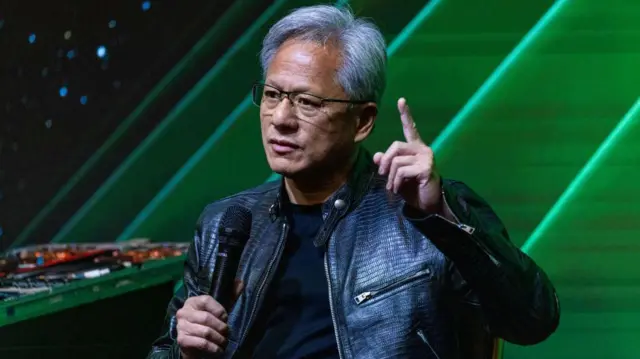
Nvidia CEO Jensen Huang recently identified Marvell Technology as a company with the potential to become the next trillion-dollar enterprise. His comments drew attention because they reflect a growing realization within the industry: the future of AI depends not only on faster chips, but also on connecting massive numbers of chips together efficiently.
The next generation of AI systems will not rely on a handful of processors. Instead, they may require tens of thousands, or even millions, of chips operating as a single giant computing platform.
Making that possible requires an entirely new level of networking infrastructure.
Traditional copper-based connections are increasingly reaching their limits as AI workloads scale. The industry is gradually moving toward optical networking and photonic technologies capable of transmitting enormous amounts of data with lower latency and greater energy efficiency.
This shift places connectivity companies such as Marvell in a strategically important position. If AI is the engine of the future economy, connectivity becomes the highway system that allows that engine to operate at full speed.
America's AI Advantage Is a National Priority
The stakes extend far beyond Wall Street.
China has already established significant positions in several critical technologies, including drones, surveillance systems, advanced manufacturing, and renewable energy infrastructure. Beijing continues to invest aggressively in artificial intelligence as part of its broader strategy to increase technological independence and global influence.
For supporters of an America First economic agenda, maintaining leadership in AI is about more than corporate profits. It is about preserving American innovation, protecting national security, strengthening domestic manufacturing, and ensuring that the world's most important technologies are developed under American leadership rather than Chinese control.
The United States currently maintains key advantages through companies such as Nvidia, AMD, Broadcom, Marvell, Microsoft, Google, and other technology leaders. However, those advantages cannot be taken for granted.
Winning the AI race will require continued investment in advanced computing, memory technologies, networking infrastructure, energy production, and skilled American workers.
The Investment Takeaway
The AI story is evolving.
First came accelerated computing. Then came high-bandwidth memory. Now, connectivity appears positioned to become the next major chapter.
If Jensen Huang's assessment proves correct, investors may increasingly focus on the companies building the networks that allow massive AI systems to function as unified machines.
America's ability to maintain technological leadership may ultimately depend on success across all three layers of the AI stack. In the race against China, winning in artificial intelligence is not just an investment theme—it is a strategic necessity.

Loading comments...