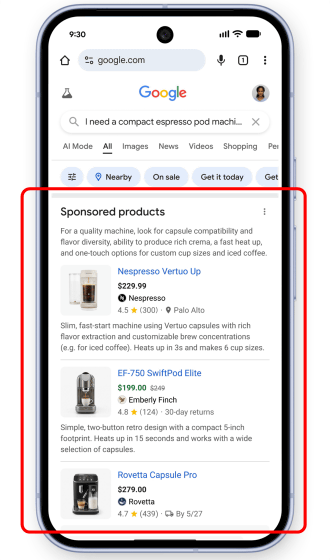
For example, a user searching for ways to make their home smell like a luxury spa may receive AI-generated recommendations for products, including sponsored diffuser advertisements generated specifically for that conversation. Another user searching for language-learning tools may see sponsored app recommendations embedded directly inside AI-generated answers.
Google is also expanding personalized advertising capabilities through its Direct Offers platform. Advertisers will be able to place exclusive discounts inside AI-generated responses, allowing users to move directly from an AI conversation to a purchase page without leaving Google Search.
The company is additionally developing "Business Agent for Leads," a Gemini-powered system that allows advertisers to interact with users through AI-generated question-and-answer conversations before guiding them toward purchases or lead-generation forms.
Why This Matters for Alphabet's Future
The shift is critical because AI threatens Google's traditional search advertising business. As users increasingly receive answers directly from AI systems, fewer people click on links, reducing opportunities for conventional search ads.
Reports indicate that AI-generated search summaries have already reduced click-through rates significantly in some cases. To address this challenge, Google is attempting to move from a click-based advertising model to an answer-based advertising model.
If successful, Alphabet could preserve its advertising dominance in the AI era. If unsuccessful, a business responsible for hundreds of billions of dollars in revenue could face substantial disruption.
Alphabet Is Much More Than Search
Many investors continue to view Alphabet primarily as a search company, but the company has evolved into a diversified AI-powered technology platform.
Google Search remains the global leader in search.
YouTube is one of the world's largest media platforms.
Google Cloud is one of the fastest-growing cloud businesses among major technology companies.
Waymo leads commercial autonomous driving deployment.
DeepMind remains one of the world's most advanced AI research organizations.
Beyond these businesses, Alphabet controls Android, Chrome, Google Maps, Gemini, AI image generation tools, AI video generation technology, cloud infrastructure, and advanced AI hardware such as TPUs.
Many analysts believe the market still undervalues these assets because investors often view Alphabet through the narrow lens of search advertising rather than as a broad AI ecosystem.
Buffett's Growing Interest in Alphabet
The company’s expanding AI capabilities may help explain Berkshire Hathaway's growing investment in Alphabet. Warren Buffett historically avoided many technology companies that were difficult to understand, yet Berkshire has continued increasing its exposure to Alphabet.
Supporters of the investment thesis argue that Alphabet trades at valuation levels below many AI-focused peers despite owning critical infrastructure across AI software, AI hardware, cloud computing, media, autonomous vehicles, and potentially future robotics platforms.
Conclusion
Google's latest Search overhaul is not simply a product update. It is a high-stakes attempt to reinvent the internet's most valuable advertising machine for the AI era. The success or failure of AI-powered advertising inside Search could determine whether Alphabet remains the dominant force in digital advertising for the next decade.

Loading comments...